Those who work in sales, revops, marketing, or even recruiting understand the grueling and monotonous work that goes into sales prospecting and closing leads. Hours upon hours are spent searching for, qualifying, and then planning how to campaign potential prospects before any contact is even made.
AI is already changing our workflows - with AI sales agents leading the charge to fully automate what were once repetitive and time-consuming tasks. Here’s everything you need to know about AI agents for sales, process automation, and how it could impact your bottom line in a big way!
In general terms, an agent is something that takes action autonomously to accomplish a goal. Many things fit this definition: a thermostat, a robot vacuum, or even human beings.
An AI sales agent is similar, with its domain limited to the web (where most of today’s sales work is done). It navigates the internet, makes decisions, and performs tasks to accomplish goals set by you.
Thanks to AI sales agents, you can now automate grueling and monotonous work. And in 2025, there are many incredible AI agents for sales available. Take Bardeen, for example:
Bardeen lets you combine our browser agents (because our extension automates your browser) with over 100 apps sales reps love, including HubSpot automations and Salesforce integrations. Here it is in action:
You can use this exact workflow immediately or choose from other fully customizable, pre-built templates such as:


How does this playbook work?
Researching websites is time-consuming. This playbook uses AI to scan a list of websites from Google Sheets, answer a custom question about each site, and add the answers back to the sheet.
How does this playbook work?
Extracting web data to Google Sheets is time-consuming. This playbook uses AI to scan websites from a spreadsheet, extract the desired information, and automatically update the sheet with the results.

How does this playbook work?
Gathering pricing data from websites is time-consuming. This playbook uses AI to scan company sites from a Google Sheet, extracting pricing info and updating the sheet automatically.
These days, when it comes to finding a sales AI agent, businesses have a ton of options, including Hubspot's Breeze Prospecting Agent . But this can be a blessing and a curse. How do you know which AI sales agent is best? How do you get started?
Well, the first thing to do is to establish your sales goals and needs. Ask yourself:
Different sales AI agents focus on different things (i.e., lead generation automation, appointment setting, email follow-ups, customer support, etc.)
Are you looking to boost conversion rates, response time, lead qualification accuracy, or something else?
The next step is to research and choose the right AI sales agent for your needs. This part will take a little more time—but with the right questions at hand, you’ll be able to find the right solution.
Look for AI agents based on things like:
Once you’ve taken these steps, you should be well on your way to getting started with a brand-new AI sales agent!
For example, you can use Bardeen to one-click automate workflows such as:

How does this playbook work?
Qualifying leads is time-consuming and error-prone. This playbook pulls leads from a Google Sheet, enriches them with data from Apollo and LinkedIn, qualifies them using a custom classifier, and saves the results to a new sheet – automating the entire process.


How does this playbook work?
Reaching out to LinkedIn post commenters is time-consuming. This playbook scrapes their data, finds email addresses, and drafts a personalized outreach email in Gmail with AI – just one click.
We’ve already mentioned that AI sales agents can automate monotonous work. For many, that alone is enough to convince them! But it’s not the only reason businesses should invest in AI for prospecting and other sales operations.
Modern AI web agents come packed with benefits. Consider these:
Did you know that conversion rates are 8x higher in the first five minutes? Quick responses are critical. AI agents can respond instantly—plus, they’re on the clock 24/7!
AI agents automatically crunch the data so you don’t have to; they can tell you who the high-quality leads are and how likely they are to buy in seconds.
Custom messaging is everything in modern sales. AI sales agents can adapt their messaging based on customer preferences, giving your AI sales team the upper hand with cold email personalization.
Clearly, it’s cheaper in the long run to integrate an AI chatbot than hire and train thousands of new human reps.
AI is far better at analyzing trends and predicting customer behavior than humans are, so with sales pipeline automation, you’d have more time to focus on the exciting work.
Once you’ve chosen the best AI sales agent for your business, it’s time to implement it. What does implementing AI sales agents mean in real terms? Well, it’ll probably look something like this:
First, you’ll have to connect your new agent to your CRM (as well as your email and other sales channels). Usually, reps from the AI sales agent software company can help you with this.
Training your AI by feeding it past sales conversations and lead specifics, including conversions, is a great idea. You can also consider data enrichment just before the training – the more information, the better the AI will perform.
Next, you should define automation rules. Also, think about defining triggers and hand-off points.
Before setting the AI sales agent loose, always test it first. Conduct some trial runs with sample customers and see how the AI agent performs!
If your testing goes well, you’re ready to deploy. Congratulations! Your sales processes are about to get a whole lot more effective!
With constant growth in specialized apps used for work, came the need for process automation. First-gen tools attempted to solve it, but over-promised and under-delivered on multiple fronts.
Luckily, the surge of technological advances this decade graced developments such as AI actions. Imagine reducing manual tasks to one click (or less)!
It’s no wonder the majority of IT Industry leaders estimate huge time savings—10% to 50% in the case of repetitive operational processes, according to Cflow’s workflow automation statistics.
So how can AI web agents multiply sales impact? When can they save time?
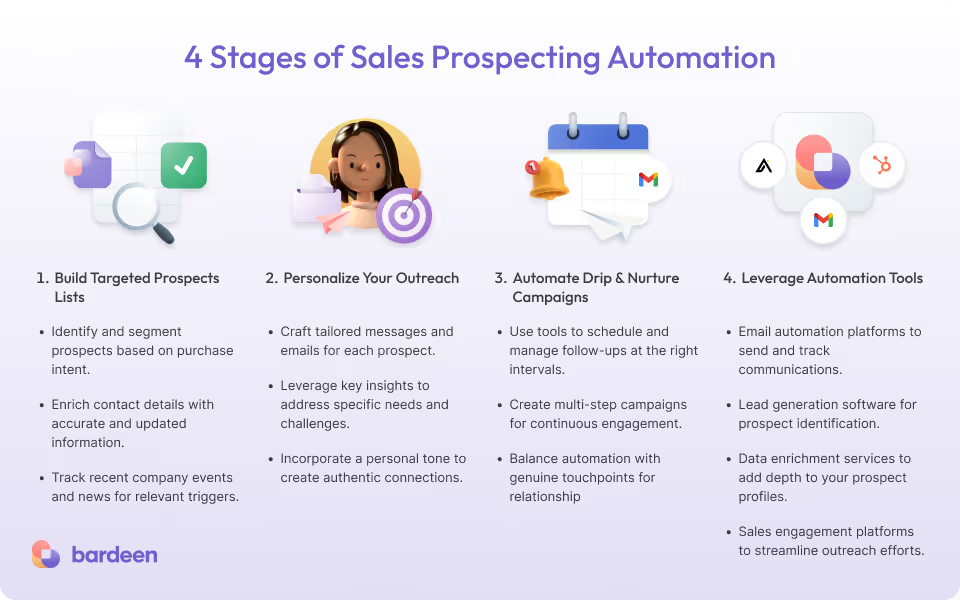
An AI sales agent can analyze vast datasets while providing insight on preferences and behaviors. It can determine preferred social media channels and engagement KPIs. Such data empowers businesses to efficiently direct their sales efforts.
For example, you can ask questions and Bardeen’s browser agent will answer by navigating provided websites and if you want, you can save that into HubSpot. Give it a try!
How does this playbook work?
Researching websites is time-consuming. This playbook uses AI to scan a list of websites from Google Sheets, answer a custom question about each site, and add the answers back to the sheet.
With machine learning algorithms, an AI agent for sales can evaluate lead data to identify high-quality prospects (more likely to convert). In contrast to traditional lead scoring models, AI web agents can combine the act of retrieving information and analyzing the results into one, similar to how leading lead qualification tools operate..
For example, you can use AI to qualify leads from new emails and speed up with automated sales prospecting workflows:

How does this playbook work?
Qualifying leads from new emails is time-consuming. This playbook collects sender data from Apollo and LinkedIn, qualifies leads using a custom AI classifier, and saves the results to Google Sheets automatically.
Manual data entry takes a lot of time. Why not use an AI agent to pull contact information instead? It works with any source and can input data to any destination.
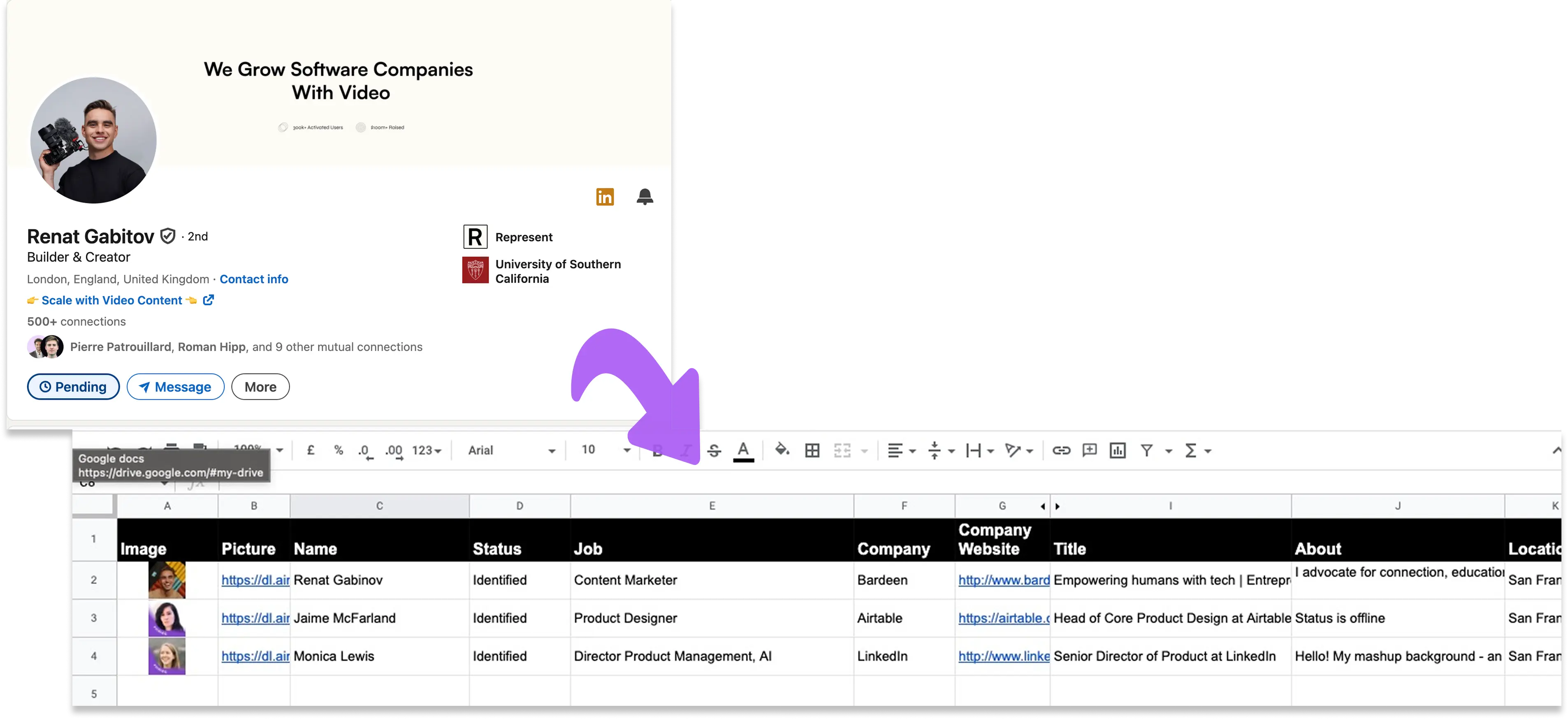
One of our most popular playbooks copies LinkedIn profile data to a Google Sheet. How much time could such an automation save you?
How does this playbook work?
Manually copying LinkedIn profile data to a spreadsheet is time-consuming. This playbook scrapes a LinkedIn profile and adds the data to a Google Sheet tab, automating the process in one click.

Talking to prospects is a vital part of the sales cycle. AI helps simplify that by highlighting important background and preference information of individual contacts, and you can push info with our Salesforce integrations whenever you need to do, such as research someone’s company, job title, or other relevant information.
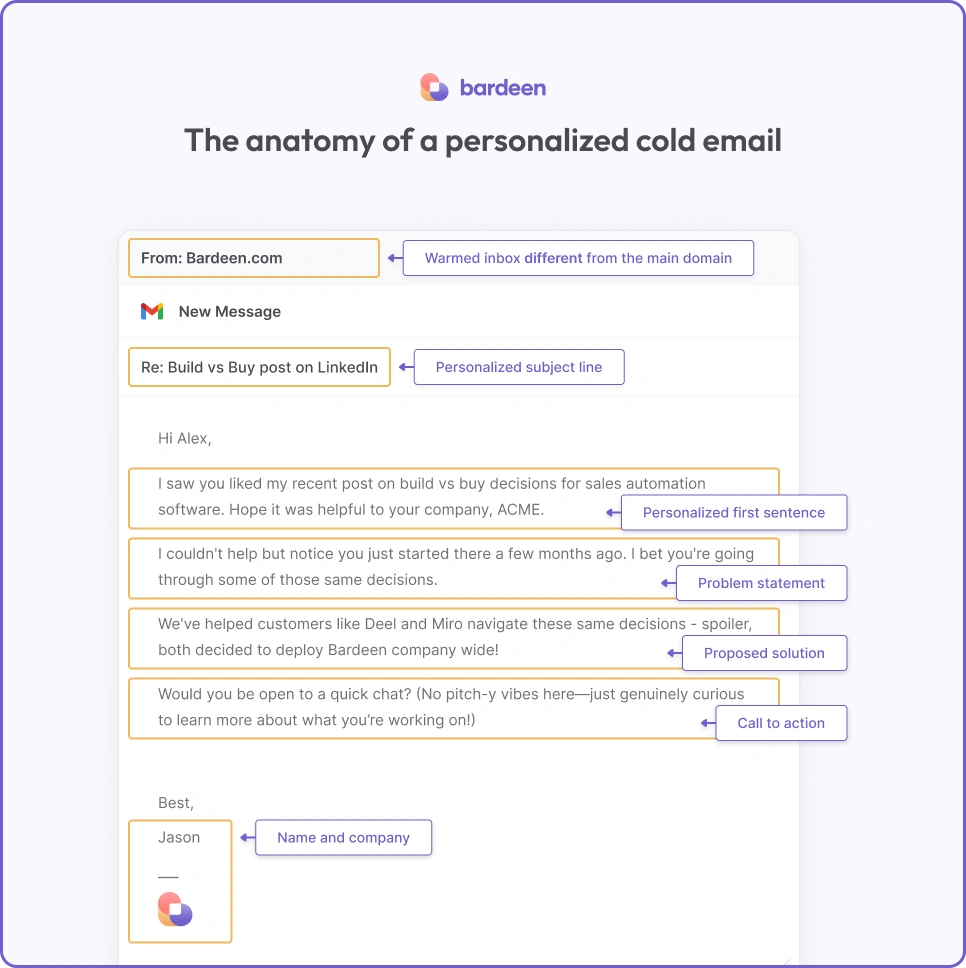
Not only can AI efficiently analyze customer data, but it can also generate personalized insights and emails based on individual users. Now, sales teams can save that precious bandwidth for customizing their communication strategies and benefit from more impactful messaging without the need for hours of work!
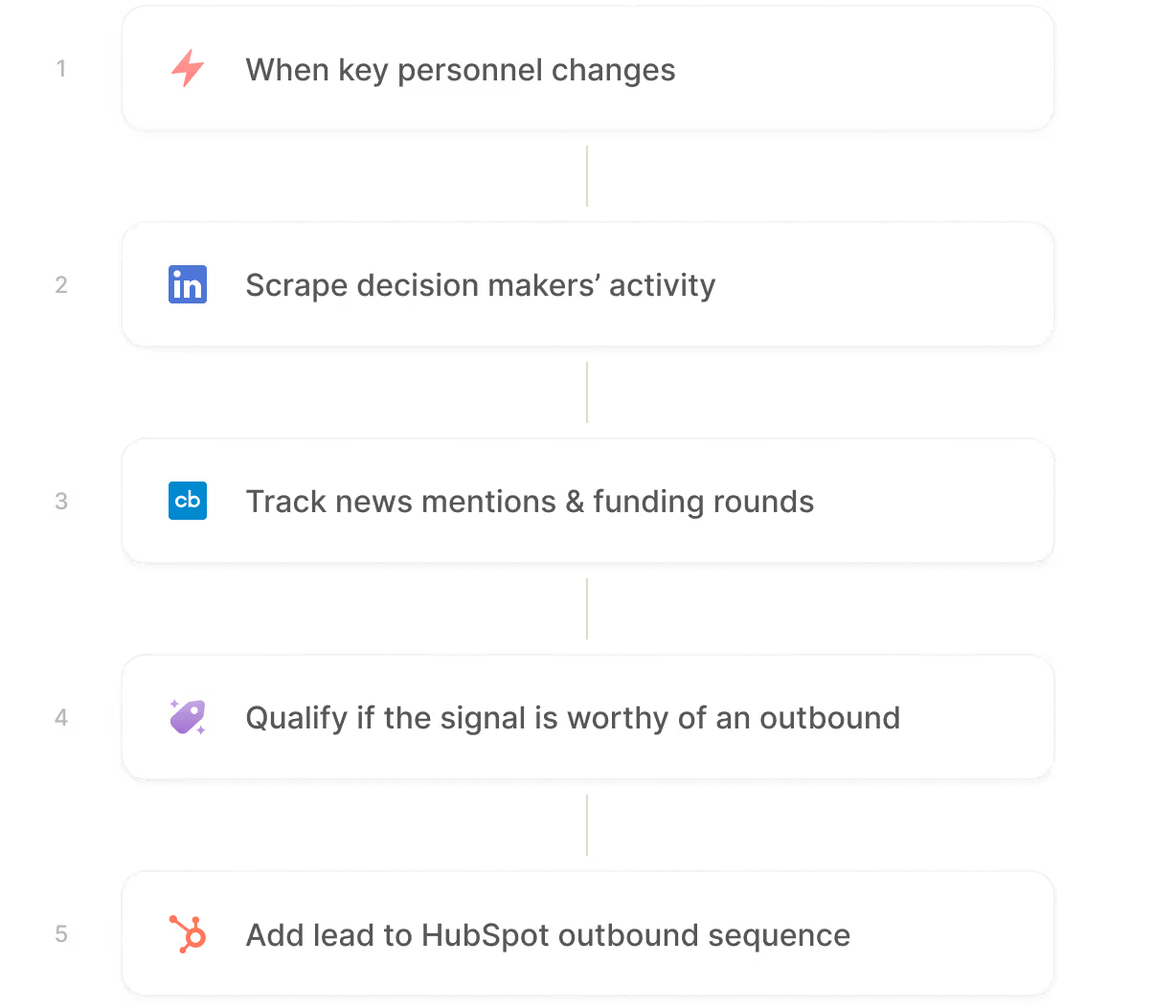
Information is changing all the time. With an AI sales agent, sales teams can automate research updates by setting up recurring accuracy checks. This ensures everyone has the important details in real time.
Is competitor pricing important to your sales process? You can use this playbook to check for changes:
How does this playbook work?
Gathering pricing data from websites is time-consuming. This playbook uses AI to scan company sites from a Google Sheet, extracting pricing info and updating the sheet automatically.
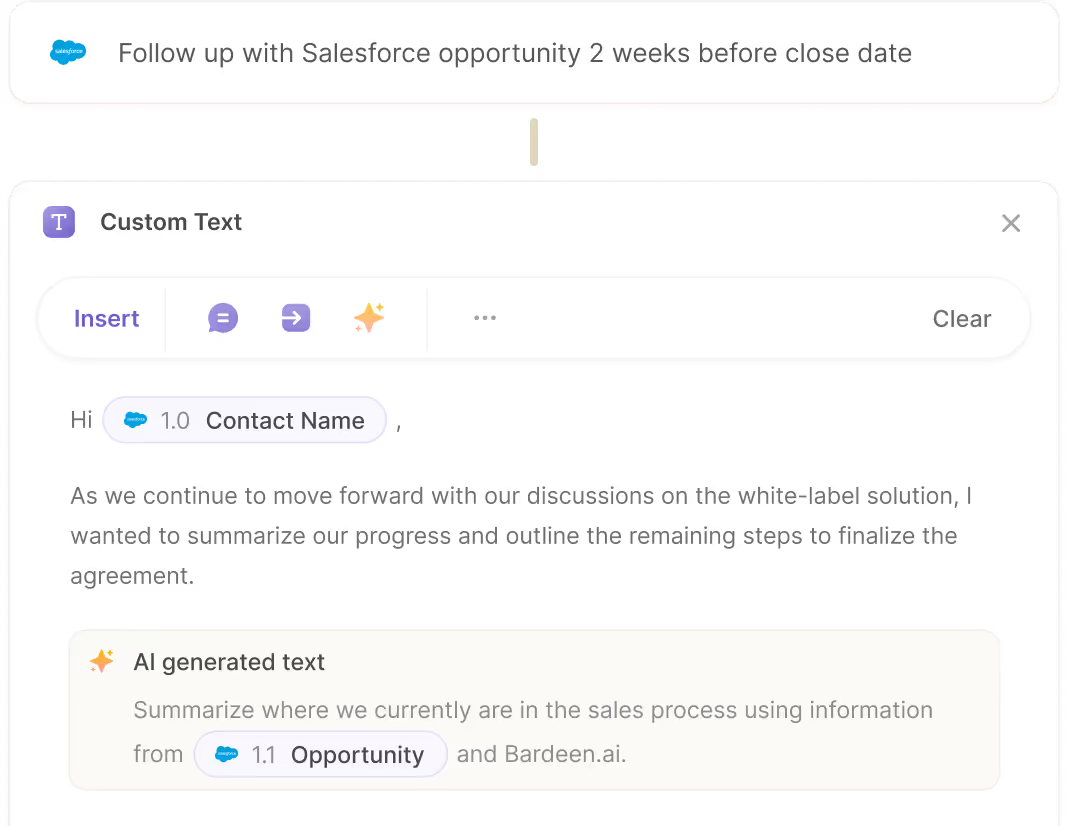
As you can see, Bardeen takes into account each individual use case and offers a fully customizable step-by-step playbook. From prospecting qualified leads and data scraping, to outreach personalization, meeting synthesizing, and preparing for sales calls.
Are event reminders becoming a necessity, or do you just want to simplify event notifications?
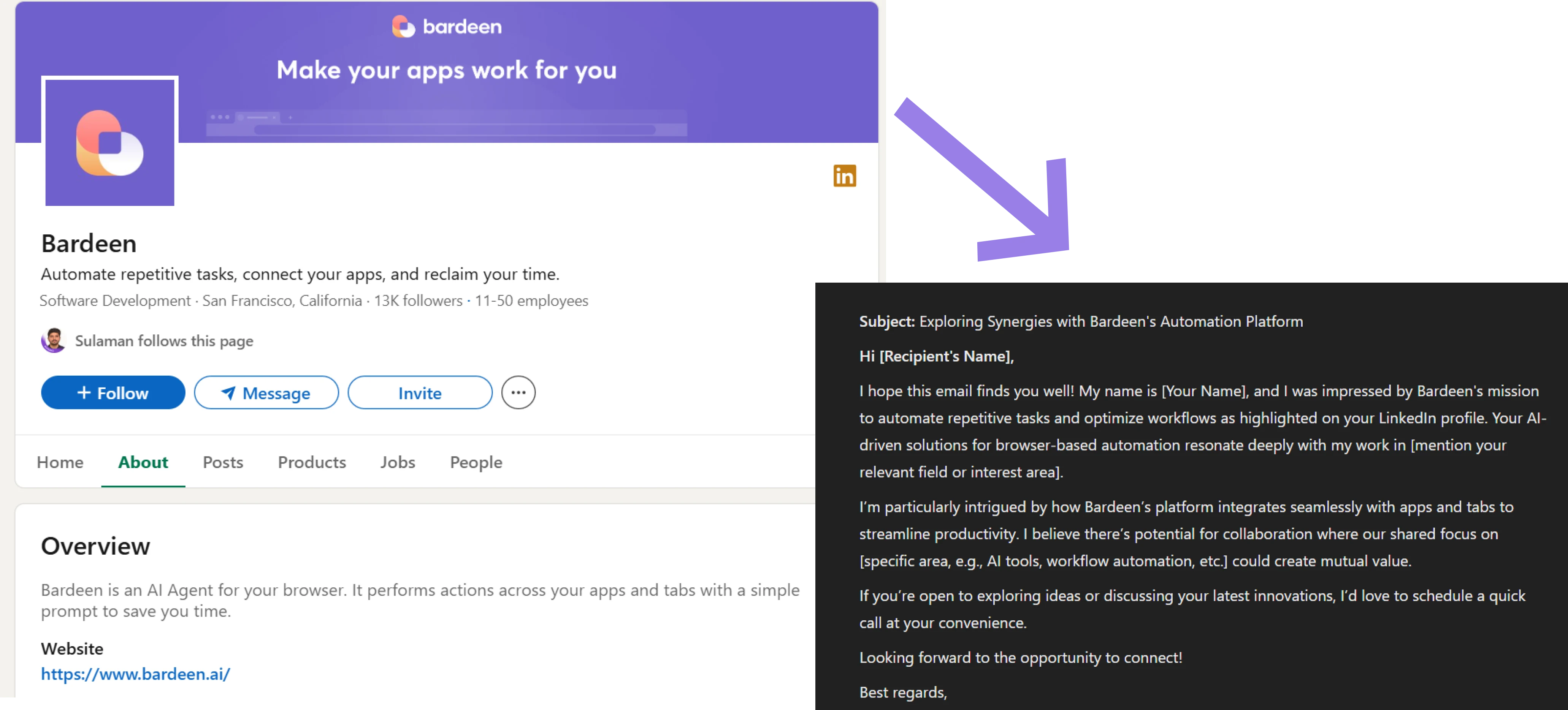
Then, how about simplifying email outreach campaigns? Using the OpenAI integration, generating optimized email drafts just got a lot easier.
How does this playbook work?
Crafting personalized sales emails is time-consuming. This playbook generates a tailored outreach email from a LinkedIn profile, pulling in enriched data about the person and their company, and saves it as a Gmail draft.
Bardeen integrates with many tools commonly used by salespeople, and some are probably already part of your workflow:
With the performance of sales teams top of mind, Bardeen can generate a variety of solutions to help clean up inefficient, repetitive processes!
If you’ve still got questions about AI sales agents, we’ve got you covered. Here are some common concerns people have surrounding the topic:
The list of people who could benefit from an AI sales agent is vast. Some prime candidates include:
They typically use browser agents to perform tasks such as:
Workflow efficiency is improved by connecting apps you use day-to-day. There are plenty you can consider, you just have to download Bardeen and get started for free.
Each AI agent on the market has pros and cons. In the end, the “best” AI agent depends on the user's specific use case, team size, and other variables.
Currently, three main types of AI web agents operate in the artificial intelligence landscape:
Multi-agent systems - products that integrate with more than one third-party application to create a “one-stop shop” environment for users who have varying operations to automate. Bardeen is a multi-agent system.
Before we can tackle what a GPT agent is, we must first learn what ‘GPT’ is. Short for ‘Generative Pre-trained Transformers’, it’s a family of neural network models. These models provide applications the function to create human-like text, content, and other media, and to use data available to improve on that function.
A GPT agent then, is a program that uses AI to write words or create media for you based on what you ask. The most popular is ChatGPT. Here, users input prompts that cause the interface to scour the internet for content that answers the users requests.
ChatGPT has several plugins users can use for content creation. Take a look at some of the best ChatGPT plugins available.
Like AI web agents, a search engine (such as Google) needs input from the user in the form of a keyword, question, or phrase being typed into the search bar. Unlike an AI web agent, search engines are more limited.
Specifically, they only provide a results page, or an index with links to websites based on closed rules the user cannot create or modify. While agents are customizable and have a wide range of functions, such as:
ChatGPT is a language model created by OpenAI that specializes in text-based interaction. Users input text prompts and it generates responses based on pre-programmed data. An AI agent is more broad in terms of functionality.
It can refer to any AI system or program that is designed to perform a task via the web. There are many use cases for ChatGPT and connections between OpenAI and tools such as LinkedIn, plus many others.
A chat bot has a limited script of responses that are very specific to the business. For example, a chat bot can help with pre-determined customer service questions. It can be assisting customers with using an e-commerce website to purchase goods, for example.
It’s important to consider that when a chat bot is connected to AI, it can be similar in functionality to ChatGPT. This is because it also learns and generates tailored responses based on user input.
However, the primary difference is that a chatbot’s range of accepted parameters is limited to one thing. Versus a more general application of an AI web agent like ChatGPT that can provide content on any query about any topic or brand.
Moral of the story: AI sales teams and individual salespeople can save precious time and resources. Whoever is weighed down with redundant and mundane tasks in their operational workflows can just apply the use of an AI sales agent (or multiple).
When used as one of the tools for outreach, chances are it will result in a significant and measurable productivity boost your boss will definitely notice.
Yearning to automate your team’s workflows? Bardeen can help with that as soon as you download the Chrome extension. Our product offers plans suitable for teams of all sizes, so go ahead and explore today.







SOC 2 Type II, GDPR and CASA Tier 2 and 3 certified — so you can automate with confidence at any scale.