Sending bulk emails is a powerful way to reach a large audience and drive engagement with your brand. Pipedrive, a popular CRM tool, offers robust features for creating and managing effective bulk email campaigns. In this step-by-step guide, we'll walk you through the process of setting up, crafting, and analyzing bulk emails in Pipedrive to maximize your outreach and achieve your marketing goals.
Understanding the Basics of Bulk Emailing in Pipedrive
Bulk emailing is the process of sending the same email to multiple recipients simultaneously. In Pipedrive's CRM ecosystem, this feature allows you to effectively communicate with a large group of contacts, saving time and effort compared to sending individual emails.
Bulk emails can be used for various marketing strategies and customer engagement purposes, such as:
Newsletters and updates
Promotional offers and discounts
Event invitations and reminders
Surveys and feedback requests
By leveraging bulk emailing, you can streamline your communication efforts, ensure consistent messaging across your audience, and nurture relationships with your contacts at scale. Pipedrive's bulk emailing features integrate seamlessly with its CRM functionalities, allowing you to segment your audience, personalize your messages, and track the success of your email campaigns.
Setting Up Your Pipedrive for Bulk Email Campaigns
Before you can start sending bulk emails in Pipedrive, you need to set up your account and configure the necessary settings. Here are the steps to get started with Pipedrive automation:
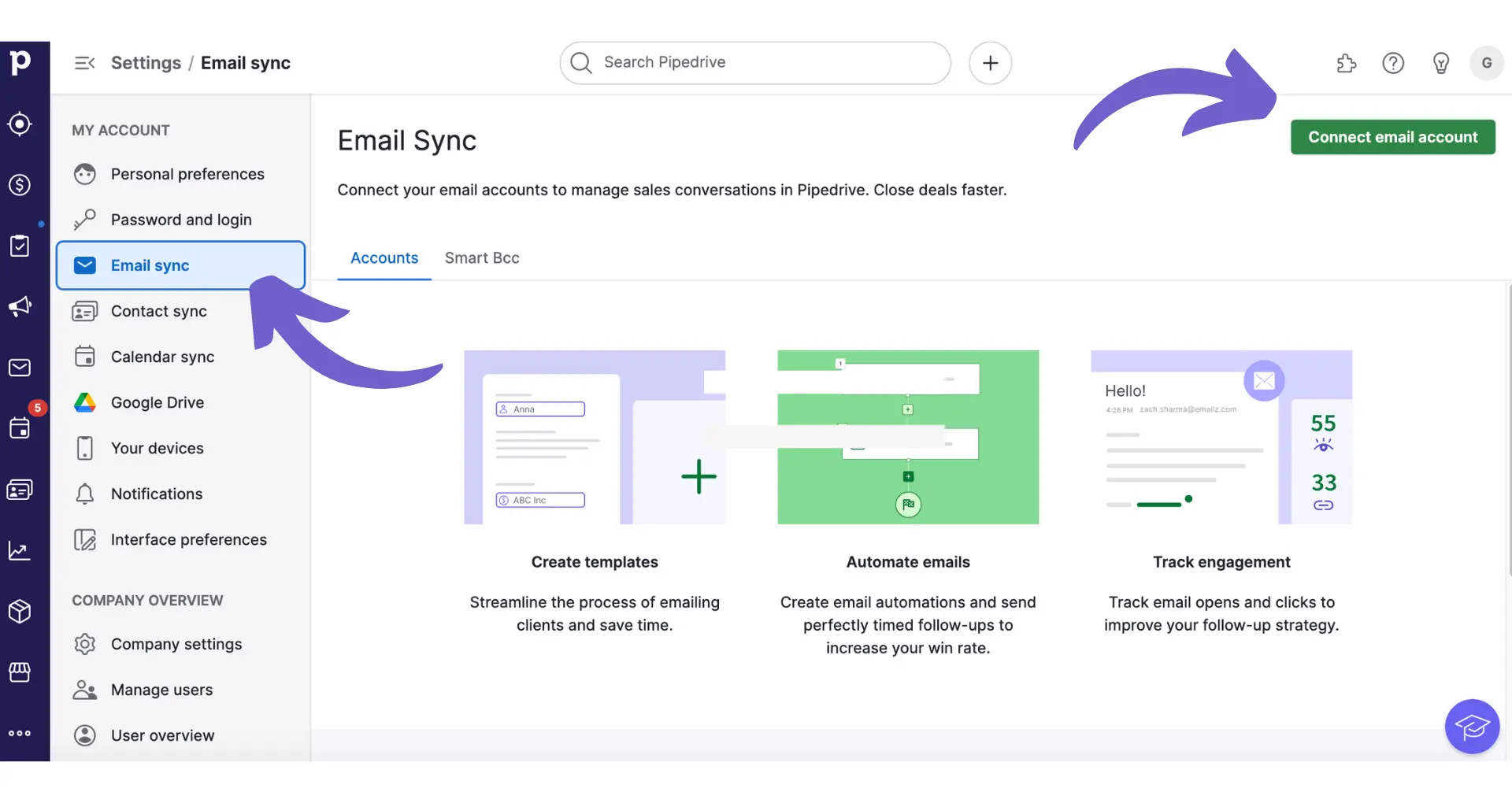
Sync your email account with Pipedrive by going to your Personal Preferences and selecting "Email sync". Click "Add new account" and provide your email login credentials.
Choose your email sync conditions, such as the labels to sync emails from and the date to begin syncing.
Decide whether to sync past emails or start with an empty inbox. You can choose to sync emails from the past 1 month, 3 months, 6 months, or 1 year, and select whether to sync emails from all people or only Pipedrive contacts.
Once your email account is synced, it's crucial to configure your email templates and ensure compliance with email marketing laws like the CAN-SPAM Act. This includes providing an unsubscribe option, clearly identifying your business as the sender, and including your physical address in the email footer.
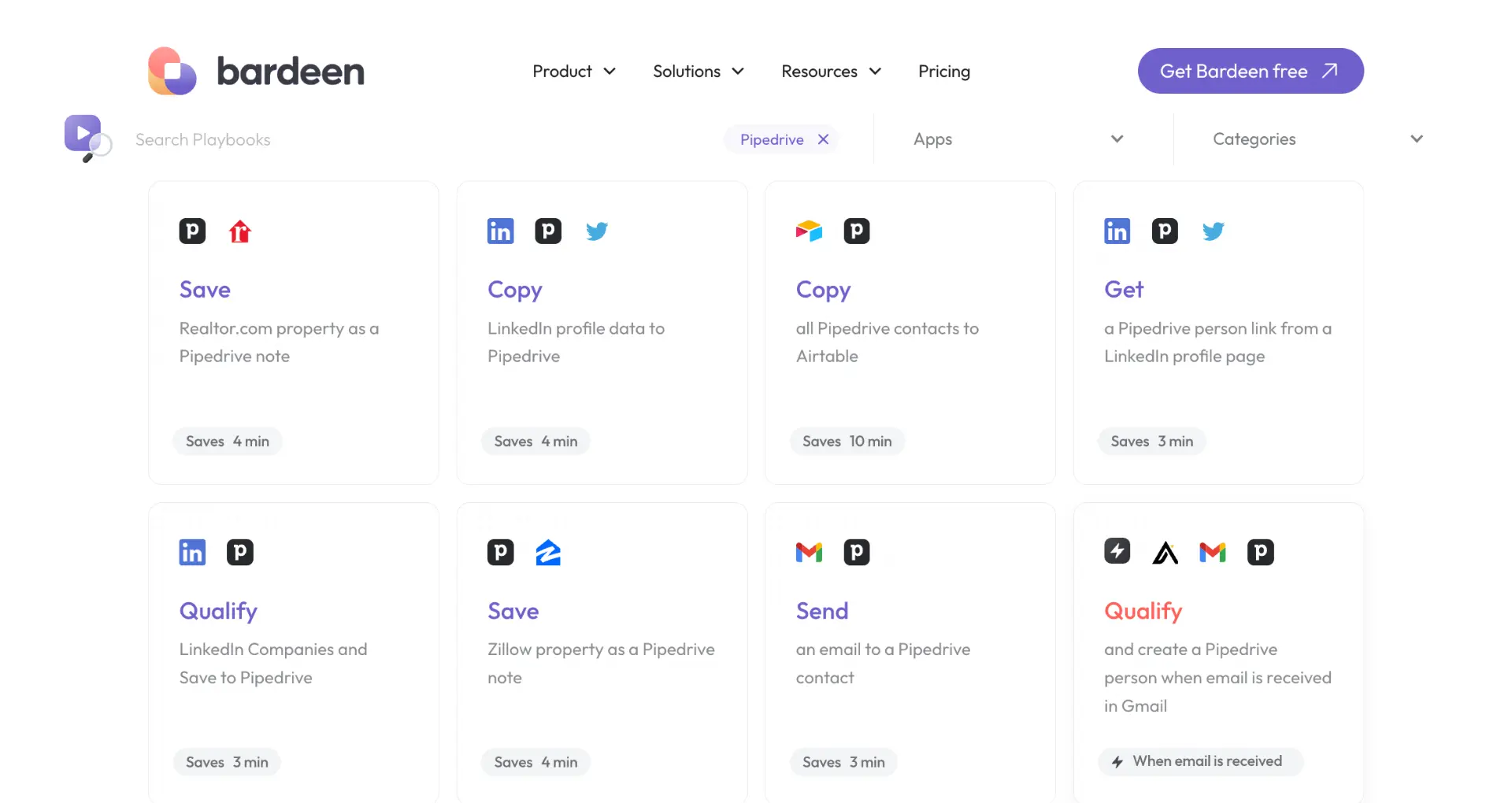
Bardeen can help automate these repetitive tasks in Pipedrive. Email Pipedrive contact in one click, saving you time for more important tasks.
By setting up your Pipedrive account correctly and adhering to legal requirements, you'll be well-prepared to launch successful bulk email campaigns that engage your audience and drive results.
Crafting Effective Email Content for Bulk Campaigns
Writing clear, concise, and persuasive subject lines that entice recipients to open your emails. Keep them under 50 characters and avoid spam trigger words.
Personalizing your email content based on recipient preferences, behaviors, and past interactions with your brand. Use segmentation to deliver targeted, relevant messages.
Highlighting the value proposition and benefits of your offer upfront, addressing the recipient's pain points or desires.
Using a conversational, friendly tone that resonates with your target audience and aligns with your brand voice.
Incorporating visually appealing elements like images, videos, and infographics to break up text and enhance engagement.
Including a clear, prominent call-to-action (CTA) that guides recipients towards the desired action, such as making a purchase or signing up for a webinar.
Segmenting Your Audience in Pipedrive for Targeted Outreach
Pipedrive's segmentation feature allows you to categorize your contacts into different groups based on specific criteria, enabling targeted email campaigns that improve success rates.
To segment your audience in Pipedrive:
Use the customizable filtering tool to split contacts into subgroups based on common fields in their deals, leads, contacts, activities, and products (person filters).
Apply multiple filters to send emails to contacts that meet multiple sets of criteria, or filter out certain characteristics to exclude contacts.
Select filters based on campaign data, such as titles, send dates, interactions, and subscription dates of campaigns sent to contacts.
If campaign tracking is enabled, group subscribers by when they opened your campaigns, how often, and how much they clicked on embedded email links.
Combine person filters with campaign-specific data filters to further narrow down contact subgroups for ultra-targeted campaigns.
By effectively segmenting your audience, you can:
Deliver relevant, personalized content to each group, increasing engagement and conversions.
Avoid sending irrelevant emails that may be marked as spam or ignored.
Build stronger relationships with subscribers by demonstrating an understanding of their needs and preferences.
Optimize your email marketing efforts and resources by focusing on the most receptive and valuable segments.
Pipedrive's intuitive segmentation tool, combined with its CRM data and email marketing features, enables you to create highly targeted campaigns without the need for additional plugins, integrations, or technical skills.
Automating your bulk emails offers several advantages:
Ensures timely and consistent communication with your contacts, nurturing leads and keeping them engaged.
Reduces manual effort and human error, allowing you to focus on other aspects of your business.
Enables you to create targeted, personalized email sequences based on specific actions or characteristics of your contacts.
When scheduling your bulk emails, consider the following strategies:
Analyze your email campaign data to identify the best times and days to send emails for optimal open and click-through rates.
Segment your audience based on their time zones to ensure emails are delivered at the most convenient times for each group.
Experiment with different sending frequencies and intervals to find the right balance between maintaining contact and avoiding oversaturation.
Use A/B testing to compare the performance of different sending times and adjust your scheduling accordingly.
By leveraging Pipedrive's automation and scheduling capabilities, you can create efficient, data-driven bulk email campaigns that maximize your outreach efforts and drive better results for your business.
Analyzing and Optimizing Email Campaigns Post-Delivery
Once your bulk email campaign has been delivered, it's crucial to analyze its performance and optimize future campaigns based on the insights gained. Pipedrive's CRM platform provides a range of tools and metrics to help you track and interpret the success of your email marketing efforts.
Key metrics to monitor include:
Open rates: The percentage of recipients who opened your email, indicating the effectiveness of your subject line and sender reputation.
Click-through rates (CTR): The percentage of recipients who clicked on links within your email, showing engagement with your content.
Bounce rates: The percentage of emails that couldn't be delivered, either due to invalid email addresses or server issues.
Unsubscribe rates: The number of recipients who opted out of future emails, which can help you gauge the relevance and value of your content.
Pipedrive's email analytics dashboard provides a comprehensive overview of these metrics, allowing you to track performance over time and identify trends. You can also segment your data by various factors, such as recipient location or engagement level, to gain deeper insights into your audience's behavior.
To optimize future campaigns based on these insights, consider the following strategies:
A/B test subject lines, sender names, and email content to identify the elements that resonate best with your audience.
Segment your email list based on engagement levels and tailor your content and sending frequency accordingly.
Experiment with different sending times and days to determine when your audience is most receptive to your messages.
Regularly clean your email list to minimize bounce rates and maintain a healthy sender reputation.
By continuously analyzing and refining your email campaigns using Pipedrive's tools and insights, you can improve your email marketing performance and drive better results for your business.
Best Practices and Common Pitfalls in Bulk Email Marketing
To ensure the success of your bulk email campaigns, it's essential to adhere to best practices and avoid common pitfalls. By following these guidelines, you can maintain a positive reputation, improve email deliverability, and maximize the impact of your email marketing efforts.
Best practices include:
Maintaining a clean mailing list by regularly removing inactive subscribers and invalid email addresses.
Obtaining explicit consent from recipients before adding them to your mailing list.
Regularly testing email elements such as subject lines, content, and calls-to-action to optimize email performance.
Personalizing emails whenever possible to increase relevance and engagement.
Optimizing emails for mobile devices to ensure a seamless user experience across all platforms.
Common pitfalls to avoid:
Over-emailing subscribers, which can lead to increased unsubscribe rates and damage your sender reputation.
Neglecting to segment your email list, resulting in generic, irrelevant content for recipients.
Failing to include an unsubscribe link or making the unsubscribe process difficult, which can frustrate subscribers and violate email marketing regulations.
Using misleading or spammy subject lines that erode trust and harm your brand's credibility.
Ignoring email analytics, which prevents you from identifying areas for improvement and optimizing future campaigns.
By adhering to these best practices and steering clear of common mistakes, you can establish a strong foundation for your bulk email marketing strategy. This approach will help you build trust with your subscribers, improve email deliverability, and ultimately drive better results for your business.