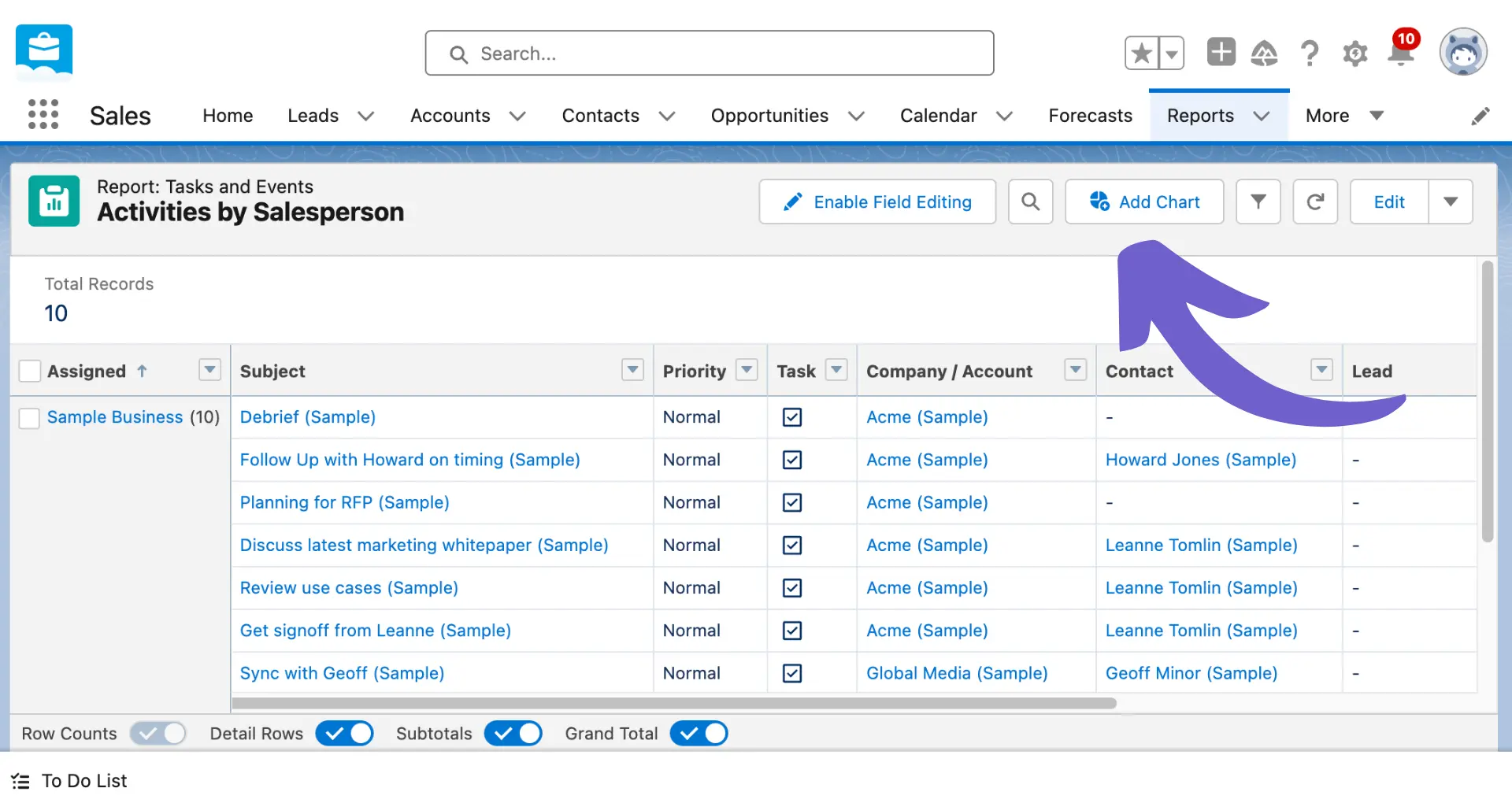
When Salesforce users encounter the 'Add Chart' option being greyed out, it can be a source of frustration and confusion. This issue typically arises within the Salesforce Lightning interface, particularly when attempting to add charts to reports. Understanding the root causes and solutions for this problem is essential for users seeking to leverage Salesforce's robust reporting and visualization capabilities effectively. This article will explore the reasons behind this issue and provide clear, actionable solutions to resolve it.
The 'Add Chart' option in Salesforce may be greyed out due to several reasons, each relating to the specific configurations and states of the Salesforce environment or the report in question. These reasons range from the type of report being viewed, the permissions of the user, to the setup of the Salesforce Lightning environment itself.
One common reason for encountering a greyed-out 'Add Chart' button is the type of report being worked on. Salesforce allows charts to be added to reports that are saved and have a tabular format. If the report is unsaved or not in a tabular format, the option to add a chart will not be available. Additionally, user permissions play a crucial role; users need the appropriate permissions to create and modify reports and dashboards.
In the Salesforce Lightning environment, the issue may also stem from the setup or configuration of the interface. Salesforce Lightning is designed to offer a more dynamic and interactive experience, including enhanced reporting features. However, if the Lightning Experience isn't fully enabled or properly configured for the user's profile, it could limit the ability to add charts to reports.
While addressing the 'Add Chart' issue, consider exploring automating Salesforce by integrating with other apps for a more streamlined and efficient workflow.
To resolve the issue of a greyed-out 'Add Chart' button in Salesforce Lightning, particularly when trying to add a chart to a report, users should follow these steps:
Unlock the full potential of Salesforce's reporting and visualization tools by downloading the Bardeen app and exploring our Salesforce automations and shortcuts.

By systematically addressing these areas, users can effectively troubleshoot and resolve the issue of a greyed-out 'Add Chart' button in Salesforce, thereby unlocking the full potential of Salesforce's reporting and visualization tools.







SOC 2 Type II, GDPR and CASA Tier 2 and 3 certified — so you can automate with confidence at any scale.