If you're managing sensitive data, you might love Bardeen's AI tools for Google Sheets. They help automate security settings and save time.
Protecting sensitive data in Google Sheets is crucial for maintaining privacy and security. In this step-by-step guide, we'll show you how to prevent others from downloading your Google Sheets files by adjusting permissions and utilizing built-in features. By the end of this guide, you'll have a solid understanding of how to keep your data secure and control access to your Google Sheets.
Understanding Google Sheets Permissions Structure
Google Sheets offers a robust permissions system that allows you to control who can access, view, and modify your spreadsheets. There are three main permission levels:
Viewer: Users with viewer permissions can only view the contents of the spreadsheet. They cannot make any changes, add comments, or download the file.
Commenter: Commenters have the same permissions as viewers, but they can also add comments to the spreadsheet. However, they still cannot make any direct changes to the content or download the file.
Editor: Editors have full control over the spreadsheet. They can view, modify, and delete content, as well as download, print, and copy the document.
As the owner of a Google Sheets document, it's crucial to understand how each permission level impacts the ability of others to interact with your spreadsheet. By carefully assigning the appropriate roles to collaborators, you can maintain data integrity, protect sensitive information, and integrate Google Sheets with other apps for better control.
Setting Up Advanced Sharing Settings
To set up advanced sharing settings in Google Sheets, start by clicking the "Share" button located in the top right corner of your spreadsheet. This will open a new window where you can manage access to your document.
Next, click on the "Advanced" link at the bottom right of the sharing window. This will reveal additional options for fine-tuning your sharing settings.
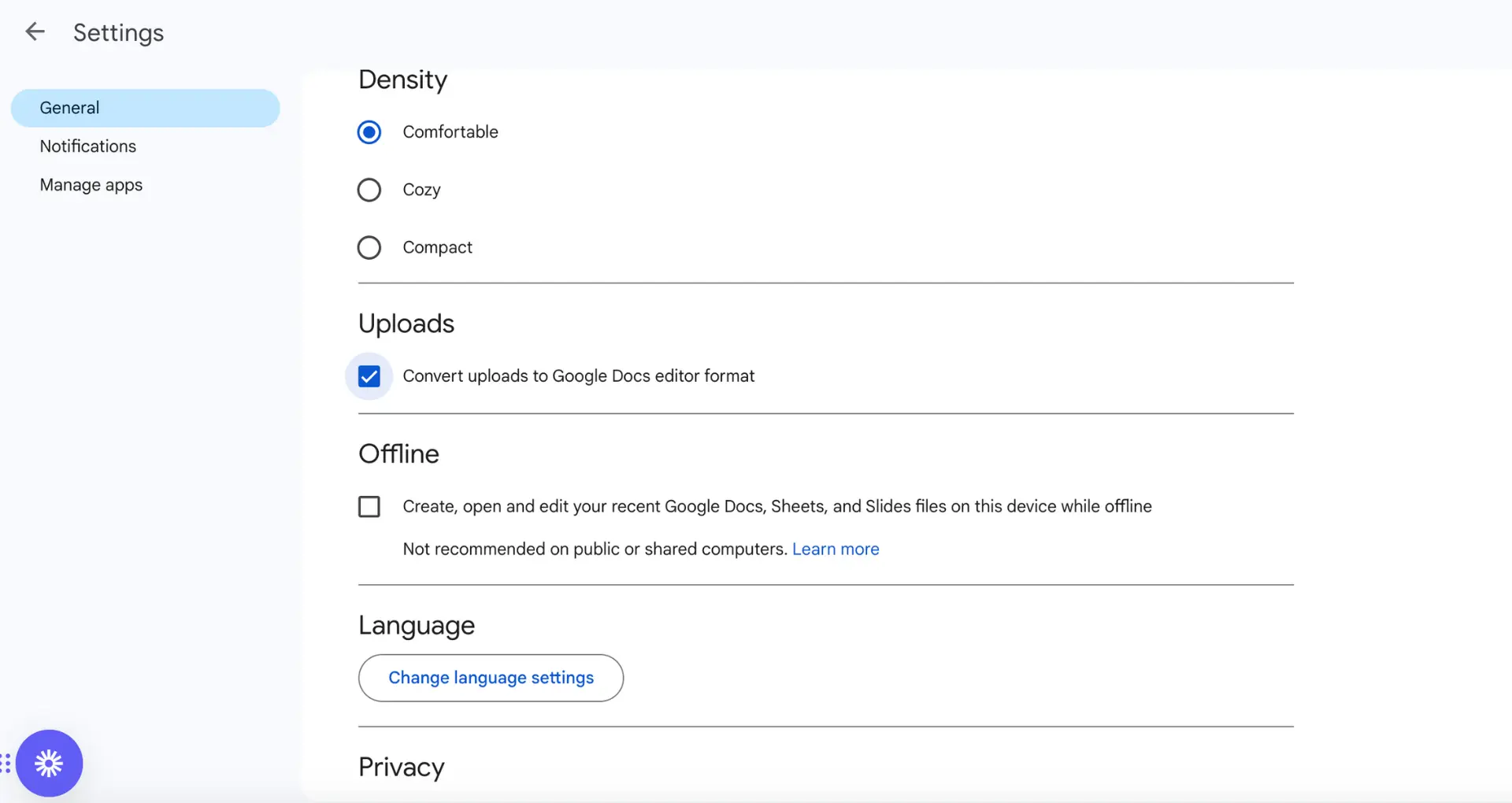
To prevent editors from changing access permissions, uncheck the box next to "Editors can change permissions and share."
To restrict viewers and commenters from downloading, printing, or copying the document, uncheck the box next to "Viewers and commenters can see the option to download, print, and copy."
Once you have adjusted these settings, click "Done" to save your changes. Your Google Sheets document will now have the desired restrictions in place, ensuring that only authorized users can modify permissions or download the file.
By taking advantage of these advanced sharing settings, you can maintain greater control over your data and protect sensitive information from unauthorized access or distribution. For more advanced features, consider adding ChatGPT to Google Sheets.
Employing Sheet and Range Protection
To further secure your data in Google Sheets, you can use the "Protected sheets and ranges" feature. This allows you to restrict editing access to specific parts of a sheet or an entire sheet.
To protect a sheet or range:
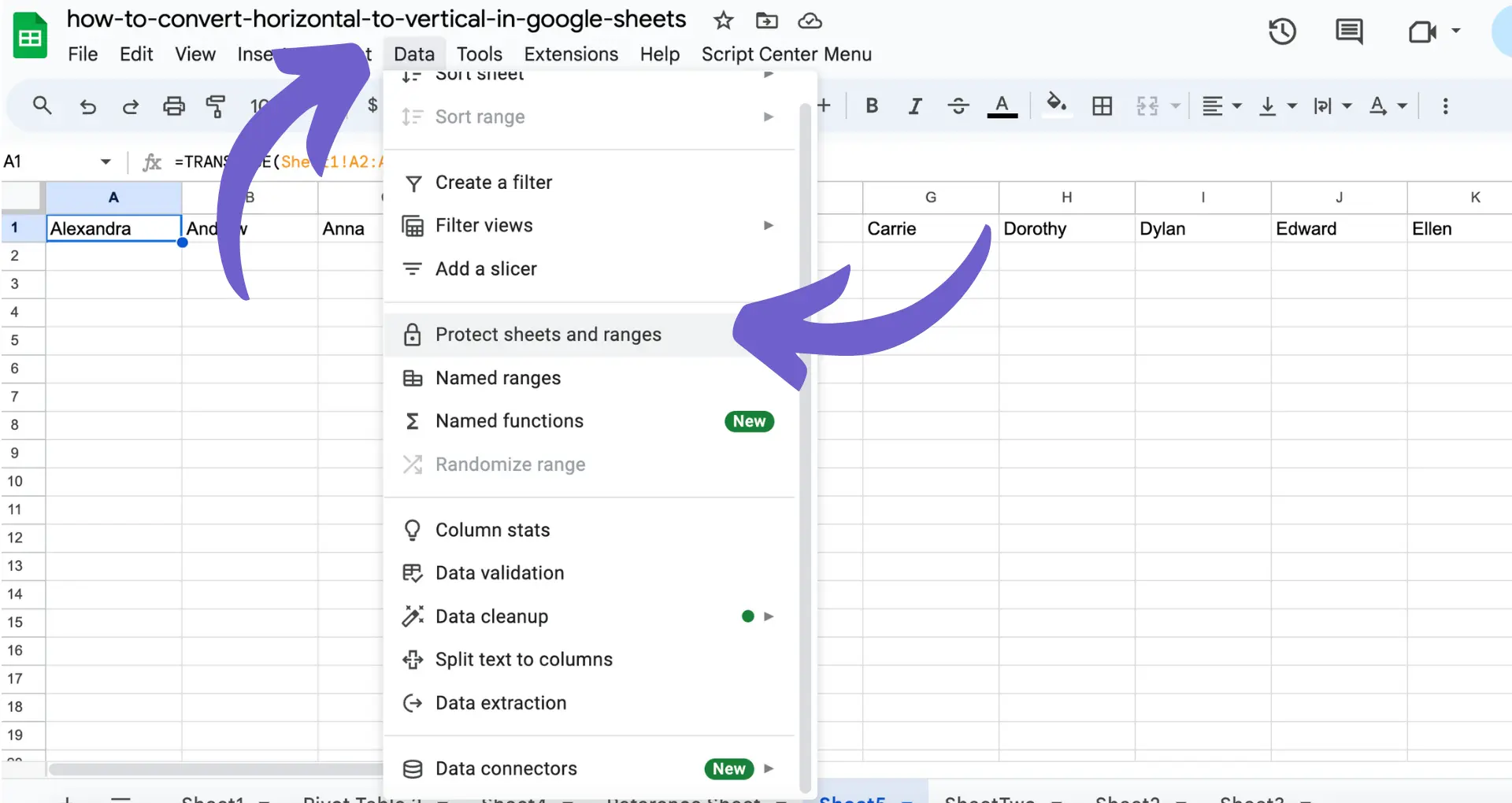
Open your Google Sheets document and click on "Data" in the menu bar.
Select "Protect sheets and ranges" from the dropdown menu.
In the panel that appears on the right, click "Add a sheet or range" to create a new protection, or click an existing protection to edit it.
Choose whether you want to protect a specific range of cells or an entire sheet.
Set the desired permissions by deciding who can edit the protected area. You can choose to show a warning when someone tries to edit, or restrict editing to specific people or groups.
Click "Done" to save your protection settings.
By setting permissions for individual ranges or entire sheets, you can control who has editing access to specific parts of your document. This is particularly important when working with sensitive data or collaborating in Google Docs.
Remember, sheet and range protection should be used in conjunction with the advanced sharing settings to ensure maximum data security in your Google Sheets.
Utilizing Google Drive File Restrictions
Google Drive's file settings can work hand-in-hand with Google Sheets to prevent unauthorized downloads at the drive level. By adjusting these settings, you can restrict downloading and sharing of your Google Sheets files.
To restrict downloading and sharing in Google Drive:
Open Google Drive and locate the file or folder you want to restrict.
Right-click the file or folder and select "Share."
In the sharing window, click the "Advanced" button in the bottom right corner.
Under "Who has access," click "Change" next to the current setting.
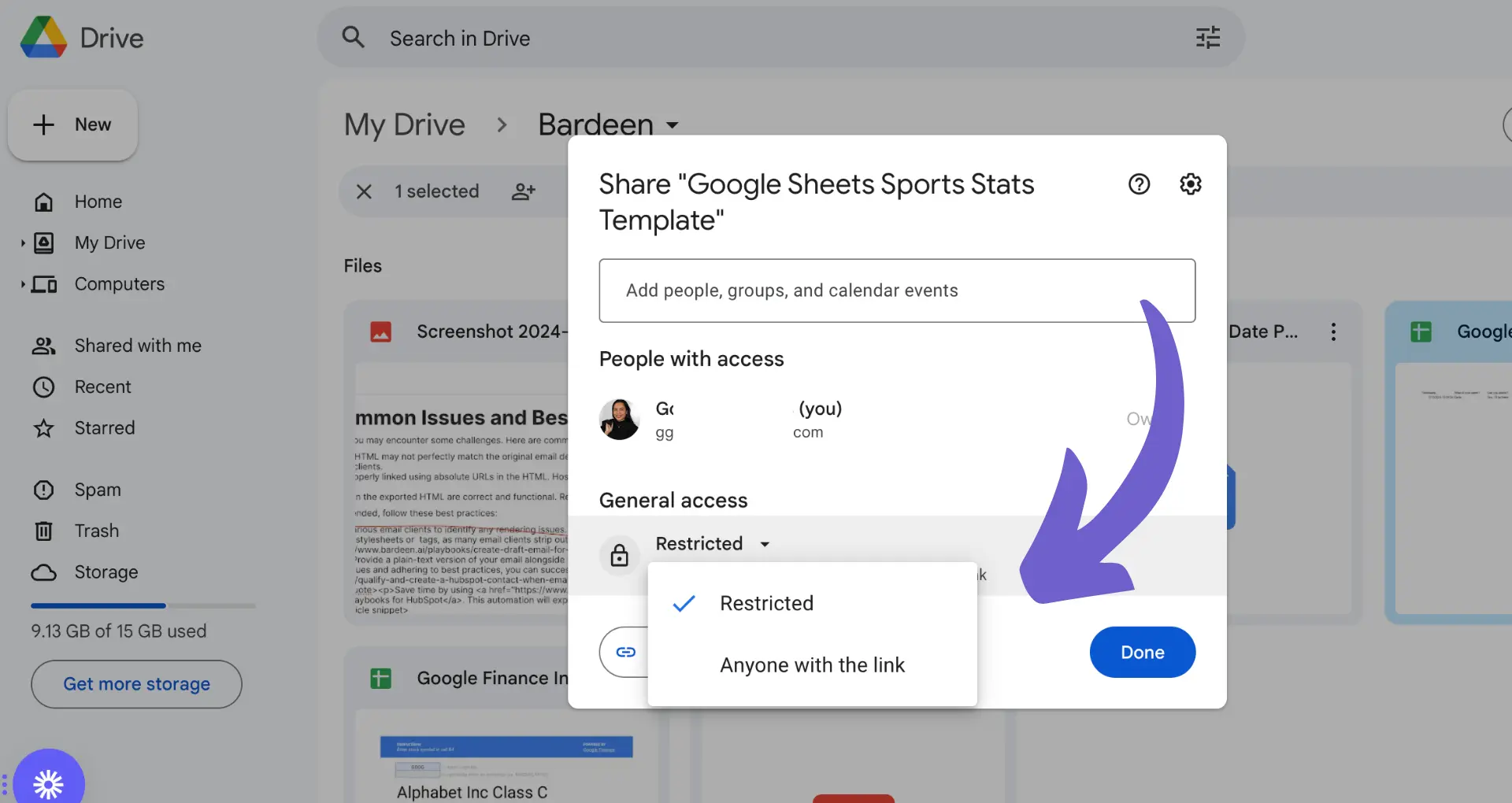
Select "Restricted" to limit access to specific people or groups.
Click "Save" to apply the changes.
You can also adjust individual file settings by selecting a file, clicking the three-dot menu in the top right corner, and choosing "Share." From there, you can modify the sharing settings for that specific file.
By utilizing Google Drive's file restrictions, you can add an extra layer of security to your Google Sheets documents, ensuring that only authorized individuals can download or share your files. For more advanced data management, consider using Excel integrations to automate workflows.
Best Practices for Maintaining Data Security in Google Sheets
To ensure maximum data security in Google Sheets, it's essential to combine the built-in security features of both Google Sheets and Google Drive. Here are some best practices to follow:
Set appropriate access levels for each user, granting only the necessary permissions (Viewer, Commenter, or Editor) based on their role and need for access.
Use the Protected sheets and ranges feature to restrict editing access to specific parts of a sheet, ensuring that sensitive data remains secure.
Regularly review and update permissions, especially when team members change roles or leave the organization.
Utilize Google Drive's file-level restrictions to prevent unauthorized downloading, printing, or copying of your Google Sheets files.
Educate your team members on data security best practices, such as not sharing sensitive information via email or with unauthorized individuals.
Remember, the sensitivity of the data should dictate the level of security measures you put in place. By combining Google Sheets and Google Drive security settings and regularly reviewing and updating permissions, you can significantly reduce the risk of data breaches and maintain a high level of data security. For more efficiency, consider using tools to automate data security processes.

SOC 2 Type II, GDPR and CASA Tier 2 and 3 certified — so you can automate with confidence at any scale.
Frequently asked questions
What is Bardeen?
Bardeen is an automation and workflow platform designed to help GTM teams eliminate manual tasks and streamline processes. It connects and integrates with your favorite tools, enabling you to automate repetitive workflows, manage data across systems, and enhance collaboration.
What tools does Bardeen replace for me?
Bardeen acts as a bridge to enhance and automate workflows. It can reduce your reliance on tools focused on data entry and CRM updating, lead generation and outreach, reporting and analytics, and communication and follow-ups.
Who benefits the most from using Bardeen?
Bardeen is ideal for GTM teams across various roles including Sales (SDRs, AEs), Customer Success (CSMs), Revenue Operations, Sales Engineering, and Sales Leadership.
How does Bardeen integrate with existing tools and systems?
Bardeen integrates broadly with CRMs, communication platforms, lead generation tools, project and task management tools, and customer success tools. These integrations connect workflows and ensure data flows smoothly across systems.
What are common use cases I can accomplish with Bardeen?
Bardeen supports a wide variety of use cases across different teams, such as:
Sales: Automating lead discovery, enrichment and outreach sequences. Tracking account activity and nurturing target accounts.
Customer Success: Preparing for customer meetings, analyzing engagement metrics, and managing renewals.
Revenue Operations: Monitoring lead status, ensuring data accuracy, and generating detailed activity summaries.
Sales Leadership: Creating competitive analysis reports, monitoring pipeline health, and generating daily/weekly team performance summaries.