This automation streamlines the process of exporting performance reports from Pipedrive to Google Sheets, making it easier to analyze sales data and share insights with your team.
The workflow begins by fetching deals from Pipedrive based on a specified filter. A descriptive title for the performance report is created, incorporating the Pipedrive filter used. Finally, the generated performance report, including the title and the deals data, is appended to the specified Google Sheet. This is particularly useful for:
Note: This workflow can be customized to match specific reporting needs by modifying the Pipedrive filter or adjusting the format of the Google Sheets output.
Enhance your sales reporting and analysis by automating the export of Pipedrive performance reports directly into Google Sheets with Bardeen.
To start, ensure you have the Bardeen app installed on your device.
Open the Magic Box in the Bardeen app and input the following command:
Export Pipedrive performance, Add report to Google Sheets
Set up the required integrations for the workflow. This involves connecting Pipedrive as the source for fetching performance data and Google Sheets as the destination for the report.
Execute the workflow to automate the process. The steps involved are:
Integrating Pipedrive with Google Sheets opens a world of possibilities for sales teams and managers. It allows for the seamless export of performance reports and other CRM data directly into Google Sheets. This integration is pivotal for those looking to automate their workflow, enhance sales reporting, and make data-driven decisions without the hassle of manual data entry. By leveraging this integration, teams can save time, improve accuracy, and focus on strategies that drive sales performance.
Automate the export of Pipedrive performance reports to Google Sheets effortlessly with Bardeen, and enhance your sales analysis and reporting capabilities.
Automatically exporting Pipedrive reports to Google Sheets can be achieved through workflow automation tools like Bardeen. These tools fetch data based on specified filters from Pipedrive and append it to a Google Sheet. This process involves setting up an automation that begins with fetching deals from Pipedrive, creating a descriptive title for the report, and then appending this data to Google Sheets. This method is ideal for sales teams tracking performance or managers needing quick access to deal flow data.
For those looking to integrate Pipedrive with Google Sheets, several tools and platforms offer seamless integration. Coupler.io and Flatly are popular choices that provide automated data export functionalities. These platforms allow users to schedule data exports, ensuring that the Google Sheet always has the latest data from Pipedrive. Additionally, users can filter the data they wish to export, making it easier to customize reports and analyses. Choosing the right tool depends on specific needs, such as the frequency of data refresh, the complexity of the reports, and the preferred level of automation.
To fully leverage the integration of Pipedrive with Google Sheets, it's crucial to regularly review and analyze the exported data. Use the data to identify trends, track sales performance, and make informed decisions. Additionally, consider creating custom dashboards within Google Sheets to visualize the data more effectively. Sharing these insights with your team can foster a data-driven culture, leading to improved sales strategies and outcomes.
Streamline your sales reporting process by automating the export of Pipedrive data to Google Sheets with Bardeen. Save time and gain valuable insights into your sales performance.
By automating the export of Pipedrive reports to Google Sheets, sales teams can focus more on selling and less on manual data processing, leading to improved efficiency and performance.
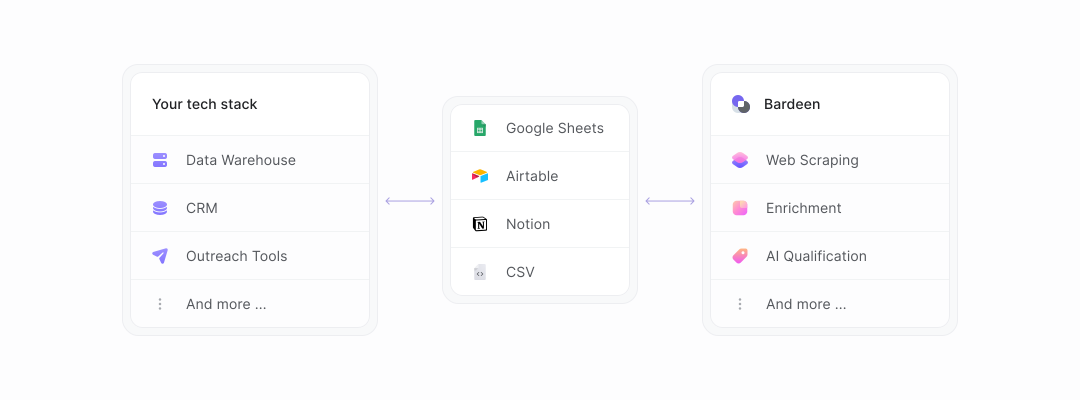
With our new Bardeen version, you can easily extract data from any website and discover new leads across the web. After extracting data from a website, use Bardeen’s powerful automation tools to validate and enrich your data, run additional scrapers on linked pages, or leverage AI to qualify leads and generate content automatically. Once your data is ready, you can easily export it to CSV, Google Sheets, Airtable, or Notion for further analysis and reporting.






SOC 2 Type II, GDPR and CASA Tier 2 and 3 certified — so you can automate with confidence at any scale.