
This automated workflow creates a new deal in HubSpot each time a new row is added to a specific Google Sheet, seamlessly integrating sales data between Google Sheets and HubSpot.
The process begins by monitoring a designated Google Sheet for new rows. When a new row is detected, the workflow extracts the necessary deal information such as deal name, amount, create date, close date, pipeline, deal stage, and any additional data provided. This extracted information is then used to create a new deal within HubSpot.
Note: This is ideal for sales teams looking to automate their lead management process, ensuring that every new potential deal captured in Google Sheets is immediately reflected in HubSpot without manual data entry.
By automating the process of adding new deals from Google Sheets to HubSpot, teams can save time, reduce errors, and ensure their sales pipeline stays up-to-date with minimal effort.
To start, install the Bardeen app on your device from here.
After installation, go to the Magic Box and enter the following prompt:
New Record in Google Sheets, Add deal to HubSpot
Make sure to configure the integrations required for this workflow. This includes Google Sheets for tracking new records and HubSpot for creating new deals.
With everything set up, execute the workflow. This process involves:
Integrating Google Sheets with HubSpot allows for the automatic transfer of data between the two platforms, streamlining the process of managing deals and ensuring that your sales pipeline is always up-to-date. This can be particularly useful for sales teams looking to automate their lead management process, eliminating the need for manual data entry and reducing the potential for errors. By setting up a workflow that automatically adds new deals from Google Sheets to HubSpot, teams can save time and increase their productivity.
Discover how Bardeen automates the process of adding new deals from Google Sheets to HubSpot, enhancing your sales team's efficiency.
To begin the integration process, you must first connect Google Sheets to your HubSpot account. This can be done through the HubSpot App Marketplace or directly within a workflow in your HubSpot account. Once connected, you can either create a new workflow or edit an existing one to include actions that send data from HubSpot properties to your Google Sheet. This setup allows for the seamless addition of new rows to your sheet whenever new data is available, ensuring that your Google Sheets and HubSpot account are always synchronized.
When configuring your workflow, it's important to properly format your Google Sheet to ensure that data is added accurately. The header row should start in the first column of the first row, and each column header must be labeled to match the HubSpot properties you wish to send data to. Additionally, to avoid any disruptions in your data flow, make sure that only populated, existing rows are referenced in your workflow actions. This ensures that any new data added to your Google Sheet does not interfere with existing data or formulas.
For those with an Operations Hub Professional subscription, you can further customize your workflow by formatting date properties into your desired format before they are added to your Google Sheet. This can be done by adding a 'Format data' action before the action that creates a new row in your Google Sheet. Additionally, to manage data more effectively, consider using actions that update existing rows in your Google Sheet rather than adding new ones, especially if you're working with a large amount of data that needs to be kept up-to-date.
Leverage Bardeen to automate your Google Sheets and HubSpot integration, ensuring your sales data is always synchronized and up-to-date.
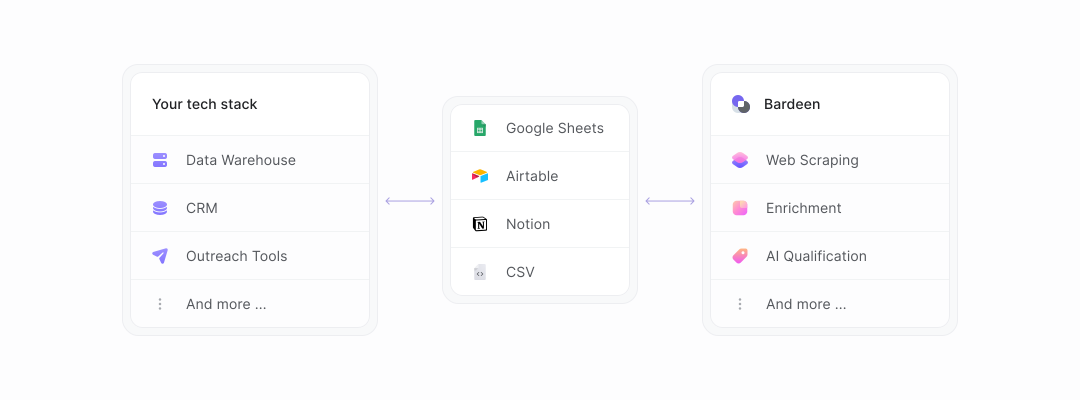
With our new Bardeen version, you can easily extract data from any website and discover new leads across the web. After extracting data from a website, use Bardeen’s powerful automation tools to validate and enrich your data, run additional scrapers on linked pages, or leverage AI to qualify leads and generate content automatically. Once your data is ready, you can easily export it to CSV, Google Sheets, Airtable, or Notion for further analysis and reporting.






SOC 2 Type II, GDPR and CASA Tier 2 and 3 certified — so you can automate with confidence at any scale.