Web scraping is an essential tool for data extraction, but finding the optimal speed can be challenging. Scraping too quickly may lead to IP bans, while going too slowly can be inefficient. In this article, we'll explore the best practices and guidelines for determining the ideal web scraping speed in 2024, focusing on rate limiting, advanced techniques, and tools to optimize your scraping process.
Rate limiting is a control mechanism used by websites to restrict the number of requests a user can make within a specific timeframe. It helps maintain server health and ensures fair usage for all users. When web scraping without code, it's crucial to respect rate limits to avoid IP bans and maintain continuous data access.

Here are some key benefits of adhering to rate limits:
To manage request rates effectively, consider the following strategies:
By implementing these techniques, you can ensure your web scraping process remains efficient and uninterrupted while respecting the website's rate limiting policies.
To further optimize your web scraping process, consider utilizing headless browsers. These browsers operate without a graphical user interface, reducing resource consumption and improving scraping speeds by not loading visual elements.
Proxy servers can also help mask your scraping activities and manage request rates. Different types of proxies, such as residential and rotating proxies, distribute the load across multiple IP addresses, reducing the risk of detection and rate limiting.
Adapting your scraping patterns is another effective technique. Here are some strategies to mimic human interaction and avoid being flagged as a bot:
By employing these advanced techniques and tools, you can significantly optimize your web scraping speeds while maintaining a low profile and minimizing the chances of detection.
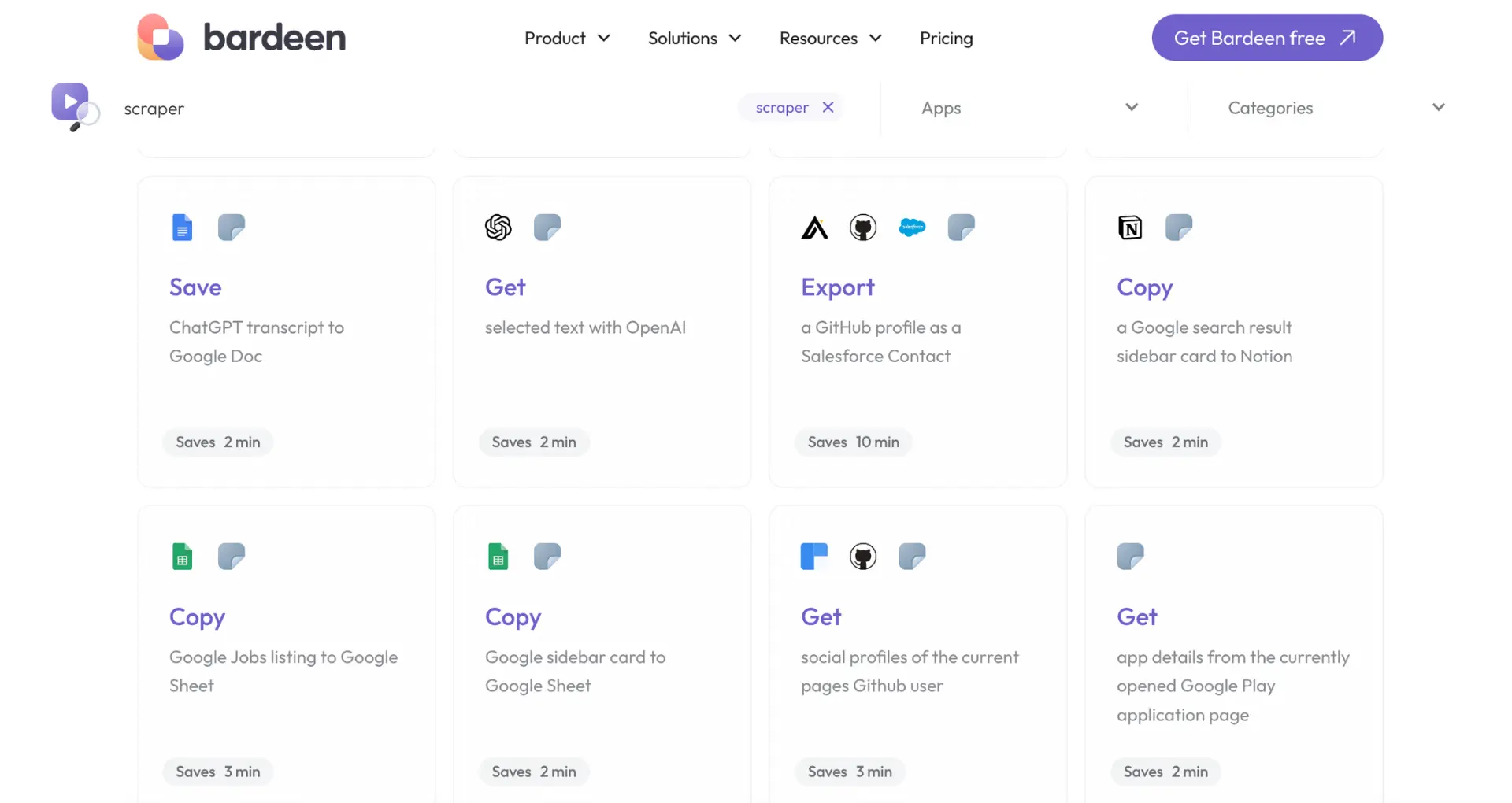
Bardeen's playbook for web scraping helps you save time and automate repetitive tasks with ease.









SOC 2 Type II, GDPR and CASA Tier 2 and 3 certified — so you can automate with confidence at any scale.