
This workflow automates the process of scraping data from Google Business Listings and saving it directly into a Google Sheet.
Firstly, the workflow uses a combined scraper model on your active browser tab to extract data from Google Business Listings. After scraping the necessary information, such as business names, addresses, and contact details, it then appends this data into a specified Google Sheet. This automation is especially useful for:
Note: The scraper model can be customized to target specific fields, making this workflow adaptable to various research needs.
With Bardeen, you can efficiently compile and organize data from Google Business Listings, streamlining your market research and outreach efforts.
To start, ensure you install the Bardeen app on your computer or device.
Open the Bardeen app and go to the Magic Box. Enter the following command:
Scrape Google Business Listings then save into Google Sheets
For this workflow, it's crucial to set up integrations with Scraper for collecting data and Google Sheets for data storage.
To execute, run the workflow. This process involves:
Understanding the landscape of local businesses is crucial for market research, competitor analysis, and lead generation. Google Business Listings, often found through Google Maps, are a goldmine for such data, offering insights into business names, addresses, contact details, and more. However, manually collecting this information can be time-consuming and inefficient. This is where the power of automation and scraping tools comes into play, significantly streamlining the process.
Automate the process of scraping and organizing data from Google Business Listings with Bardeen. Start now to save time and enhance your market research.
While there are various tools available for scraping Google Business Listings, including ProWebScraper and Google Map Extractor, these require setting up and often navigating through a learning curve. For those seeking a more direct and automated approach, integrating Google My Business data into Google Sheets can provide a seamless solution for real-time data analysis and storage.
Directly importing Google My Business data into Google Sheets is a game-changer for professionals looking to analyze local SEO performance, track competitor activity, or gather leads. By using add-ons or API integrations, users can automate data collection, scheduling regular updates to ensure the most current data is always at their fingertips. This method not only saves significant time but also allows for more sophisticated data manipulation and analysis within Google Sheets.
For those who prefer a more hands-on approach, manual methods such as using the IMPORTDATA function in Google Sheets can also serve as a quick way to pull in data. However, this might require more frequent updates and lacks the automation benefits of dedicated add-ons or API integrations.
Streamline your workflow by automating the extraction of Google Business Listings into Google Sheets with Bardeen. Discover how.
In conclusion, whether you're conducting market research, analyzing competitors, or generating leads, efficiently scraping Google Business Listings and integrating this data into Google Sheets can significantly enhance your productivity and insights. By leveraging tools like Bardeen, you can automate these tasks, allowing you to focus on strategic decisions based on the latest data.
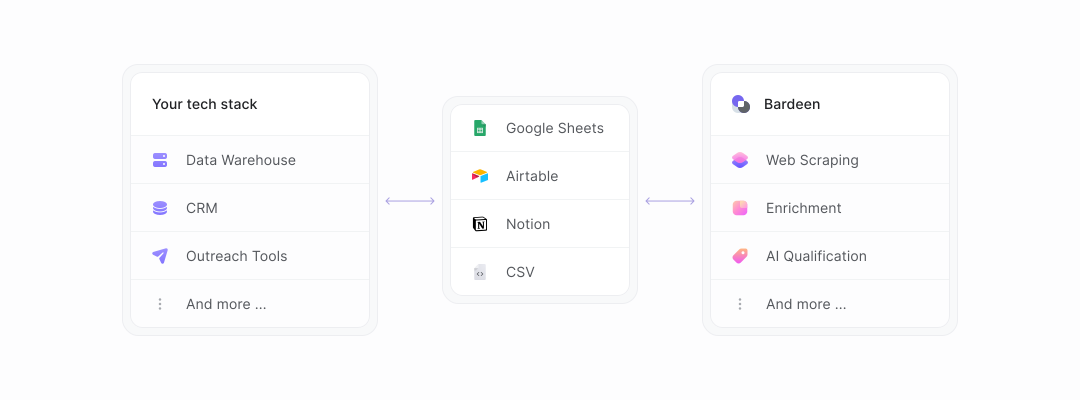
With our new Bardeen version, you can easily extract data from any website and discover new leads across the web. After extracting data from a website, use Bardeen’s powerful automation tools to validate and enrich your data, run additional scrapers on linked pages, or leverage AI to qualify leads and generate content automatically. Once your data is ready, you can easily export it to CSV, Google Sheets, Airtable, or Notion for further analysis and reporting.






SOC 2 Type II, GDPR and CASA Tier 2 and 3 certified — so you can automate with confidence at any scale.