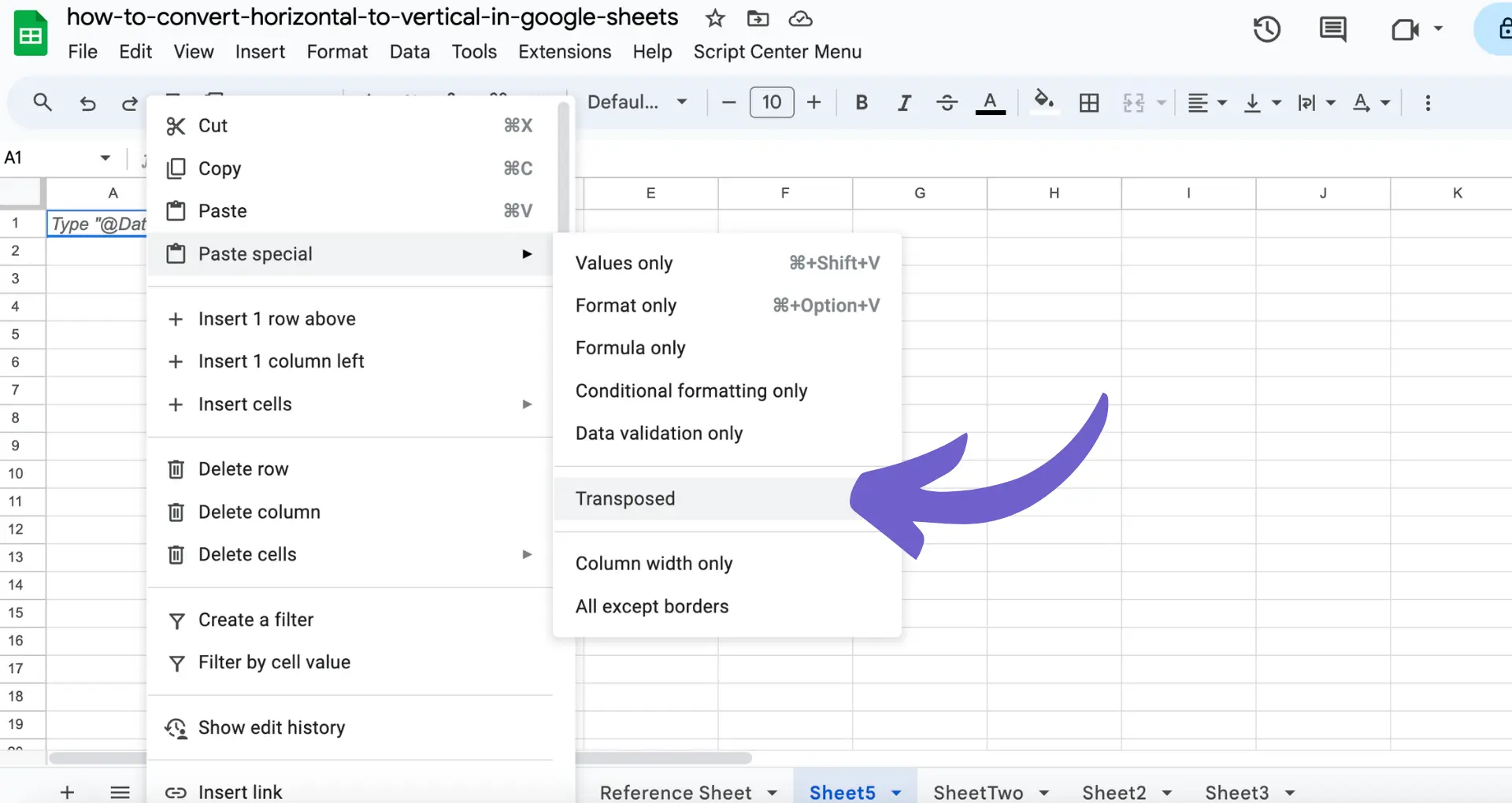
When working with data in Google Sheets, you may find yourself needing to change the orientation of your data from horizontal rows to vertical columns or vice versa. This process, known as transposing, can be essential for data analysis, presentation, and organization. Google Sheets provides two primary methods for accomplishing this: using the Paste Special feature and employing the TRANSPOSE function.
Automate your Google Sheets tasks and save time with Bardeen. Discover powerful automations and streamline your workflows now.
Bardeen can automate the process of copying data from various sources directly into Google Sheets, saving you time from manually copying and pasting. Try these playbooks to streamline importing data:

Transposing data in Google Sheets means flipping the rows and columns of a dataset. This action can be necessary when the structure of your data table does not meet your analysis or presentation needs. Transposing allows you to quickly reorient your data without manually re-entering or rearranging it.
Bardeen can help automate getting data from various sources into Google Sheets, saving you time from manually copying and pasting. Once the data is in Sheets, you can easily transpose it to fit your analysis needs. Try these playbooks:
Bardeen can automate the process of exporting data from various sources into Google Sheets, saving you time from manually copying and pasting. Try these playbooks to quickly consolidate data for analysis or reporting:
The Paste Special feature in Google Sheets is a straightforward method to transpose data:
Bardeen can automate copying and pasting data into Google Sheets from various sources, saving you time and effort:
This method instantly switches the rows and columns of your data, effectively reorienting it from horizontal to vertical or vice versa. It also retains the formatting of your original data.
Bardeen can also automatically translate copied text before pasting it into Google Sheets, enabling more advanced workflows:
For those who prefer using formulas, Google Sheets offers the TRANSPOSE function. This method provides a dynamic way to transpose data, which automatically updates if the original data changes. Here's how to use it:
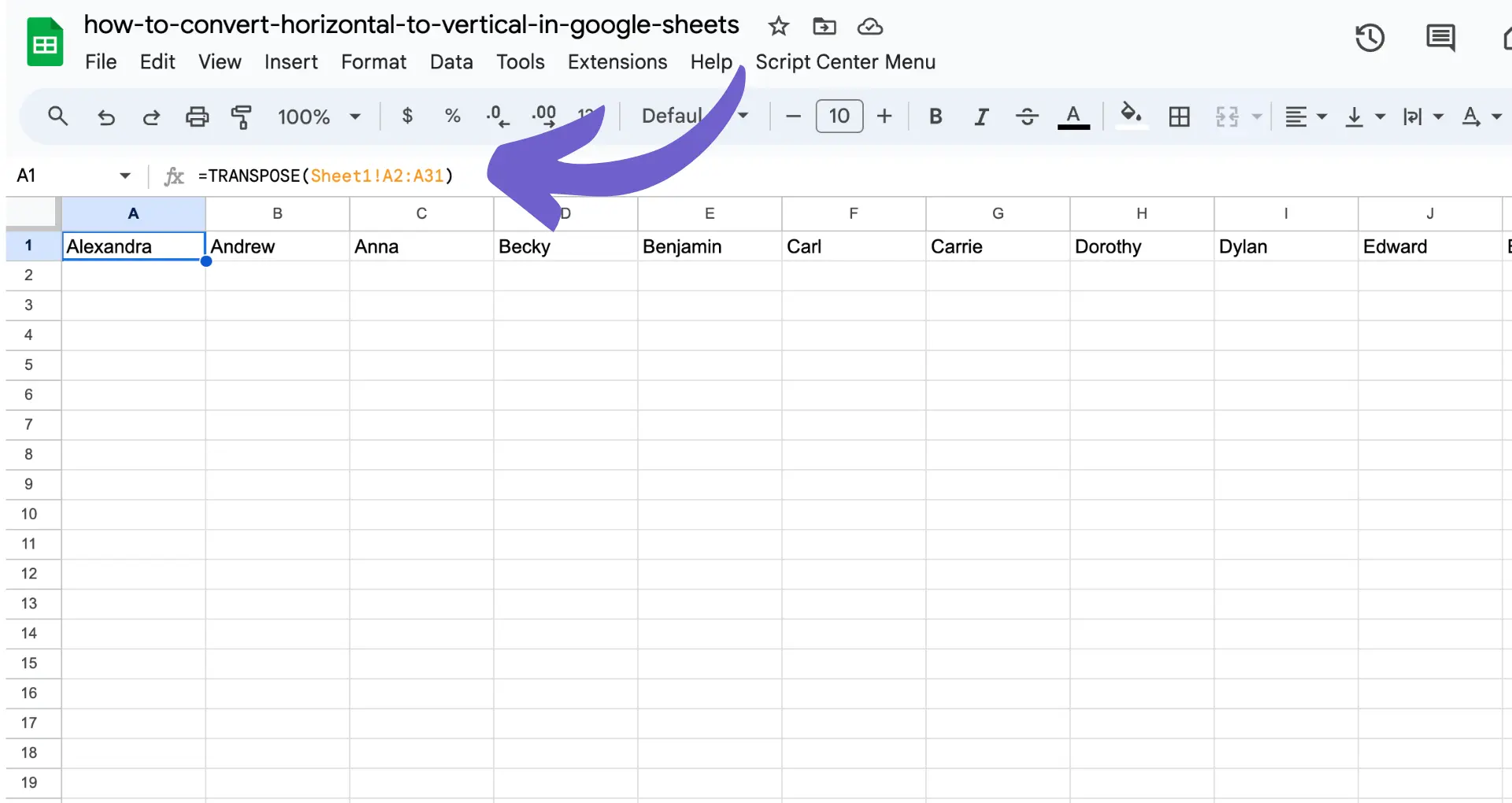
The TRANSPOSE function flips the rows and columns of the specified range. Unlike the Paste Special method, this approach does not carry over the original formatting. However, it offers the advantage of dynamically updating the transposed data if changes are made to the source range.
Explore addons for Google Sheets, learn how to automate Google Sheets, and discover a collection of Google Sheets automations to enhance your productivity.
Both methods provide efficient ways to reorient your data in Google Sheets, whether for presentation purposes, analysis, or simply to better organize your spreadsheet. Choosing between the Paste Special feature and the TRANSPOSE function depends on your specific needs, such as whether you require dynamic updates or wish to retain formatting.







SOC 2 Type II, GDPR and CASA Tier 2 and 3 certified — so you can automate with confidence at any scale.