This article compares Apollo and Mailchimp, focusing on their cold outreach capabilities to help you choose the right tool. We aim to offer a detailed breakdown of their features, even though both tools offer more than just cold outreach functionalities. Our motivation stems from Bardeen's commitment to helping you save time on repetitive tasks, ensuring you select the best tools for efficiency. Learn more about Bardeen, your task copilot.
Apollo offers a more versatile campaign creation tool for sales sequences, integrating emails, phone calls, and LinkedIn tasks, which is ideal for a varied outreach strategy.
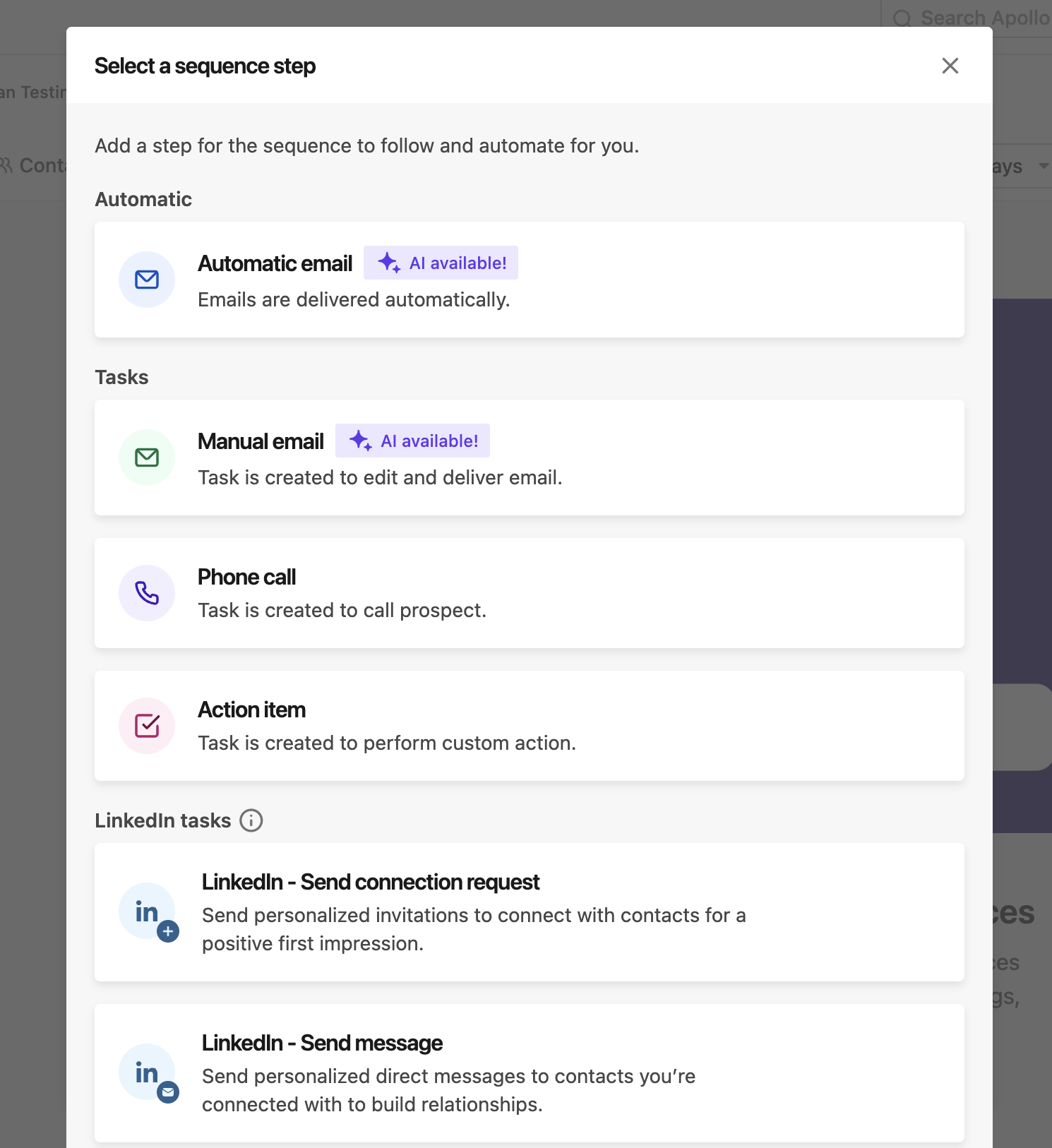
Mailchimp, while traditionally used for marketing, provides an easy-to-use interface with drag-and-drop tools that are great for crafting well-designed marketing emails, but it lacks the direct sales tools like phone and LinkedIn messaging that Apollo offers.

For those looking to run multifaceted campaigns that require consistent messaging across various platforms, Apollo's comprehensive approach might be more advantageous. Additionally, using Bardeen's automation tools can streamline these processes, enhancing productivity and outreach effectiveness.
Apollo's Sequences feature allows users to create campaigns that automate outreach to leads through a variety of channels. While it may not support complex branching or conditional paths, it provides a straightforward way to set up linear sequences of actions.
Key features of Apollo's Sequences:
Reddit users express mixed opinions on Apollo's Sequences feature, with some finding it comprehensive enough for their needs while others suggest combining it with other tools for better results.
😐 "Apollo has its own email sequence function and they've recently added email warm up too." - r/Emailmarketing
😐 "Set up Apollo.io sequence to automate the flow" - r/Emailmarketing
Mailchimp, originally an email marketing tool, provides a user-friendly interface for creating and formatting emails using simple drag-and-drop tools. While it was initially designed for marketing emails, some users have adapted it for cold outreach purposes.
Key features of campaign creation in Mailchimp:
When comparing Mailchimp and Apollo for email deliverability in sequence features, Mailchimp has a clear advantage for established subscriber outreach due to its compliance with best email practices and strong deliverability reputation.
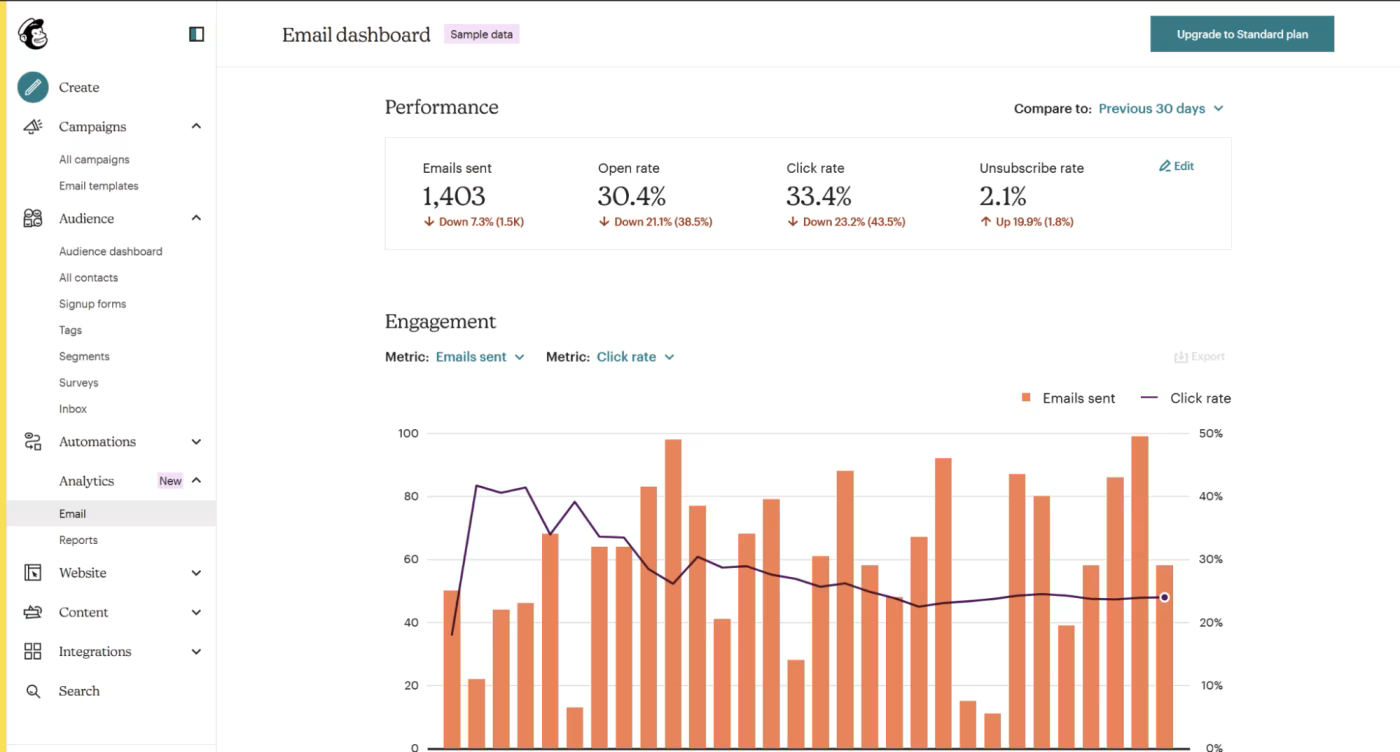
However, it lacks email warming services, making it less ideal for cold outreach compared to platforms like lemlist that provide integrated warming solutions. Apollo, while supporting multiple mailboxes, also does not offer email warming, putting it at a similar disadvantage for users needing to build sender reputation from scratch.
To enhance your email campaigns on platforms like Apollo, consider integrating Bardeen to automate workflows and improve your deliverability metrics.
In summary, for users primarily engaged with warm outreach to existing subscribers, Mailchimp's robust deliverability tools and domain authentication features make it a superior choice, whereas Apollo might require additional strategies or tools to achieve similar deliverability outcomes.
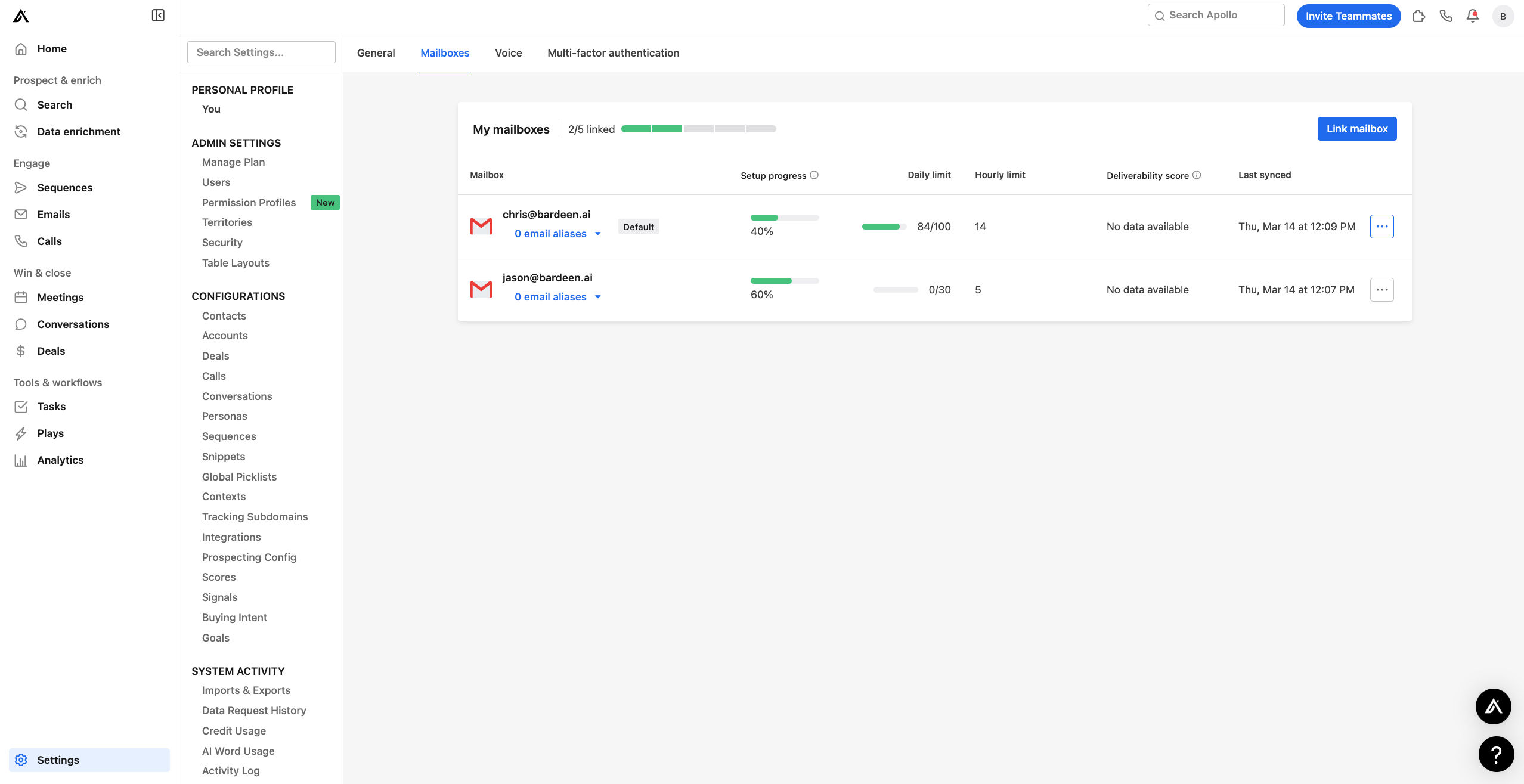
Apollo supports sending email sequences through multiple linked mailboxes, providing users flexibility in their outreach campaigns. However, it lacks some key deliverability features that may impact the success of these campaigns.
To mitigate potential deliverability problems when using Apollo for email sequences, users may need to employ additional strategies and tools alongside the platform. This could include gradually warming up new mailboxes, closely monitoring key metrics like bounce rates, and using third-party email validation services.
Reddit users have reported mixed experiences with Apollo's email sequence deliverability:
😐 "Allowing link tracking adds some inherent risk when sending emails" - r/Emailmarketing
😐 "mediocre results...screw up your domain reputation and create deliverability issues" - r/sales
MailChimp is known for its strong reputation in email deliverability, thanks to its compliance with best email sending practices. The platform provides tools and features to help users maintain high deliverability rates and avoid spam filters.
Key features for maintaining deliverability:
However, it's important to note that MailChimp does not offer email warming services, making it less suitable for cold outreach campaigns. The platform is best used for engaging with existing subscribers and sending warm outreach to opted-in contacts.
Apollo stands out with its extensive use of dynamic variables from a rich enrichment database, allowing users to create highly personalized and context-specific emails.

Mailchimp uses merge tags for personalization, which are straightforward but less flexible compared to Apollo's capabilities. Mailchimp's personalization relies heavily on the information collected through signup forms and predefined tags, limiting the personalization to the data explicitly captured during sign-up.
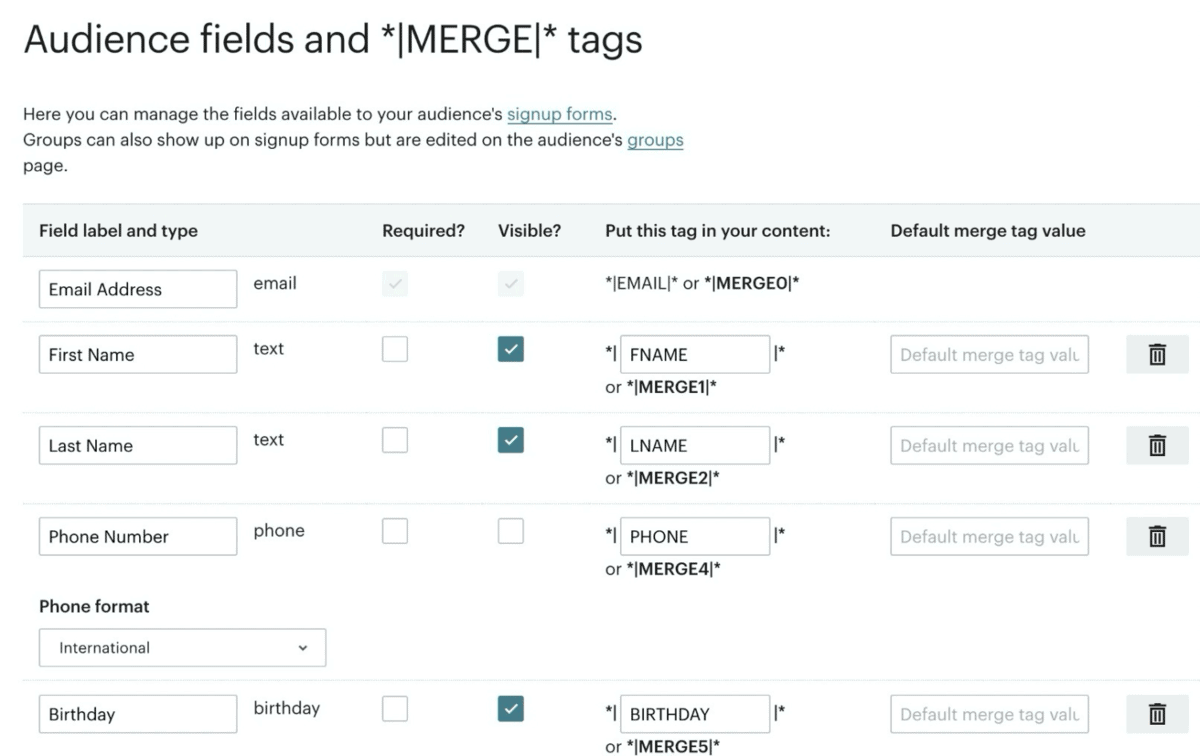
While Mailchimp provides a solid base for personalization through merge tags, Apollo's approach allows for a more tailored experience, leveraging a vast array of data points. This makes Apollo a better choice for scenarios requiring detailed customization based on extensive data attributes. For enhancing personalization and outreach, consider using Bardeen’s AI tools to further refine your messaging and engagement strategies.
Apollo provides an intuitive way to personalize emails within sequences, allowing users to incorporate dynamic variables from their extensive enrichment database directly into the email body. This enables highly targeted and relevant messaging for each recipient.
Key personalization features:
In addition to dynamic text, Apollo also supports adding personalized meeting invites, Vidyard video recordings, and images to create engaging multimedia sequences. With Apollo's focus on data enrichment, users have access to an extensive set of fields to craft highly personalized emails at scale.
Mailchimp provides robust personalization options through its audience fields and merge tags feature. This allows you to collect specific information about your subscribers via signup forms and use that data to create targeted, personalized email content.
Apollo has a more robust AI feature set for sequence creation compared to Mailchimp.

Apollo allows users to generate fully personalized emails by providing detailed information about their company, product, and target persona. It offers granular control over the generation of one-liners, openers, subject lines, or complete emails, and even includes options to record and analyze video call meetings for further insights.
On the other hand, Mailchimp's AI capabilities focus mainly on generating content based on predefined types like paragraphs or headlines. While this is useful, it lacks the deeper customization and personalization features that Apollo offers.
For businesses looking to leverage AI for more personalized and context-rich email sequences, Apollo provides a superior solution. Additionally, integrating AI tools like Bardeen with Apollo can enhance your ability to automate and personalize at scale, making your outreach efforts more effective.
Apollo's AI assistant empowers users to generate highly personalized emails at scale, saving time while maintaining a human touch in their outreach. By leveraging information about the user's company, product, and target persona, the AI can craft compelling subject lines, opening lines, and entire email bodies tailored to each prospect.
Key features of Apollo's AI email generation:
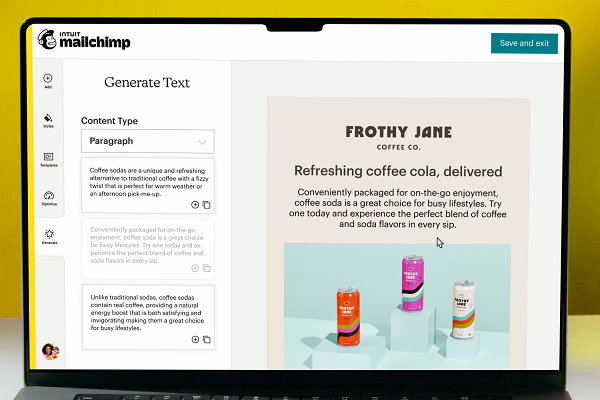
Mailchimp's email marketing platform includes an AI-powered content generator that can assist users in creating compelling email content. This feature leverages artificial intelligence to generate text based on a given topic or theme, helping users save time and effort in crafting effective email campaigns.
Key aspects of Mailchimp's AI content generation:
While the AI-generated content can provide a solid starting point, it's essential for users to review and refine the text to ensure it accurately reflects their intended message and brand identity. Mailchimp's AI content generator is a useful tool for streamlining the email creation process, but human oversight remains crucial for creating truly personalized and effective campaigns.
Apollo clearly leads with its robust native enrichment features, significantly enhancing lead and company data directly within its platform.

Apollo allows users to access detailed insights about leads and companies, which can be seamlessly integrated into email personalization and sales strategies. This capability is essential for crafting targeted communications that resonate with recipients.
In contrast, Mailchimp does not offer native enrichment within its sequences feature, relying instead on integrations with external tools to gather additional lead data. While effective, this approach may require more setup and coordination, potentially complicating workflow for users who need streamlined operations.
To enhance your lead management process, consider integrating Bardeen's automation capabilities, which can augment the data enrichment process, saving time and improving the accuracy of your lead data.
Apollo's native data enrichment capabilities provide users with valuable insights and personalization options for their sales engagement campaigns. By leveraging Apollo's extensive database, users can access detailed information about their leads, enabling them to craft highly targeted and relevant outreach.
By leveraging Apollo's native data enrichment features, users can create highly targeted and effective sales engagement campaigns that resonate with their leads, ultimately leading to better response rates and more successful outcomes.
Mailchimp, as a marketing automation platform, does not offer native lead enrichment capabilities within its email sequences feature. To gather additional data on leads, such as buyer signals or other relevant information, users need to rely on integrations with external tools.
While this may be seen as a limitation, Mailchimp's focus on providing a robust email marketing solution allows it to excel in its core functionalities. Users who require lead enrichment can still achieve this by leveraging Mailchimp's extensive integration options with third-party services that specialize in data enrichment.
Apollo edges out Mailchimp in terms of social automation capabilities, particularly in lead engagement and enrichment through social platforms like LinkedIn.
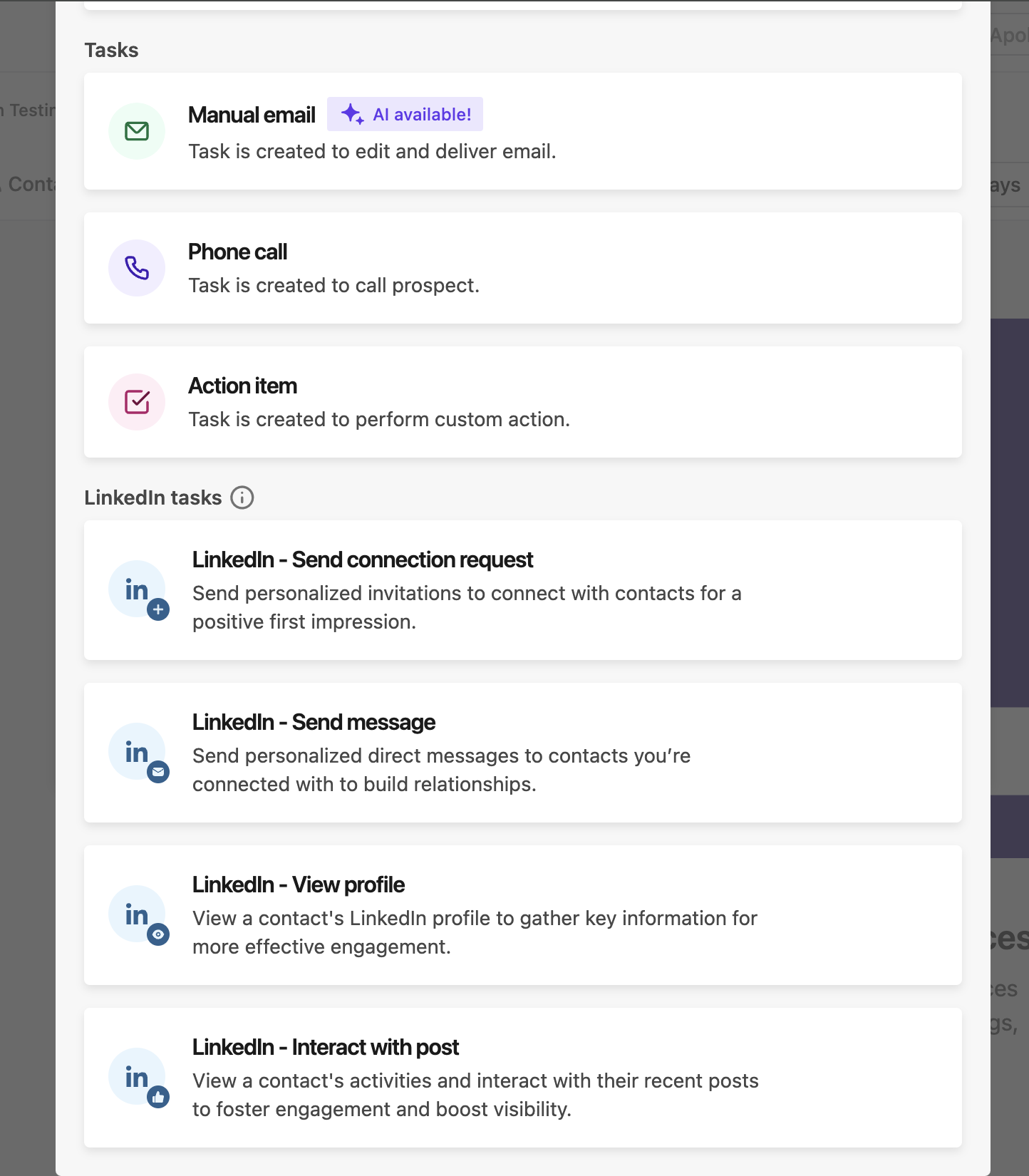
Apollo allows users to automate personalized connection requests, direct messages, and interactions with posts on LinkedIn, which can be crucial for building relationships and enhancing lead engagement without manual effort. On the other hand, Mailchimp focuses primarily on managing social media ads and cross-posting content, without the capability to automate interactions or enrich leads directly from social platforms.
If you're looking to automate LinkedIn actions and enrich your sales strategies, Apollo provides a more robust solution. Additionally, Bardeen can further enhance your social media engagement by automating tasks across different platforms, offering a significant boost in productivity and effectiveness in your social media strategies.
Apollo's Sequences feature includes robust social automation capabilities, allowing users to engage with prospects across multiple channels without manual effort. The platform can automate tasks on social media platforms like LinkedIn, in addition to traditional channels like email and phone.
While Mailchimp is a powerful email marketing and automation platform, it does not offer the same level of social media automation for lead enrichment as some other sales engagement tools. Mailchimp's social media capabilities are primarily focused on cross-posting content and managing social media ads rather than automating interactions or gathering lead information from social platforms.
Key aspects of Mailchimp's social media features:
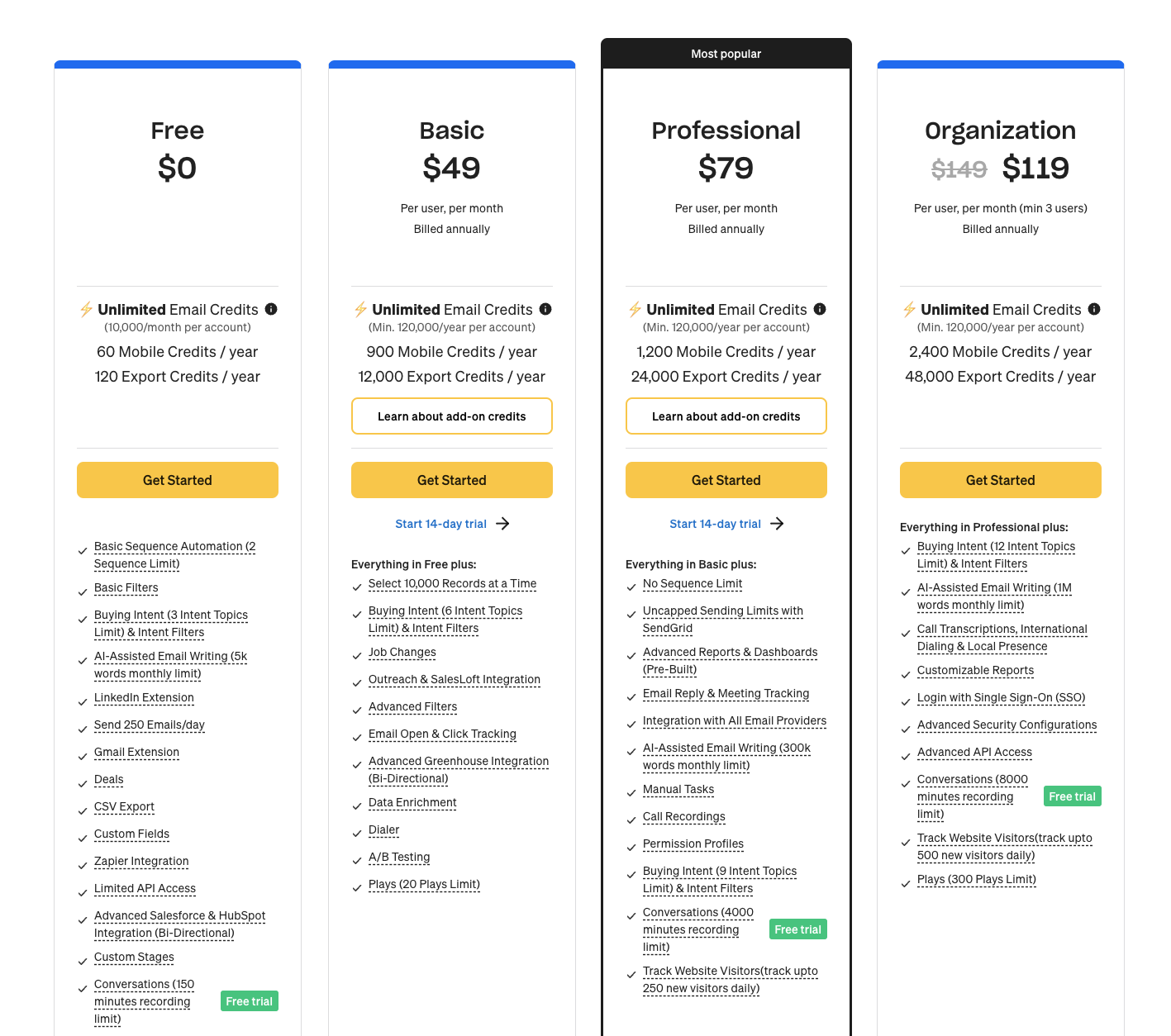
Apollo edges out Mailchimp with its more flexible credits system and tiered plans tailored for different usage levels.
Apollo Pricing: Offers a free plan with significant email credits and multiple paid plans starting at $49 per user per month when billed annually. These plans are structured to cater to varying needs, from basic usage in the free plan to advanced features in the Organization plan. Apollo's pricing includes unlimited email credits up to 10,000 per month to prevent abuse, and free trials are available for Basic and Professional plans.
Mailchimp Pricing: Provides a simple free tier and several paid options, the most affordable being $13 per month. Each tier offers more features, with the Premium plan at $350 per month including unlimited contacts and priority support. Mailchimp's plans are straightforward, focusing on the number of emails sent and the level of support available.
For businesses looking for a cost-effective solution with flexibility in email volume and additional features like AI-assisted email writing and advanced security, Apollo provides a more adaptable pricing structure. However, for those needing unlimited contacts and extensive support, Mailchimp's higher-tier plans may be appealing.
Apollo provides a flexible pricing model that can accommodate various user requirements, from individual users to larger organizations. The platform offers a free plan as well as paid memberships with a 14-day trial period.
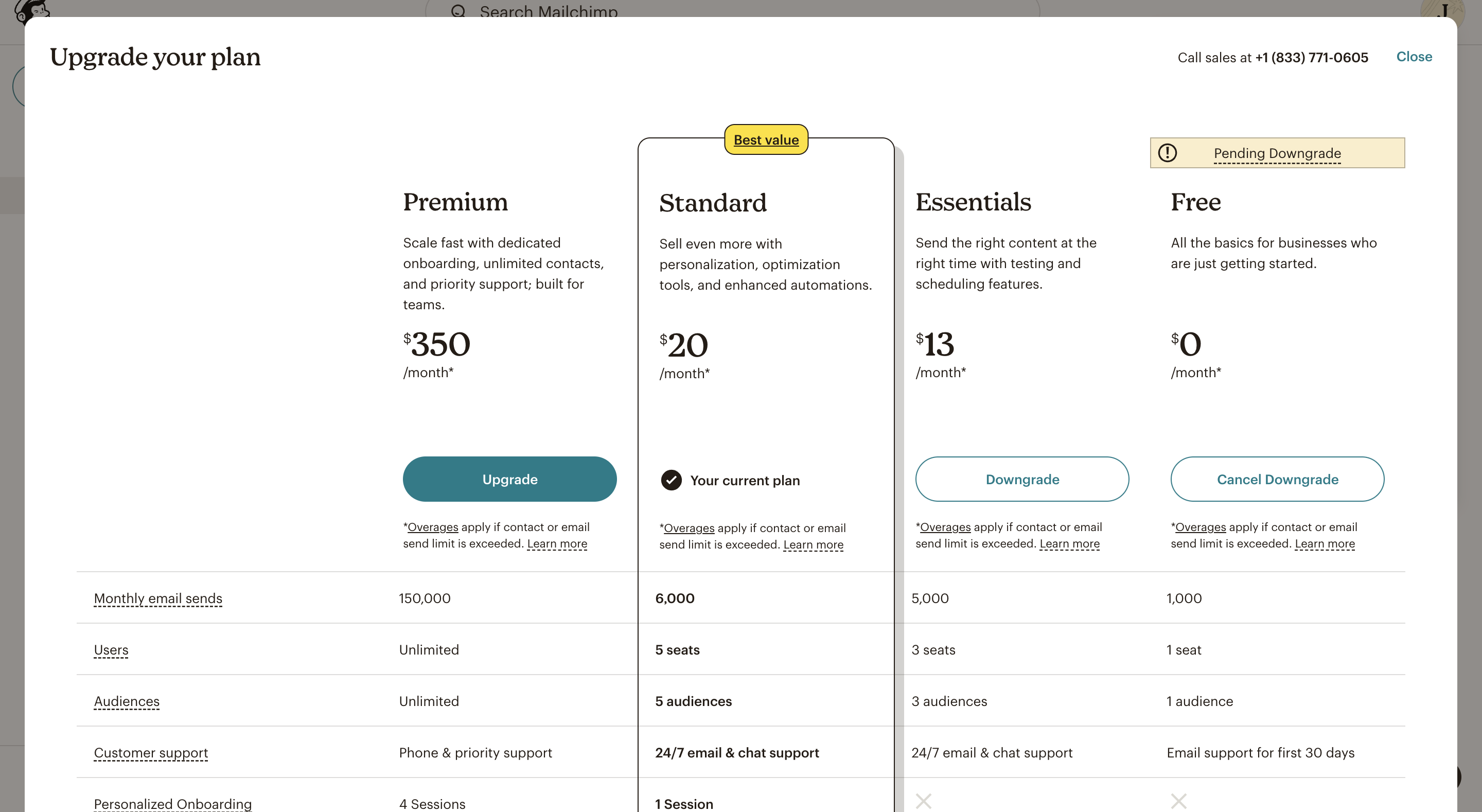
Mailchimp provides a range of pricing options to suit various business needs, from a free plan for those just starting out to more advanced paid plans with additional features and higher sending limits.
All paid plans are billed monthly and have the option to upgrade or downgrade as needed. Mailchimp also offers a free trial for users to test out the platform before committing to a paid plan.







SOC 2 Type II, GDPR and CASA Tier 2 and 3 certified — so you can automate with confidence at any scale.