If you use Google Sheets often, you might like Bardeen's GPT in Spreadsheets. It helps automate tasks like data formatting and analysis.
Discover how to effortlessly upload your Google Sheets to Google Drive for seamless integration and enhanced productivity. In this step-by-step guide, we'll walk you through the process of manually uploading existing Google Sheets from your computer to Google Drive and show you how to directly save and sync Google Sheets created online. We'll also cover advanced tips on converting uploaded Excel files into Google Sheets format and managing version control within Google Drive.
Understanding Google Drive and Google Sheets Integration
Google Drive and Google Sheets are two powerful tools that work together seamlessly to boost your productivity. When you create a Google Sheet, it's automatically saved and synced within your Google Drive, ensuring that your data is always backed up and accessible from any device.
The integration between Google Drive and Google Sheets offers several advantages:
Automatic saving and syncing: Never worry about losing your work or manually saving files. Google Sheets automatically saves your progress and syncs it with Google Drive in real-time.
Easy collaboration: Share your Google Sheets with others directly from Google Drive, allowing for seamless collaboration and real-time editing with your team.
Access from anywhere: With your Google Sheets stored in Google Drive, you can access your files from any device with an internet connection, making it easy to work on the go.
By leveraging the integration between Google Drive and Google Sheets, you can streamline your workflow, collaborate more effectively, and ensure that your data is always secure and accessible.
Practical Steps to Upload Google Sheets to Google Drive
If you have existing Google Sheets files on your computer that you want to store in Google Drive, follow these simple steps to upload them manually:
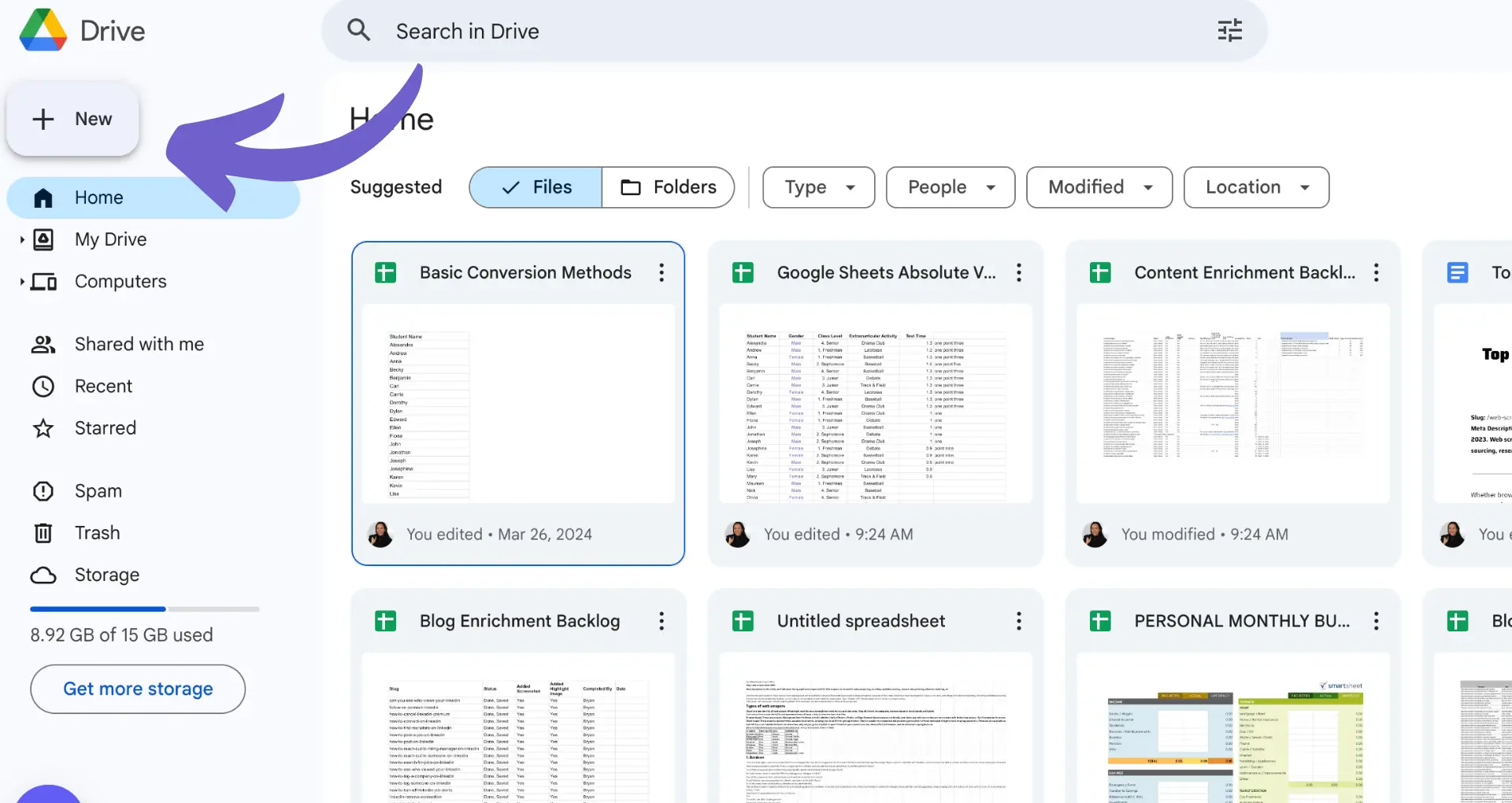
Click on the "New" button in the top-left corner of the screen.
Select either "File upload" or "Folder upload," depending on whether you want to upload individual files or an entire folder.
Choose the Google Sheets file(s) or folder you want to upload from your computer.
Wait for the upload process to complete. The time it takes will depend on the size of your file(s) or folder.
Alternatively, if you have the Google Drive for Desktop app installed on your computer, you can simply drag and drop your Google Sheets files or folders directly into the Google Drive folder on your desktop.
When creating new Google Sheets online, they are automatically saved and synced to your Google Drive account. However, if you want to organize your files better, you can move them to specific folders within Google Drive:
Open the Google Sheets file you want to move.
Click on the "File" menu in the top-left corner of the screen.
Select "Move" from the dropdown menu.
Choose the destination folder in your Google Drive where you want to store the file.
Click the "Move" button to complete the process.
By following these steps, you can ensure that all your Google Sheets files are safely backed up and easily accessible within Google Drive. To enhance your workflow, consider using GPT for Google Sheets to automate tasks.
Bardeen can help you bring AI into your spreadsheet to streamline your work, allowing you to focus on what's important while automating repetitive tasks.
Advanced Tips: Managing and Converting Files in Google Drive
Google Drive makes it easy to convert uploaded Excel files into Google Sheets format, allowing you to take advantage of the collaboration and sharing features offered by Google Sheets. To convert an Excel file:
Open the Excel file in Google Drive.
Click on the "File" menu and select "Save as Google Sheets."
The file will be converted and saved as a new Google Sheets file, while the original Excel file remains unchanged.
Converting Excel files to Google Sheets offers several benefits:
Real-time collaboration with others
Access to version history and revision tracking
Ability to use Google Sheets' built-in formulas, functions, and tools
When uploading files with the same name to Google Drive, the new file will be automatically renamed with a number in parentheses, such as "Filename (1)." To manage version control and avoid confusion:
Rename the older file with a descriptive tag, like "[Archived] Filename," to distinguish it from the new version.
Use Google Drive's built-in version history feature to track changes and revert to previous versions if needed.
Establish a clear file naming convention within your team to ensure consistency and easy identification of the most recent files.
By converting Excel files to Google Sheets and properly managing file versions, you can streamline your workflow and ensure that your team is always working with the most up-to-date information.

SOC 2 Type II, GDPR and CASA Tier 2 and 3 certified — so you can automate with confidence at any scale.
Frequently asked questions
What is Bardeen?
Bardeen is an automation and workflow platform designed to help GTM teams eliminate manual tasks and streamline processes. It connects and integrates with your favorite tools, enabling you to automate repetitive workflows, manage data across systems, and enhance collaboration.
What tools does Bardeen replace for me?
Bardeen acts as a bridge to enhance and automate workflows. It can reduce your reliance on tools focused on data entry and CRM updating, lead generation and outreach, reporting and analytics, and communication and follow-ups.
Who benefits the most from using Bardeen?
Bardeen is ideal for GTM teams across various roles including Sales (SDRs, AEs), Customer Success (CSMs), Revenue Operations, Sales Engineering, and Sales Leadership.
How does Bardeen integrate with existing tools and systems?
Bardeen integrates broadly with CRMs, communication platforms, lead generation tools, project and task management tools, and customer success tools. These integrations connect workflows and ensure data flows smoothly across systems.
What are common use cases I can accomplish with Bardeen?
Bardeen supports a wide variety of use cases across different teams, such as:
Sales: Automating lead discovery, enrichment and outreach sequences. Tracking account activity and nurturing target accounts.
Customer Success: Preparing for customer meetings, analyzing engagement metrics, and managing renewals.
Revenue Operations: Monitoring lead status, ensuring data accuracy, and generating detailed activity summaries.
Sales Leadership: Creating competitive analysis reports, monitoring pipeline health, and generating daily/weekly team performance summaries.