Since you're converting Sheets to Docs, you might love Bardeen's Google Sheets automations. Use it to save time and automate your workflow.
Convert Google Sheets to Google Doc
Converting Google Sheets to Google Docs involves a few straightforward methods, allowing you to transfer data seamlessly between these two Google Workspace tools. Whether you're looking to copy tabular data or use a Google Workspace add-on, these methods cater to various needs and preferences.
This method is ideal for quickly moving tabular data from Google Sheets into a Google Doc, maintaining the original format and offering the option for dynamic updates linked to the original Sheet.
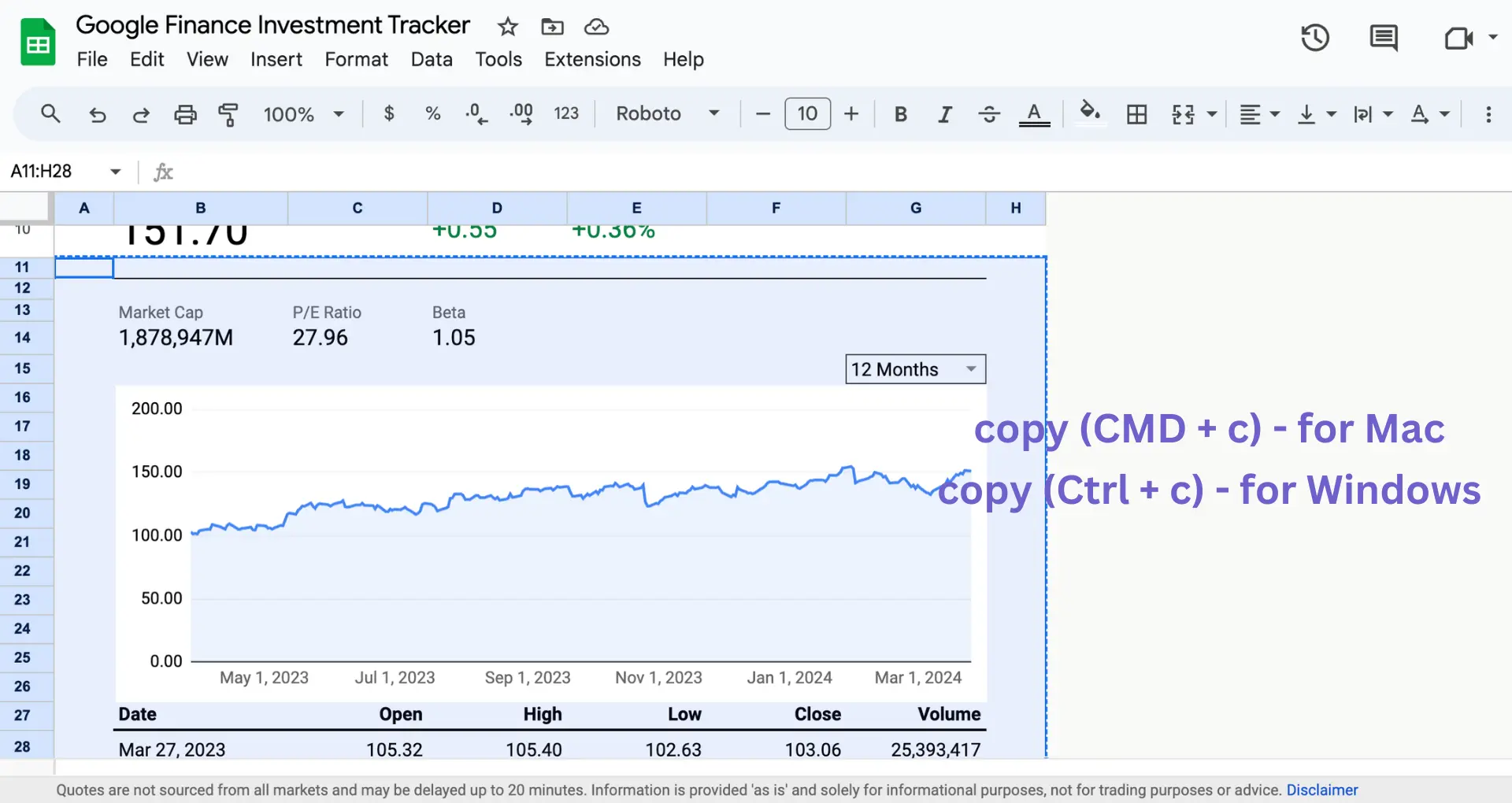
Open both the Google Sheet with the data and the Google Doc where you want to transfer the data.
Highlight the content in the Google Sheet and use the keyboard shortcut to copy it.
3. In the Google Doc, click where you want to paste the table, select 'Edit' then 'Paste'.
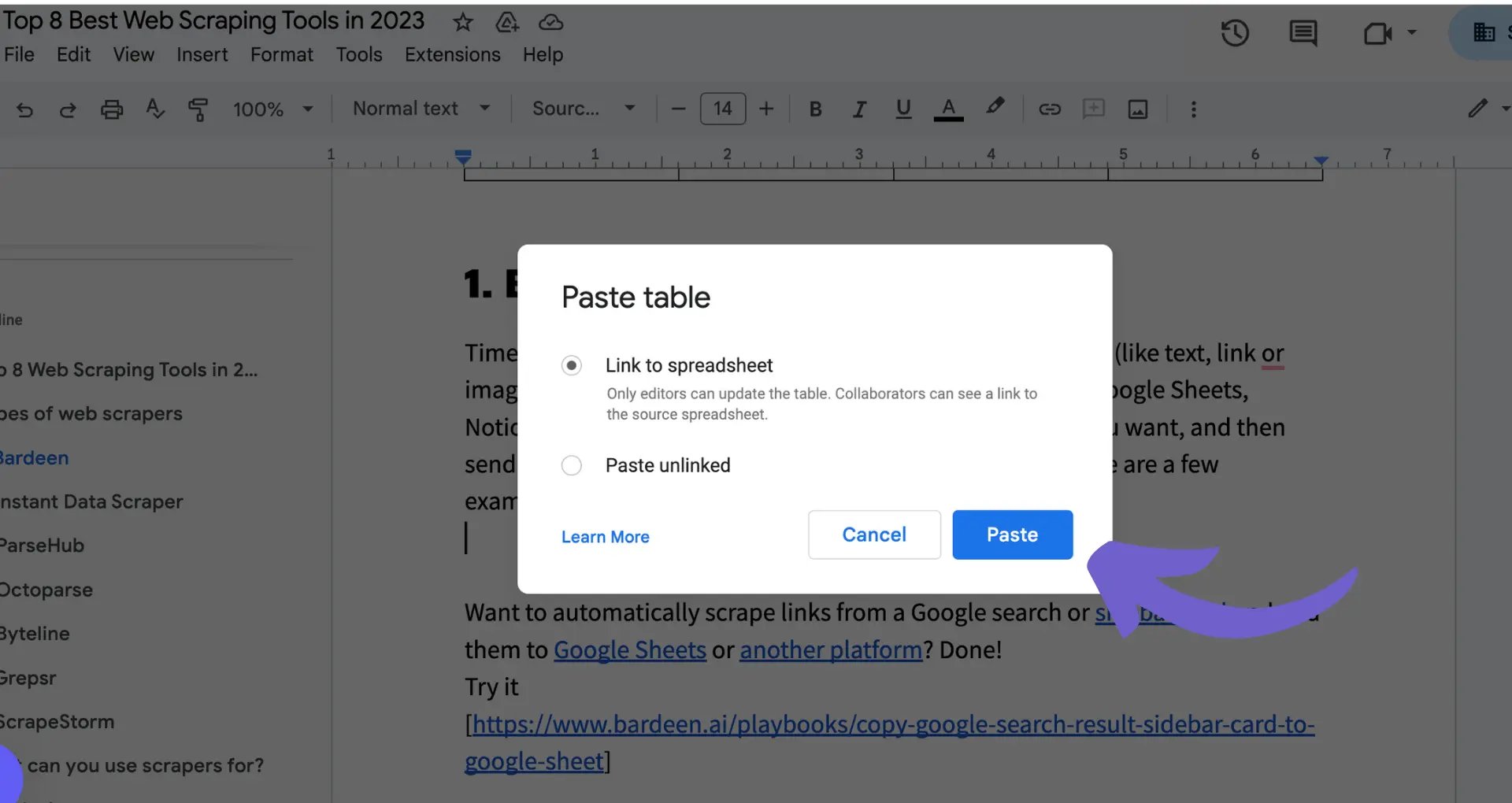
4. Choose 'Link to Spreadsheet' from the popup window and click 'Paste'.
The table will be pasted with its original format in your Google Doc. If you select 'Paste unlinked', the table won't include a link to the original data source, meaning updates made to the spreadsheet won't reflect in the Google Doc.
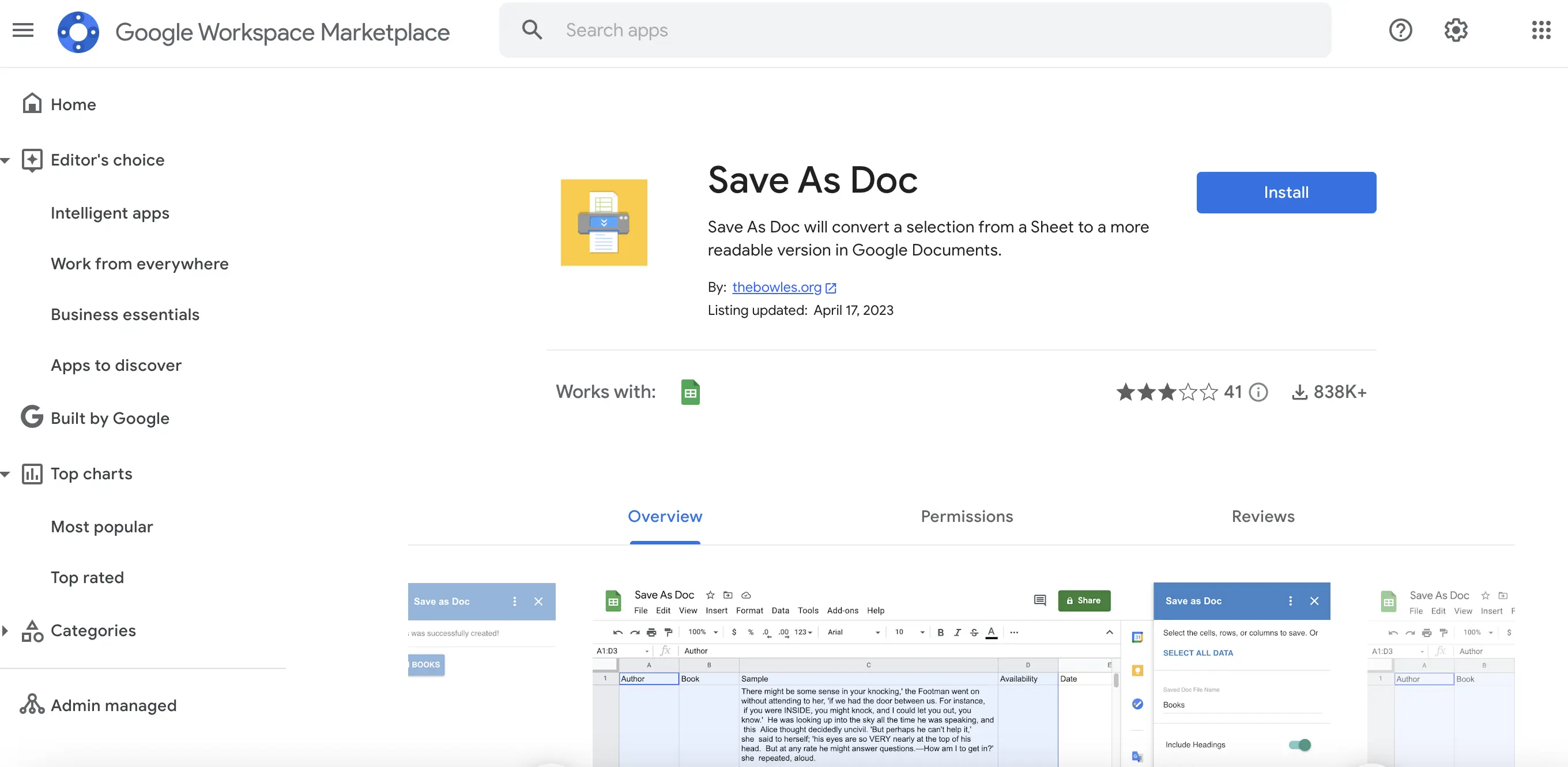
Save As Doc Add-on
The 'Save As Doc' add-on is a Google Workspace tool that converts spreadsheet content into a readable format in a Google Document, offering customization options like selecting specific cells, adding page breaks, and choosing heading styles.
Choose 'Save As Doc > Start'.
Select the cells to include or choose 'Select all data'.
Enter a file output name.
Modify the output settings in the sidebar.
Choose 'Save as Doc'.
Note that 'Save As Doc' will output the Google Sheet cell content as a paragraph one after the next, not side by side as laid out in the Sheet.
Mail Merge from Google Sheets to Google Doc
Mail merge involves pulling values from rows in a spreadsheet or another data source and inserting them into a Google Doc template. This process allows for the creation of multiple documents customized with the merged data.
Set up a Google Sheets document with your data organized in rows, with columns representing fields.
Create a Google Doc template with placeholders for the data you wish to merge.
Use Google Apps Script or third-party tools to automate the merging process, replacing placeholders in the template with actual data from the Google Sheets document.
This method is useful for generating multiple customized documents such as invoices or personalized letters.
Open the Google Sheet and the Google Doc you want to work with.
Copy the data you wish to embed from Google Sheets.
In the Google Doc, select 'Edit' > 'Paste'.
From the 'Paste table' window, select 'Link to spreadsheet' and click 'Paste'.
This method embeds the data with the option to keep it dynamically linked to the original Google Sheet, allowing for updates in the Sheet to be reflected in the Google Doc.
Updating Embedded Google Sheets Data in Google Docs
To update embedded Google Sheets data in a Google Doc:
Select any cell in the embedded table in the Google Doc.
Click the link icon that appears above the table and select 'Change range' to adjust the data range if necessary.
To update the table with the latest data from Google Sheets, select the 'Update' button above your table in the Google Doc.
This ensures that the table in your Google Doc reflects the most recent version of your spreadsheet data.
Automate your Google Sheets tasks with Bardeen. Find more Google Sheets automations and explore our blog for tips on automation!

SOC 2 Type II, GDPR and CASA Tier 2 and 3 certified — so you can automate with confidence at any scale.
Frequently asked questions
What is Bardeen?
Bardeen is an automation and workflow platform designed to help GTM teams eliminate manual tasks and streamline processes. It connects and integrates with your favorite tools, enabling you to automate repetitive workflows, manage data across systems, and enhance collaboration.
What tools does Bardeen replace for me?
Bardeen acts as a bridge to enhance and automate workflows. It can reduce your reliance on tools focused on data entry and CRM updating, lead generation and outreach, reporting and analytics, and communication and follow-ups.
Who benefits the most from using Bardeen?
Bardeen is ideal for GTM teams across various roles including Sales (SDRs, AEs), Customer Success (CSMs), Revenue Operations, Sales Engineering, and Sales Leadership.
How does Bardeen integrate with existing tools and systems?
Bardeen integrates broadly with CRMs, communication platforms, lead generation tools, project and task management tools, and customer success tools. These integrations connect workflows and ensure data flows smoothly across systems.
What are common use cases I can accomplish with Bardeen?
Bardeen supports a wide variety of use cases across different teams, such as:
Sales: Automating lead discovery, enrichment and outreach sequences. Tracking account activity and nurturing target accounts.
Customer Success: Preparing for customer meetings, analyzing engagement metrics, and managing renewals.
Revenue Operations: Monitoring lead status, ensuring data accuracy, and generating detailed activity summaries.
Sales Leadership: Creating competitive analysis reports, monitoring pipeline health, and generating daily/weekly team performance summaries.