This automation creates a draft email summarizing the action items from a Zoom meeting transcript once a new recording is available.
Upon availability of a new Zoom recording, the workflow is triggered, fetching information about the meeting and the recording itself. It then utilizes OpenAI to extract action items from the transcript and drafts an email with these summarized points to a specified recipient. This can be incredibly useful for:
Note: The process leverages advanced AI to accurately identify relevant action items, making it a powerful tool for managing post-meeting tasks.
For businesses and teams looking to enhance their meeting efficiency, this workflow offers a streamlined solution to capture and communicate important tasks, prompting users to take necessary actions.
To start, ensure you have the Bardeen app installed on your device.
With the app ready, proceed to the Magic Box and input the following prompt:
When new zoom recording, summarize Zoom transcript action items with ChatGPT, draft email with summary
Make sure to set up the integrations required by the workflow. This includes Zoom for the source of recordings, OpenAI (ChatGPT) for summarization, and Google Mail for drafting the email.
Now, execute the workflow. This workflow is configured to:
Efficiency is key in the modern workspace, especially when it comes to meetings. With the increasing frequency and complexity of meetings, it's crucial to keep track of everything discussed. This is where a well-crafted meeting summary email comes into play. A meeting summary or recap offers a streamlined and condensed version of the meeting's key points and outcomes, making it easier for stakeholders to scan and obtain the information they need. Whether you're summarizing a Zoom meeting or any other type, the process and intent remain the same: to ensure follow-ups on decisions and improve meeting productivity by highlighting actionable tasks.
Automate your meeting summaries with Bardeen and ensure no action item goes unnoticed.
Writing a good meeting summary involves several steps. Start by taking detailed notes during the meeting, either manually or using a digital platform like Google Docs. If the meeting was recorded, that's even better as it allows for more accurate notes. Next, highlight key points or discussions, ensuring the summary is clear and concise. Include clear action items with assigned tasks, deadlines, and responsible individuals. Finally, proofread the summary for accuracy and clarity before sharing it with all stakeholders.
For those looking to automate this process, Bardeen can be a valuable tool. It can automatically generate meeting summaries from Zoom transcripts, identifying and summarizing action items, and even drafting follow-up emails. This not only saves time but also ensures that summaries are accurate and comprehensive.
Summarizing a Zoom transcript can be overwhelming, especially after lengthy meetings. Tools like Reduct offer features to condense long Zoom recordings into short summaries with clickable timestamps. This simplifies the process, allowing you to quickly grasp the main points without spending hours watching the entire meeting. Similarly, summarizing live meetings becomes effortless with Reduct's Live Capture, summarizing real-time generated transcripts at the end of your Zoom meeting.
Following up after a Zoom meeting is equally important. A well-structured follow-up email should thank attendees for their participation, recap the meeting with key takeaways, outline decisions made, and list clear action items along with their deadlines. It's also a good practice to include the next meeting's date and time to keep everyone aligned. For those using Bardeen, automating this process can significantly enhance productivity and ensure that no detail is missed.
Streamline your post-meeting workflow by automating meeting summaries and follow-up emails with Bardeen.
Whether you're summarizing and following up manually or seeking to automate the process, the goal remains the same: to capture and communicate important tasks effectively. This not only ensures that meetings are productive but also that actionable items are clearly defined and followed up on, driving better outcomes for businesses and teams.
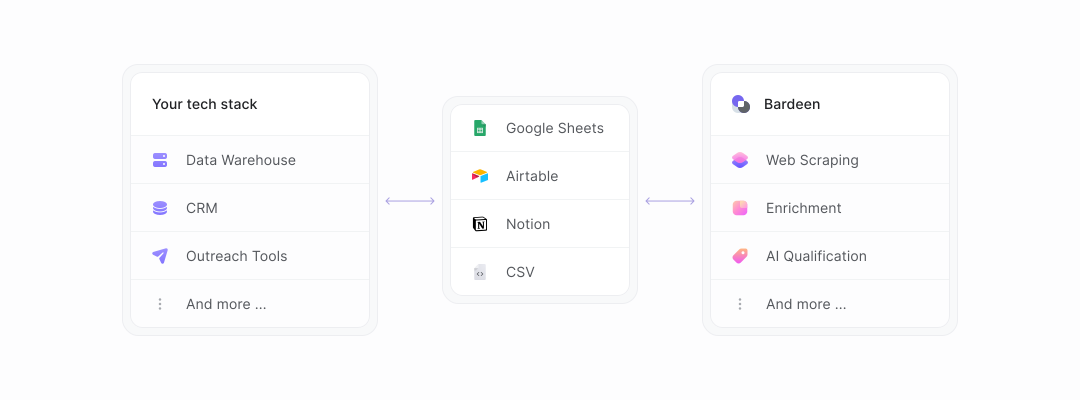
With our new Bardeen version, you can easily extract data from any website and discover new leads across the web. After extracting data from a website, use Bardeen’s powerful automation tools to validate and enrich your data, run additional scrapers on linked pages, or leverage AI to qualify leads and generate content automatically. Once your data is ready, you can easily export it to CSV, Google Sheets, Airtable, or Notion for further analysis and reporting.






SOC 2 Type II, GDPR and CASA Tier 2 and 3 certified — so you can automate with confidence at any scale.