


This workflow automates the process of analyzing the sentiment of posts in a Facebook Group and saving the results into Google Sheets. It leverages a scraper model to collect posts from a Facebook Group, then uses OpenAI's sentiment analysis to understand the emotion behind each post, and finally appends this data to a specified Google Sheets document.
The steps include:
Note: This automation can be customized to include additional data points or to analyze different aspects of the posts, like engagement or topics discussed. It's also possible to trigger this workflow on a schedule.
This workflow is perfect for community managers, marketers, and researchers who want to keep a pulse on the sentiment within their Facebook Groups. It automates the manual process of reading through posts and categorizing sentiment, saving time and providing valuable insights.
Begin by installing the Bardeen app on your device to get started.
After installation, go to the Magic Box and input the following prompt:
Analyze Facebook Group Posts then save into Google Sheets
Make sure to set up the required integrations for the workflow. This includes Scraper for collecting data from Facebook Group Posts, OpenAI for sentiment analysis, and Google Sheets for data storage.
Upon setup, execute the workflow. This process entails:
Scraping Facebook Group posts is a crucial first step in analyzing the content and sentiment of discussions within a Facebook Group. This process involves extracting data such as post text, comments, likes, and other engagement metrics from the group. While Facebook does not officially support scraping, there are ways to collect data from public groups for analysis.
One method involves using web scraping tools such as Selenium and BeautifulSoup in Python. Selenium automates web browser interaction, allowing you to navigate to the Facebook Group page, while BeautifulSoup parses the HTML content of the page to extract the needed data. This approach requires coding knowledge and understanding of HTML structure. It's important to respect Facebook's terms of service and ensure that your scraping activities do not violate user privacy or data use policies.
Automate your Facebook Group post analysis with Bardeen. Try it now!
After collecting data from Facebook Group posts, the next step is analysis. This involves examining the scraped data to identify trends, sentiment, and engagement levels within the group. Tools like Apify offer ready-made scrapers and actors that can automate data collection and analysis, providing insights into customer attitudes, market research, and social media phenomena.
For a more manual approach, you can use Python libraries such as Pandas for data manipulation and analysis, and NLTK or TextBlob for sentiment analysis. These tools allow you to process the scraped data, perform statistical analysis, and understand the sentiment behind the posts. Visualization libraries like Matplotlib or Seaborn can then be used to create charts and graphs that illustrate the analysis results.
Streamline your analysis by automating Facebook Group post scraping and analysis with Bardeen. Get started now!
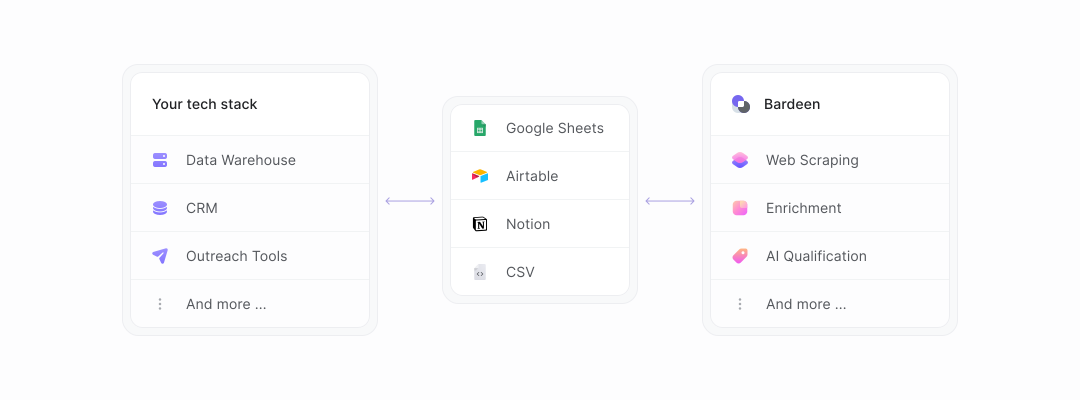
With our new Bardeen version, you can easily extract data from any website and discover new leads across the web. After extracting data from a website, use Bardeen’s powerful automation tools to validate and enrich your data, run additional scrapers on linked pages, or leverage AI to qualify leads and generate content automatically. Once your data is ready, you can easily export it to CSV, Google Sheets, Airtable, or Notion for further analysis and reporting.






SOC 2 Type II, GDPR and CASA Tier 2 and 3 certified — so you can automate with confidence at any scale.