

This automation streamlines the process of extracting contact information from any webpage and directly adding it as a contact in HubSpot.
The workflow begins by extracting the selected text from the current webpage. It then utilizes AI to interpret and structure data from this text, identifying email addresses and phone numbers. Additionally, it intelligently splits a full name into first and last names. Finally, it creates a new contact in HubSpot with the extracted information, including first and last names, email, and phone number. This is particularly useful for:
Pro Tip: The AI model can also interpret and extract information from images within the text, making no piece of information too hidden to capture.
This automation is highly modular. For example, if you prefer, the extracted contacts can be added to a different CRM system like Salesforce or Pipedrive, or even to a Google Sheet for further processing.
To start, ensure you have the Bardeen app installed on your device.
Open the app and go to the Magic Box. Enter the following command:
Scrape current page text, Use BardeenAI to locate Contacts, Add new contacts to HubSpot
Make sure you have integrated the required integrations for the workflow, including Scraper for extracting text, BardeenAI for data extraction, and HubSpot for adding the contacts.
Now, execute the workflow. This process involves:
Automating your HubSpot workflow, especially when it involves adding contacts from web data, can significantly boost your productivity and efficiency. By scraping data from websites and importing all emails directly into HubSpot, you streamline the process of capturing leads and managing contact information. This eliminates the need for manual data entry, saving time and reducing the risk of errors. Bardeen offers a powerful solution for automating this process, allowing you to focus on more strategic tasks.
By using Bardeen to automate the scraping and importing process, you ensure that no potential lead information is missed, making your marketing efforts more effective. Learn more about automating your workflow with Bardeen.
Scraping data from a website involves programmatically reading and analyzing content on the internet to extract useful information, such as email addresses and phone numbers. This process typically includes finding the source of the data, pulling it into an environment where it can be manipulated, and then parsing it for valuable bits. While there are many tools and methods available for web scraping, ranging from no-code solutions like browser extensions to coding-based approaches using libraries like Beautiful Soup in Python, choosing the right method depends on your specific needs and technical capabilities.
Once you have scraped the necessary contact information from a website, the next step is to import these contacts into HubSpot. This can be done manually by navigating to the CRM section of your HubSpot account and adding the contacts one by one. However, for efficiency and to avoid manual errors, automating this process is highly recommended. Using Bardeen, you can set up an automation that directly imports the scraped emails and other contact details into HubSpot as new contacts. This not only saves time but also ensures that your contact list is always up-to-date with the latest leads captured from various online sources.
Automation with Bardeen doesn't just stop at importing contacts. It can also intelligently split full names into first and last names and identify additional contact information like phone numbers. This level of detail enriches your HubSpot database, making your outreach efforts more personalized and effective. Discover the full capabilities of Bardeen's automation.
Setting up a HubSpot automation workflow that includes the scraping of data from websites and the subsequent addition of contacts to your HubSpot account can significantly enhance your team's efficiency. By automating these repetitive tasks, you free up valuable time for your team to focus on more impactful activities, such as engaging with leads and closing sales. Furthermore, automation ensures that your processes are consistent and error-free, leading to more reliable data and better overall performance of your marketing and sales efforts.
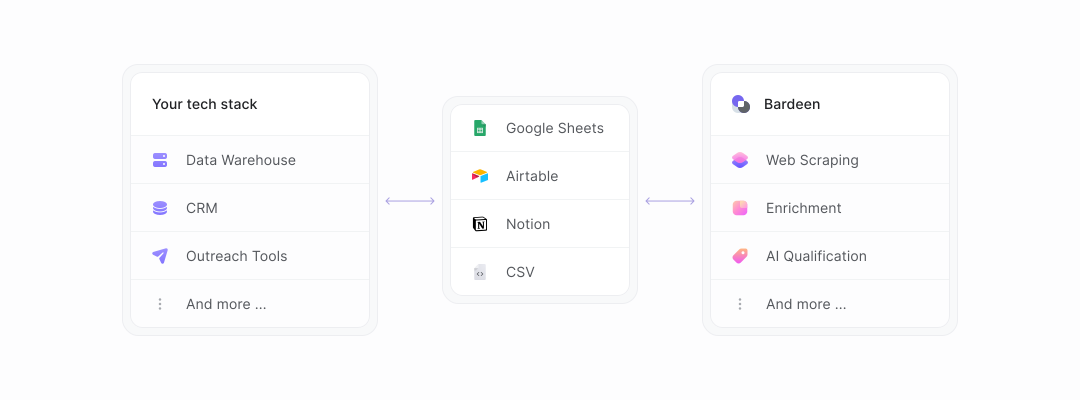
With our new Bardeen version, you can easily extract data from any website and discover new leads across the web. After extracting data from a website, use Bardeen’s powerful automation tools to validate and enrich your data, run additional scrapers on linked pages, or leverage AI to qualify leads and generate content automatically. Once your data is ready, you can easily export it to CSV, Google Sheets, Airtable, or Notion for further analysis and reporting.






SOC 2 Type II, GDPR and CASA Tier 2 and 3 certified — so you can automate with confidence at any scale.