
This workflow efficiently captures data from Facebook Pages and saves it directly into a Google Sheet. It's designed to streamline the process of collecting information from public Facebook Pages using a scraper model and consolidating that data for analysis, reporting, or archiving purposes.
The process begins by navigating to the desired Facebook Page in an active browser tab. The use_combined_scaper_model_on_active_tab command then activates, pulling data from the page based on the specified model. Finally, the append_data_frame_google_spreadsheet command appends this data into the designated Google Sheet, allowing for easy access and manipulation.
Pro Tip: This automation is perfect for market researchers, social media managers, and data analysts looking to aggregate public data from multiple Facebook Pages without manual input.
This workflow is flexible and can be adjusted to scrape different types of data by modifying the scraper model. Users can easily customize the data points they wish to extract, making it an invaluable tool for tailored data collection projects.
To start, ensure you have installed the Bardeen app on your device.
After installation, go to the Magic Box and enter the following prompt:
Scrape Facebook Pages then save into Google Sheets
Make sure to set up the necessary integrations for the workflow. This includes integration with Scraper for data scraping from Facebook Pages and Google Sheets for data storage.
Proceed to execute the workflow. This workflow is configured to:
Scraping Facebook Pages involves extracting data from public Facebook profiles, pages, or posts. This data can include page names, URLs, categories, likes, check-ins, and other publicly available information. While manual data collection from Facebook is possible, it's often inefficient and prone to errors, especially for large-scale projects. Fortunately, tools and methods are available to automate this process, making it more efficient and accurate. It's crucial to scrape data responsibly, adhering to Facebook's terms of service and respecting users' privacy.
Ready to automate your Facebook data collection? Try this workflow to scrape Facebook Pages and save the data into Google Sheets effortlessly. Get started with Bardeen.
For those interested in building custom solutions, Python offers libraries like Scrapy, Beautiful Soup, and Selenium for web scraping tasks. These tools require some programming knowledge but provide flexibility in data collection.
Automating the process of scraping Facebook Pages and saving the data into Google Sheets can significantly streamline data collection and analysis. This automation involves using a scraper to extract data from Facebook and then appending this data into a Google Sheet for easy access and manipulation. The process begins by identifying the Facebook Pages you wish to scrape, using a tool or script to collect the desired data, and then utilizing an automation platform or script to transfer this data into a Google Sheet.
Streamline your data collection process. Automate the scraping of Facebook Pages and directly save the data into Google Sheets with Bardeen. Discover how.
While there are dedicated tools and services available for scraping Facebook data, such as Apify's Facebook Pages Scraper, these might come with their own set of limitations and costs. Alternatively, custom solutions can be developed using Python libraries for those with programming expertise, offering more control over the data collection process.
Regardless of the method chosen, it's important to ensure that the scraping activities comply with Facebook's policies and respect data privacy laws. This includes avoiding the collection of personal data without consent and adhering to legal guidelines like GDPR and CCPA.
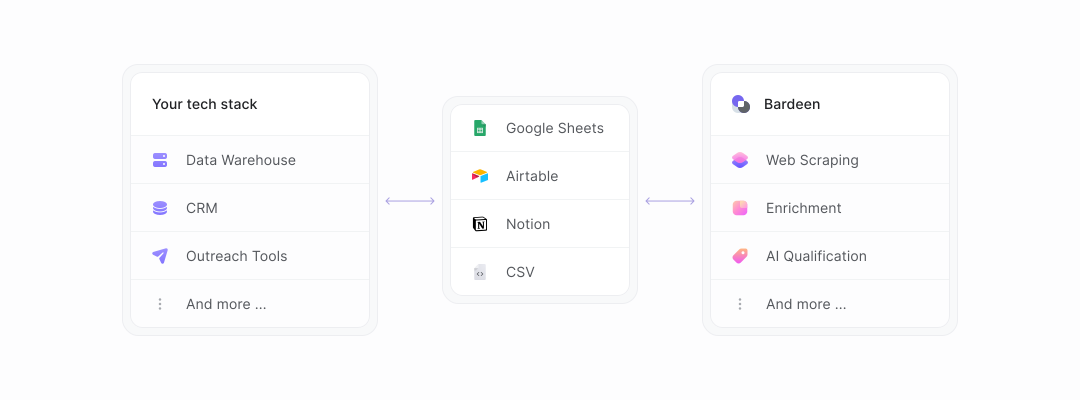
With our new Bardeen version, you can easily extract data from any website and discover new leads across the web. After extracting data from a website, use Bardeen’s powerful automation tools to validate and enrich your data, run additional scrapers on linked pages, or leverage AI to qualify leads and generate content automatically. Once your data is ready, you can easily export it to CSV, Google Sheets, Airtable, or Notion for further analysis and reporting.






SOC 2 Type II, GDPR and CASA Tier 2 and 3 certified — so you can automate with confidence at any scale.