This article compares Apollo and Zoominfo, focusing on their sales intelligence capabilities to help you choose the best tool for your needs. While both tools offer more than just sales intelligence, this comparison is specifically on this feature. Bardeen aims to aid in selecting the best tools to save time on repetitive tasks, an essential part of efficient work processes. Learn more about Bardeen, your task copilot.
Apollo's enrichment capabilities offer a more extensive range of data points, notably in company insights like buying signals and tech stacks, which are not commonly found in other platforms.

ZoomInfo, while strong in leveraging LinkedIn data for buyer's intent, does not match Apollo's depth in work history and specific company details. This makes Apollo particularly valuable for detailed prospect research and strategic outreach planning.
Moreover, integrating Apollo with Bardeen can enhance your data enrichment processes, automating workflows and enriching leads in other apps effectively. Check out this playbook for enriching contact information using Apollo.io to see how it can transform your data handling.
If your needs lean towards comprehensive background information and actionable company insights for a more informed outreach, Apollo provides a significant advantage over ZoomInfo.
Apollo provides an extensive range of data points for contacts and companies, going beyond standard information like email and phone numbers. The breadth of Apollo's platform stands out, capturing a large number of contacts and companies with detailed insights.
Key data points available in Apollo:
While Apollo offers extensive work history and company details, it provides less data from social platforms compared to some competitors. However, the unique company insights like buying signals and tech stack, when available, can be valuable for personalizing outreach, even if the granularity of the data may not always be sufficient.
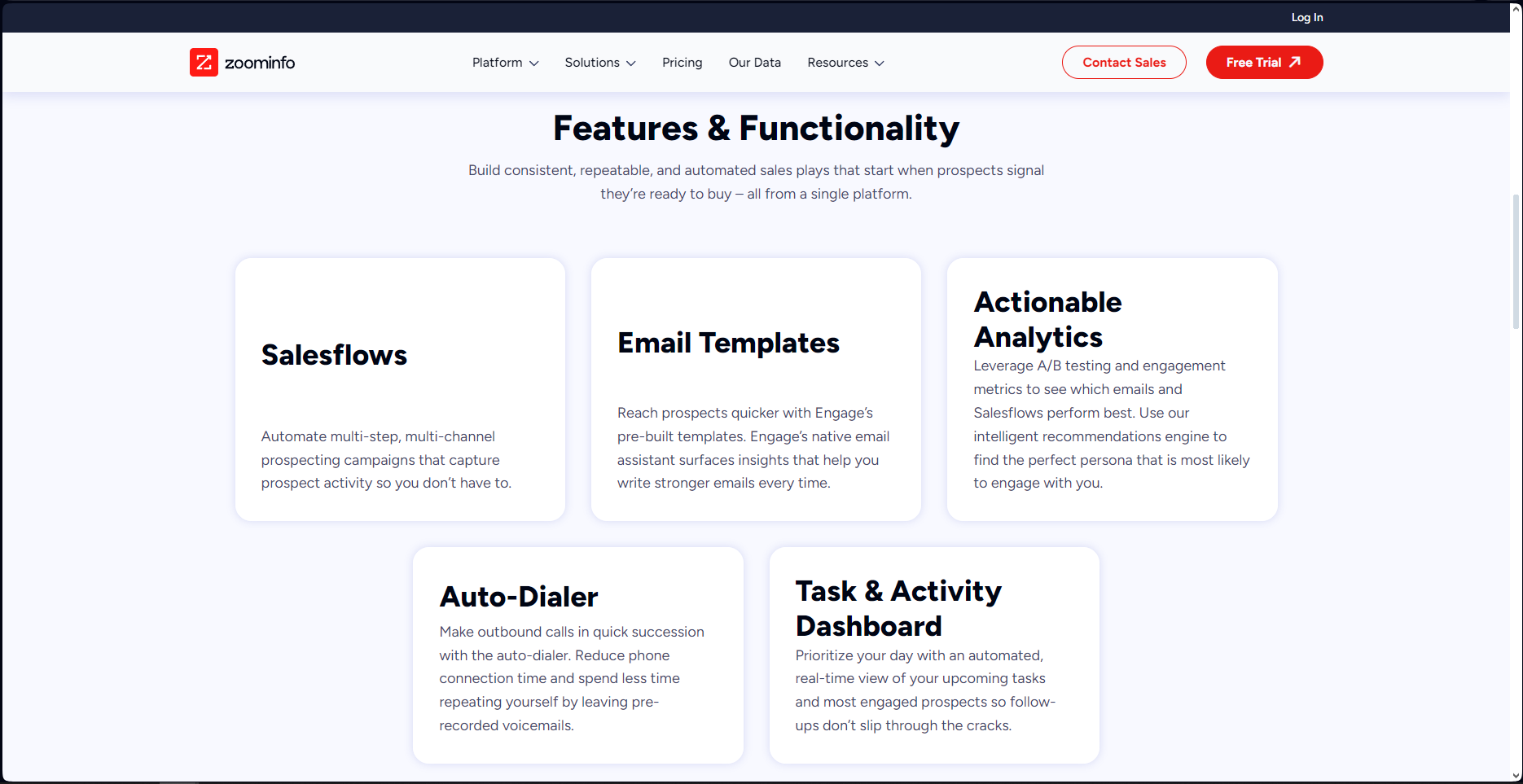
ZoomInfo offers a comprehensive set of data points to enrich lead information, going beyond standard contact details like email and phone number. The platform leverages unique data sources, including LinkedIn, to provide insights that help sales teams identify and engage with the most promising prospects.
Key data points available:
When comparing the integration capabilities of Apollo and Zoominfo for enrichment services, Apollo offers a more straightforward approach for CRM and sales engagement tools, specifically supporting direct integrations with major platforms like HubSpot and Salesforce. This is complemented by its ability to connect with Outreach and Salesloft, catering well to users needing seamless integration with these specific tools.
Zoominfo, on the other hand, does not provide direct CRM integrations but does offer the flexibility of connecting with AWS and Google Cloud through APIs. This could be beneficial for tech-savvy teams that require customization and are using these cloud services extensively.
For teams looking for direct and hassle-free CRM integrations with some of the most commonly used platforms, Apollo might be the more appealing choice. However, if your team is proficient in leveraging cloud technologies and prefers a more flexible, API-driven approach, Zoominfo's capabilities with AWS and Google Cloud are impressive.
To further enhance data enrichment and integration across your preferred tools, consider using Bardeen, which connects data from platforms like Apollo to your CRM or sales engagement tool of choice. Bardeen's ability to automate workflows with Apollo.io and other platforms can significantly boost your productivity and data management efficiency.
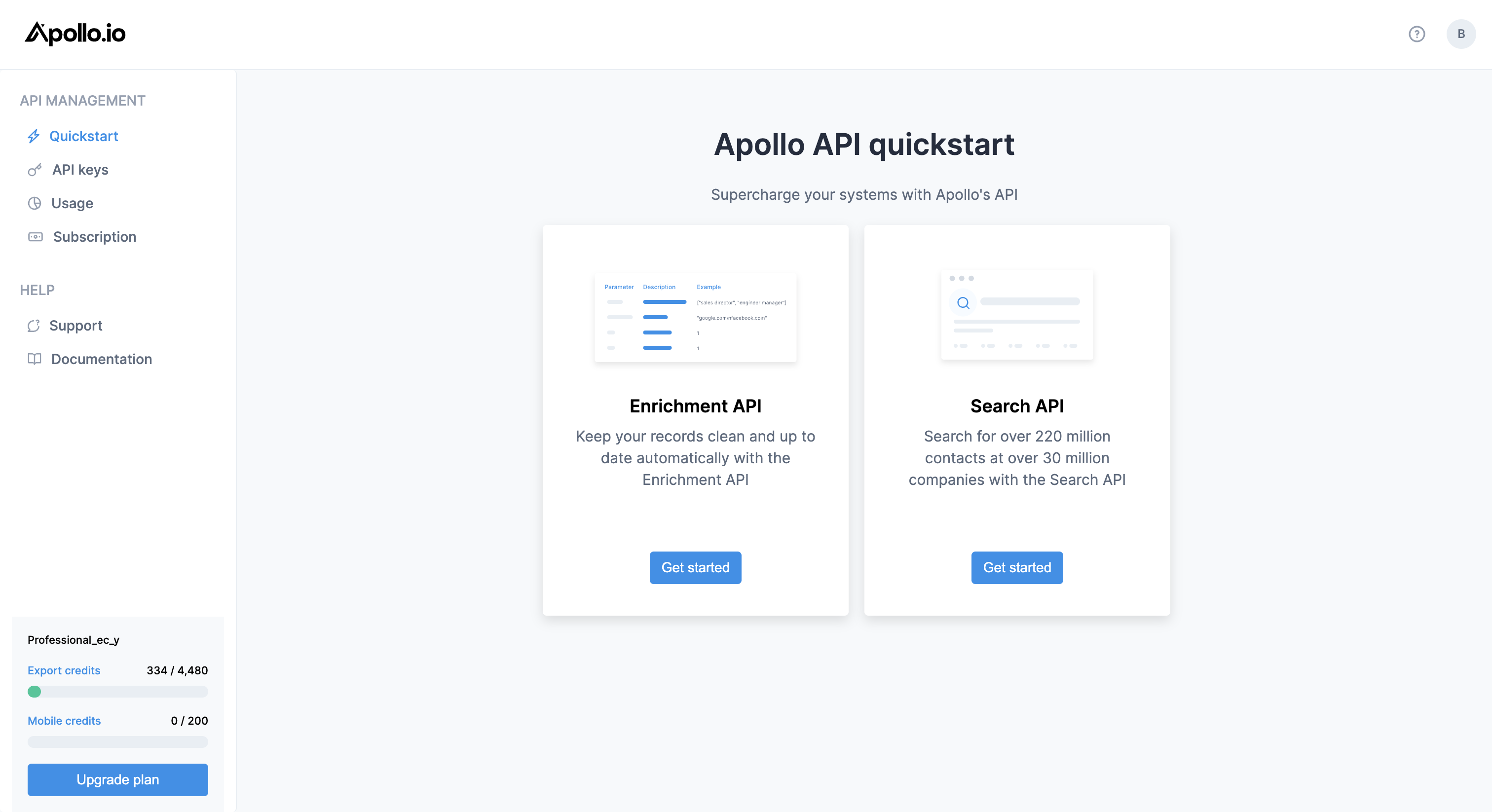
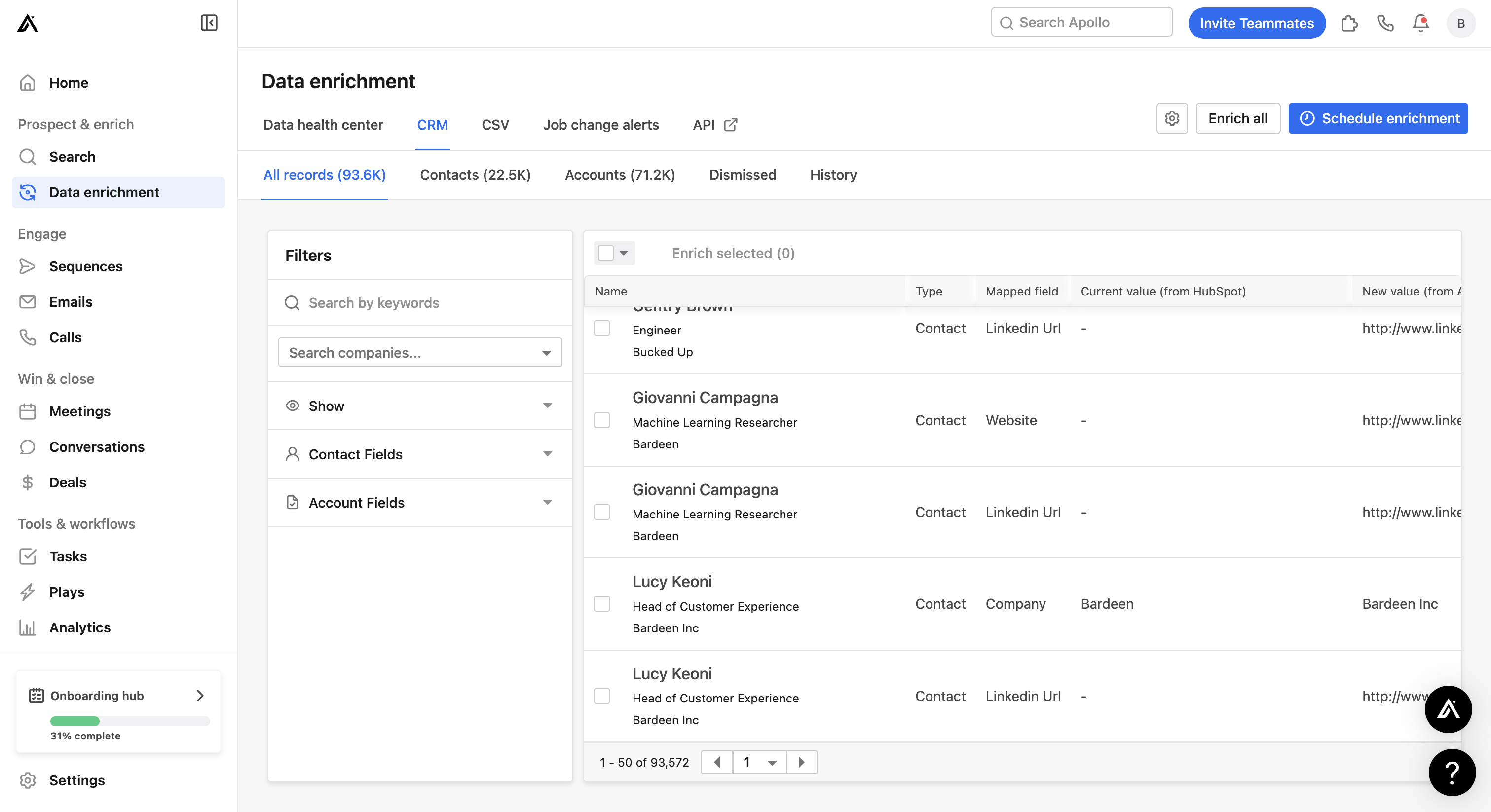
Apollo offers native integrations with popular CRM and sales engagement platforms, making it easy to sync data and streamline workflows. The platform has a strong focus on connecting with the tools sales teams already use, ensuring a seamless experience.
Key aspects of Apollo's integrations:
While Apollo's native integration options are somewhat limited compared to competitors, the platform focuses on deep integrations with the most popular tools in the sales tech stack. This approach, combined with a robust API, ensures that Apollo can fit into most sales teams' existing workflows and processes.
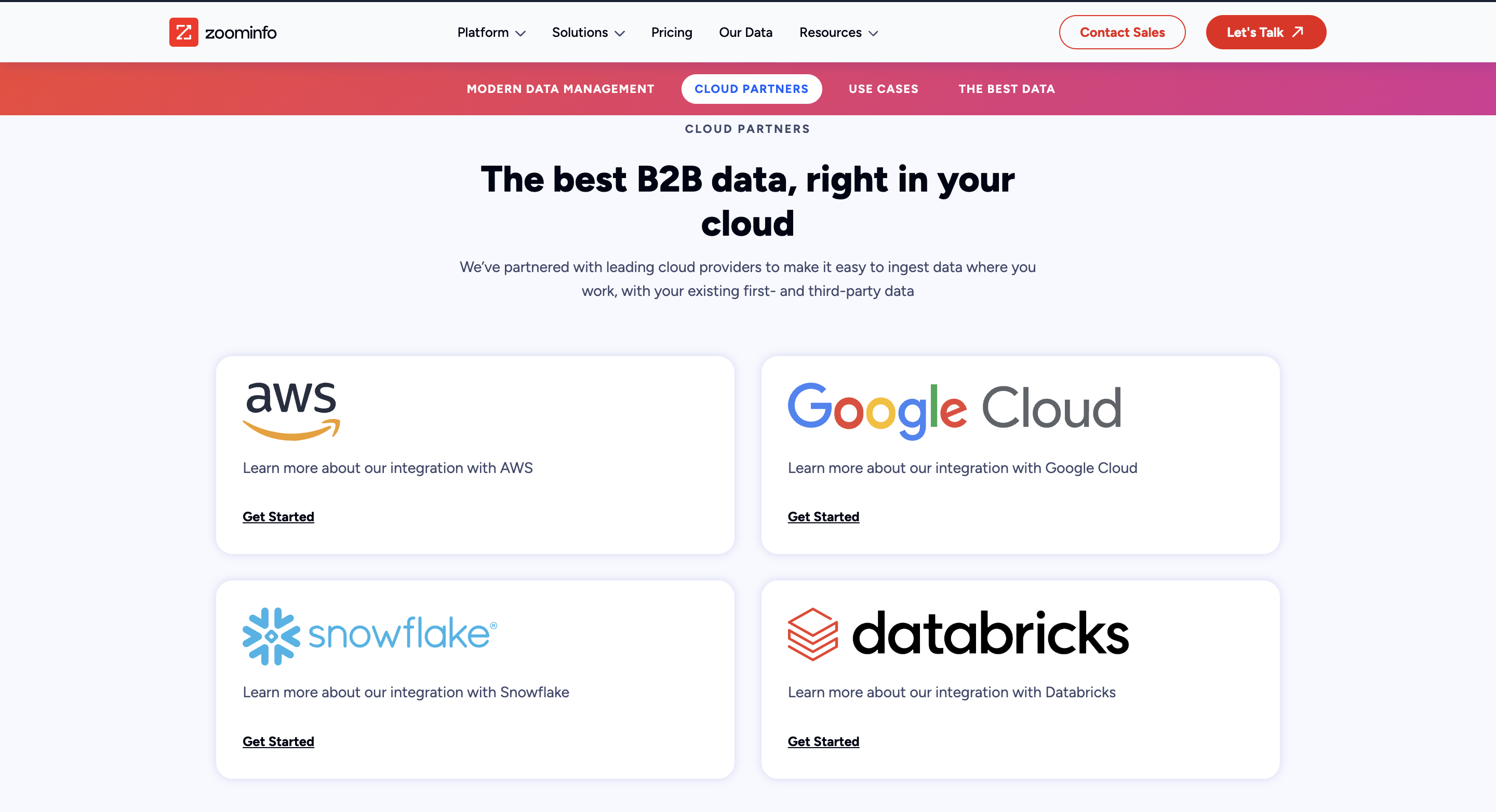
ZoomInfo does not have direct integrations with CRMs or outreach tools out-of-the-box. However, the platform can be integrated with AWS and Google Cloud, allowing users to ingest their existing data into ZoomInfo's platform. Additionally, ZoomInfo provides an API that enables integration with any CRM system.
Key aspects of ZoomInfo's enrichment integrations:
When comparing the data quality and accuracy of Apollo and ZoomInfo, Apollo stands out due to its transparent documentation and user feedback on data reliability. Apollo also integrates directly with Bardeen, enhancing its utility by automating workflows for data enrichment.
ZoomInfo, while noted for its use of advanced technology and frequent updates, does not provide as much public detail about its data sources or update frequency as Apollo does. This lack of transparency might concern users who prioritize data accuracy and up-to-date information.
For those looking to extend the capabilities of their data tools, integrating Apollo with Bardeen offers a sophisticated approach to manage and enrich company information efficiently.
If data transparency and integration potential are top priorities, Apollo provides a more compelling option due to its detailed documentation and positive user endorsements, alongside powerful integrations with platforms like Bardeen.
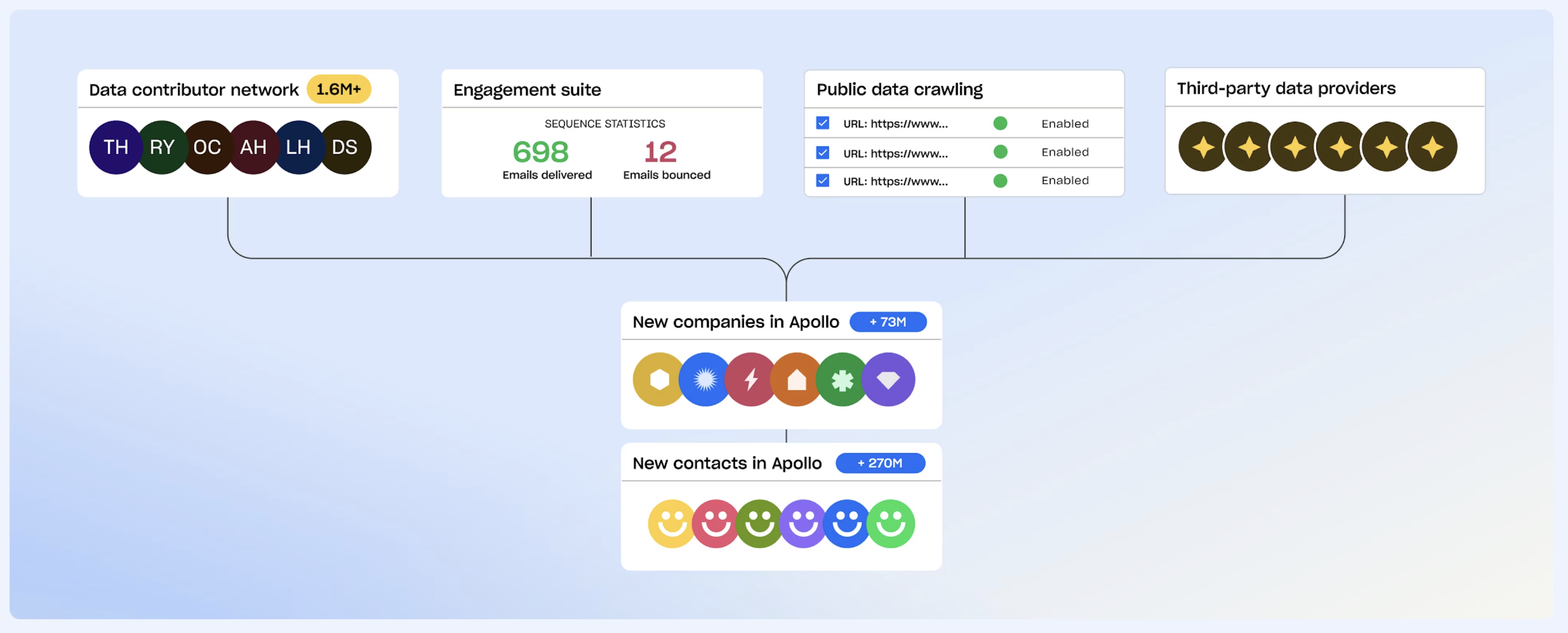
Apollo provides high-quality data for sales engagement, sourced from a vast network of over 1.6 million data contributors. The platform offers extensive documentation on its data quality, emphasizing the importance of accurate contact information for effective outreach.
Key aspects of Apollo's data quality:
While Reddit users express mixed opinions on Apollo's data quality compared to competitors, the platform's extensive documentation and large data contributor network suggest a commitment to providing accurate and up-to-date information for sales professionals.
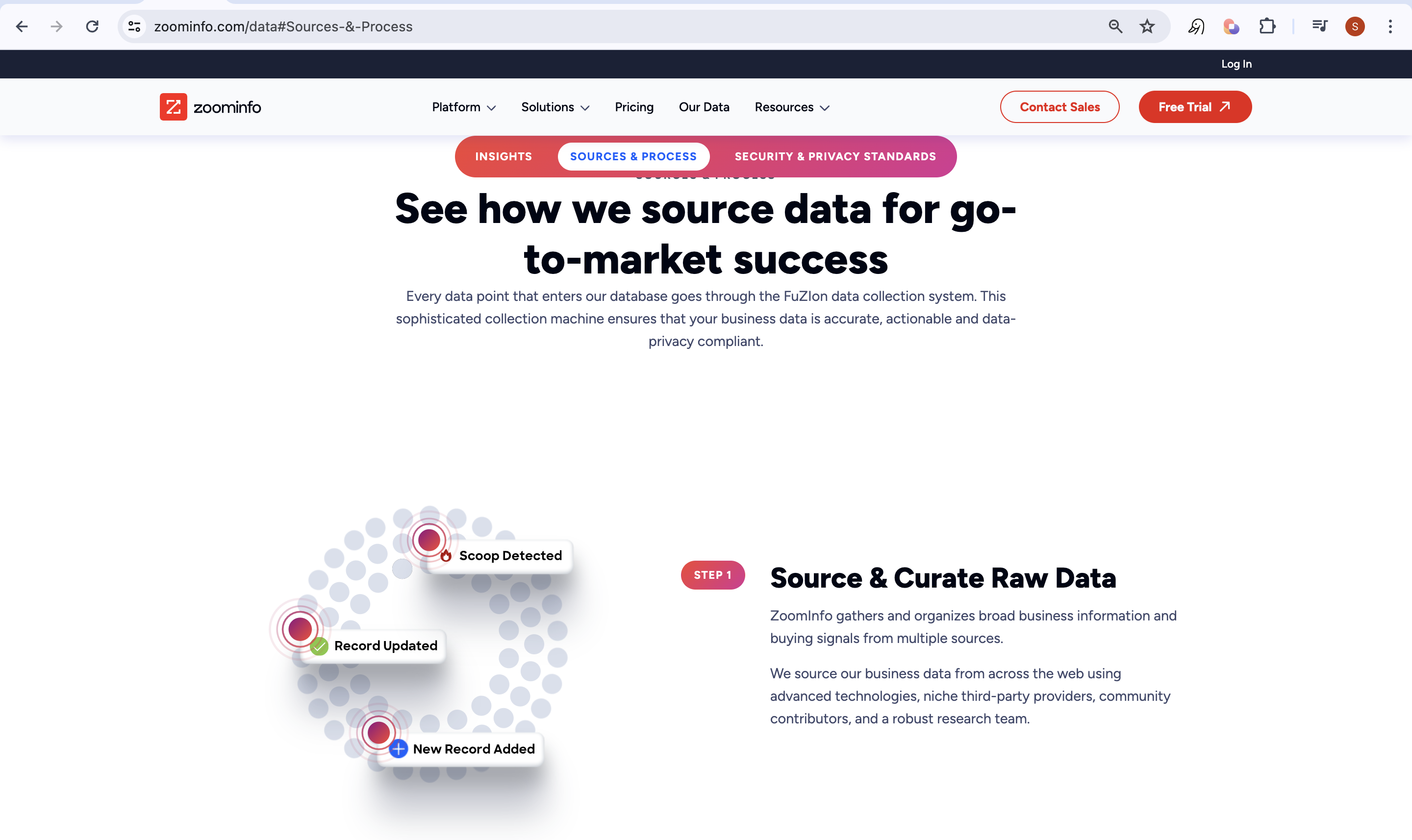
ZoomInfo places a strong emphasis on the quality and accuracy of its data, ensuring that users have access to the most up-to-date and reliable information for their sales and marketing efforts. The platform gathers data from a variety of sources and employs a multi-pronged approach to maintain data integrity.
Key aspects of ZoomInfo's data quality and accuracy:
By leveraging a combination of cutting-edge technology and human expertise, ZoomInfo strives to provide its users with the highest quality data possible, enabling them to make informed decisions and connect with the right prospects at the right time.
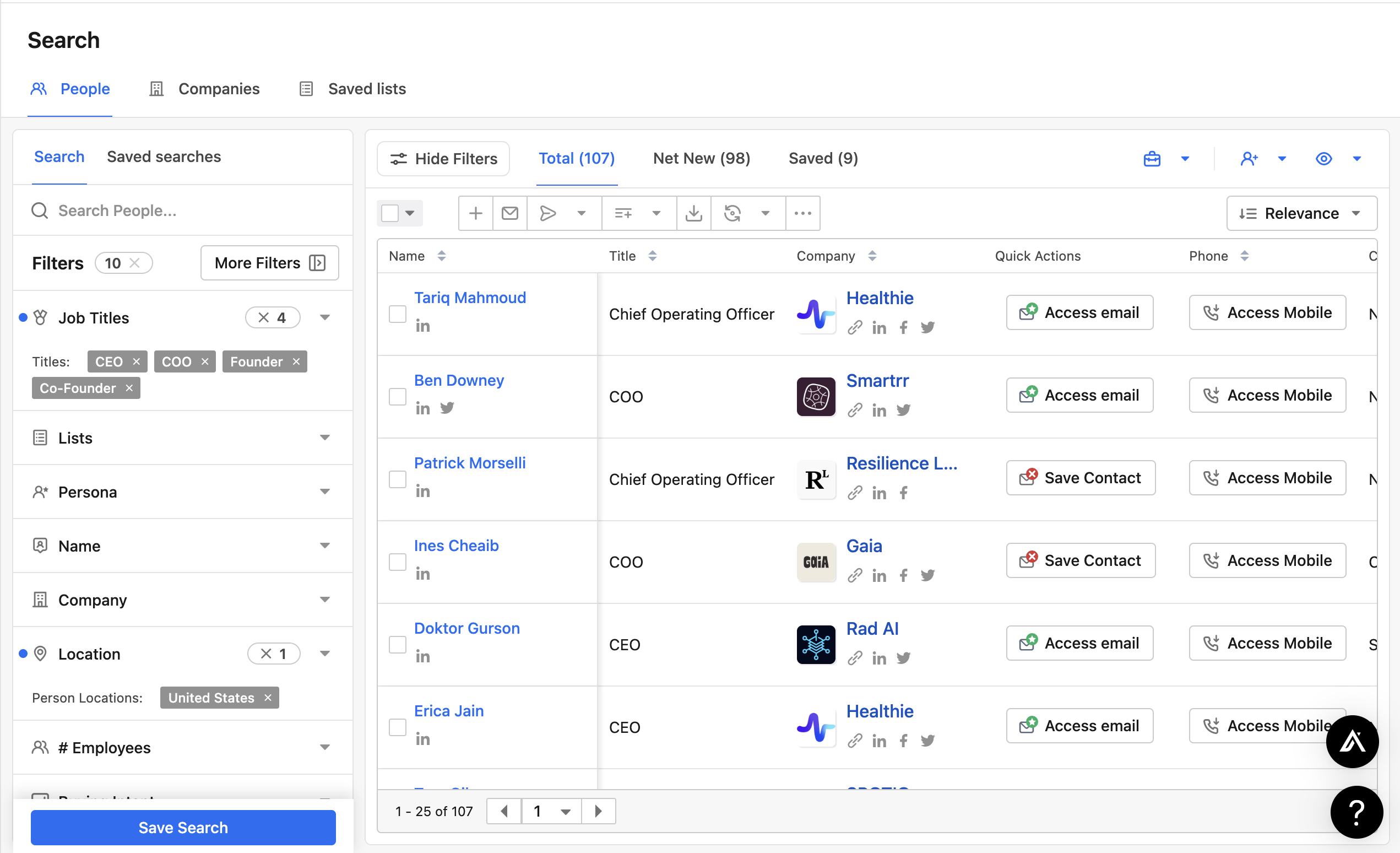
Apollo's prospecting feature excels with its intuitive user interface and robust functionality that allows you to create multiple lead lists, use advanced filters, and directly engage with leads.
While Zoominfo also supports list creation and has powerful filtering capabilities, it primarily relies on API use for data export, which may not be as direct or user-friendly as Apollo's built-in export options.
For users seeking a more integrated and accessible approach to managing and directly interacting with their leads, Apollo provides a more comprehensive solution. Additionally, integrating Apollo with Bardeen can further enhance your lead management by automating workflows and enriching lead data from various sources, making your prospecting process even more efficient.
Apollo's prospecting feature offers a powerful yet user-friendly experience for building targeted lists of leads for outreach. With an intuitive interface and a wide range of filtering options, users can quickly create and manage multiple lead lists tailored to their specific needs.
Key features of Apollo's prospecting tool:
The combination of these features allows users to efficiently build and maintain highly targeted lead lists, streamlining their prospecting efforts and enabling more effective outreach directly within the Apollo platform.

Zoominfo's Enrichment feature provides a powerful prospecting tool for building targeted lead lists. With an intuitive interface and a wide range of filtering options, users can quickly create and manage multiple lists of contacts and companies that meet their specific criteria.
Key features of Zoominfo's prospecting tool:
While Zoominfo's prospecting tool offers powerful features for building targeted lead lists, some users may find the learning curve steeper compared to other sales intelligence platforms. However, the advanced filtering options and data export capabilities make it a valuable asset for sales teams looking to streamline their outreach efforts.
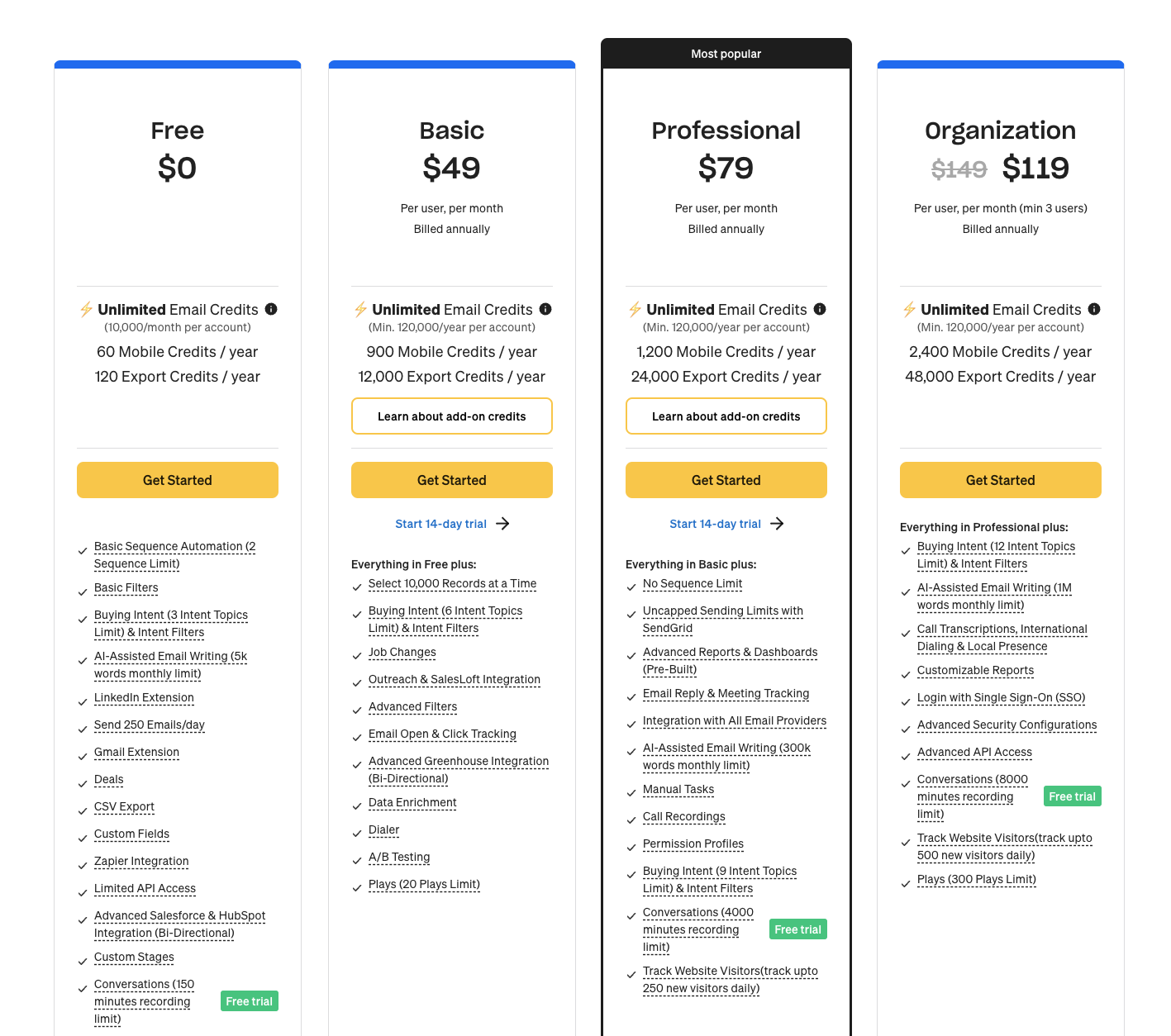
Apollo provides a range of pricing options to suit different needs and budgets, with plans billed either monthly or annually. The pricing model is based on credits, which are used for various actions within the platform.
All paid plans offer a 14-day trial, though the trial is limited to 50 lead credits per user. Notably, all plans include unlimited email credits, with a 10,000 credit monthly limit per account to prevent abuse. However, free plan users with unverified email domains are restricted to only 100 email credits per month.
To access Organization plans and features, you'll need to contact Apollo's sales team directly.
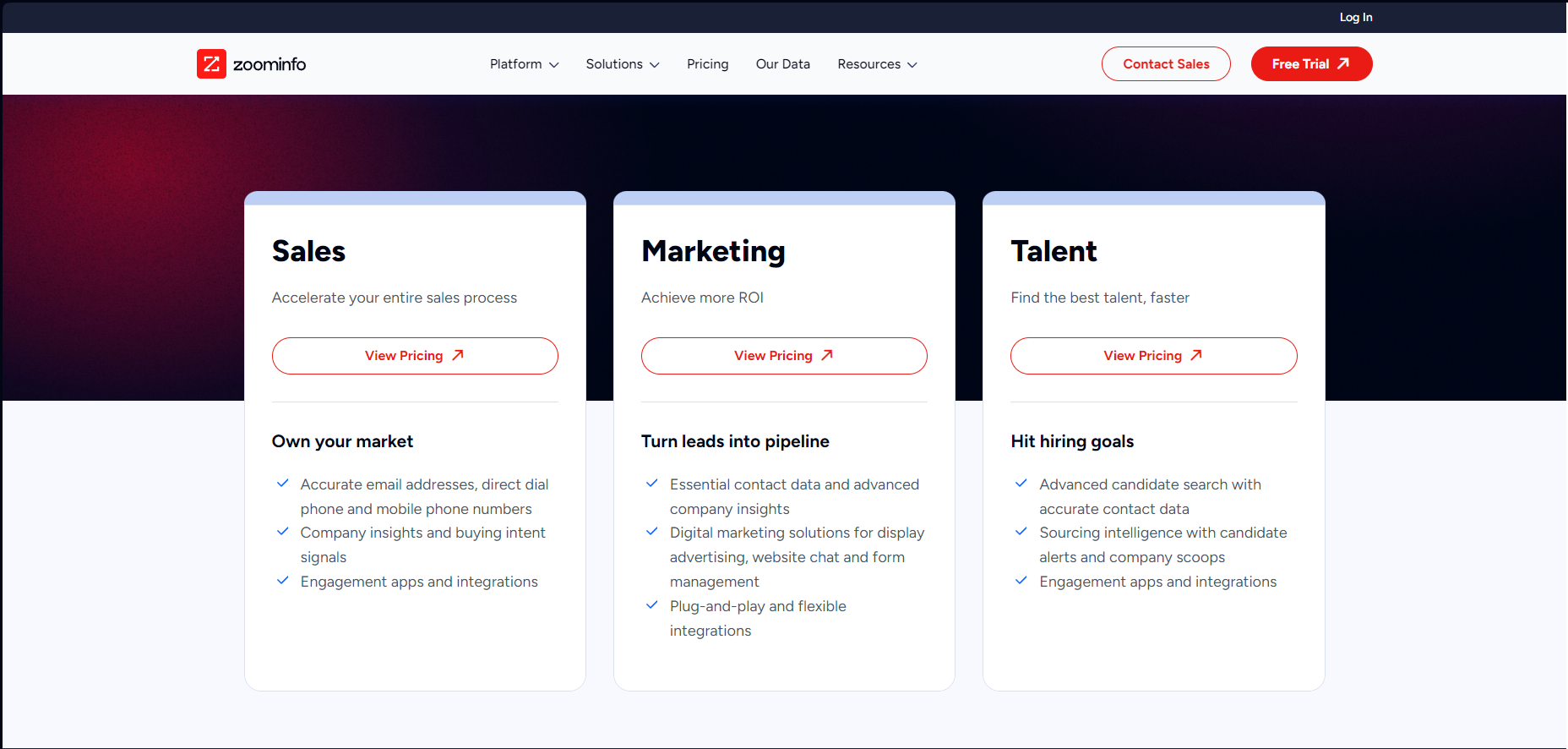
Zoominfo provides pricing information for their sales, marketing, and talent solutions only after contacting their sales team. They do not publicly disclose pricing details on their website.
Key points about Zoominfo pricing:







SOC 2 Type II, GDPR and CASA Tier 2 and 3 certified — so you can automate with confidence at any scale.