
This automation streamlines the process of transferring citation data from Google Scholar into a Google Sheet. It simplifies research tracking, citation analysis, and data management for academics, researchers, and students.
First, the automation scrapes citations from Google Scholar using a predefined model while you're on the active tab. Then, it appends the scraped citation data to a specified Google Sheet, making it accessible for further analysis or sharing. This process can be used for:
Note: Ensure you're on the Google Scholar page with the citations you want to scrape before starting this automation. Bardeen supports various output destinations beyond Google Sheets, like Airtable, or CRMs, offering flexibility in how and where you manage your data.
With this workflow, managing academic references becomes a breeze, enabling researchers to focus more on their work and less on administration. Perfect for keeping your research organized and easily accessible.
To start, make sure to install the Bardeen app on your computer.
After installation, proceed to the Magic Box and enter the following prompt:
Scrape Google Scholar Citations then save into Google Sheets
It is important to set up the necessary integrations for the workflow, which includes the Scraper for scraping data and Google Sheets for data storage.
Finally, you can execute the workflow. This workflow is specifically designed to:
Scraping Google Scholar for citations is a task that can significantly enhance academic research, allowing for the efficient collection of data for analysis or reference management. Whether you're a researcher, student, or faculty member, extracting citation data can be invaluable for your work. However, due to Google Scholar's restrictions, this process might seem daunting at first. This guide will walk you through the manual methods and introduce how Bardeen can automate this task, making it more efficient.
Automate the process of scraping Google Scholar citations and save them directly into Google Sheets with Bardeen. Start using this workflow now.
Manually, there are a couple of approaches to scrape citations from Google Scholar. The first involves using Python scripts with libraries such as BeautifulSoup and Requests. This method requires some programming knowledge but is powerful for fetching bulk data. The second method is using web scraping tools like Octoparse, which offers a no-code solution for extracting data. Both methods have their merits and can be chosen based on your technical expertise and requirements.
Once you have scraped the necessary citation data from Google Scholar, the next step is to organize and analyze this data efficiently. Google Sheets is a popular choice for this task due to its accessibility and ease of use. Manually, you can save the scraped data into a CSV file and then import it into Google Sheets. However, this process can be cumbersome and time-consuming, especially if you're dealing with a large volume of data.
Bardeen automates the transfer of citation data from Google Scholar into Google Sheets, streamlining the process. By using Bardeen, you can bypass the manual steps and have your scraped data neatly organized in Google Sheets in no time. This not only saves valuable time but also reduces the potential for errors that can occur during manual data entry.
Streamline your academic research by automating the scraping of Google Scholar citations into Google Sheets with Bardeen. Try it out here.
Whether you choose to scrape Google Scholar citations manually or automate the process with Bardeen, the key is to select the method that best fits your workflow and technical comfort level. Automation with Bardeen not only simplifies the task but also enhances productivity, allowing you to focus more on your research and less on data management.
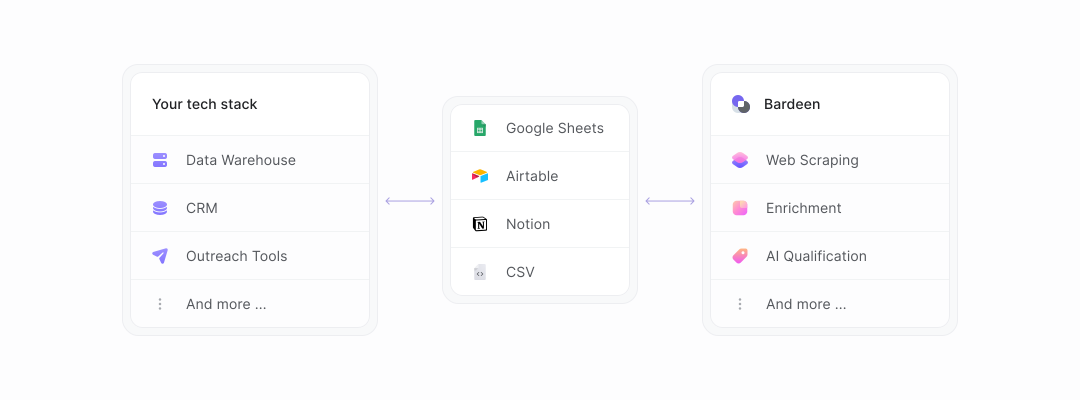
With our new Bardeen version, you can easily extract data from any website and discover new leads across the web. After extracting data from a website, use Bardeen’s powerful automation tools to validate and enrich your data, run additional scrapers on linked pages, or leverage AI to qualify leads and generate content automatically. Once your data is ready, you can easily export it to CSV, Google Sheets, Airtable, or Notion for further analysis and reporting.






SOC 2 Type II, GDPR and CASA Tier 2 and 3 certified — so you can automate with confidence at any scale.