

This automation scrapes job listings from Glassdoor and saves them to a designated Google Sheet. It's designed to help job seekers and recruiters aggregate job listing data efficiently.
The process begins by scraping job listings from the active Glassdoor URL you're viewing, using a pre-defined scraper model tailored for Glassdoor job listings. After scraping, the job listings are appended to your specified Google Sheets. This automation is ideal for:
Pro Tip: This workflow can be customized with additional filters or data manipulation steps in Google Sheets, such as sorting by date, location, or company.
Streamline your job search or recruitment efforts by leveraging this automation with Bardeen.
To begin, ensure you have the Bardeen app installed on your device.
Open the Magic Box and enter the prompt:
scrape job listing from Glassdoor, save into google sheets
For the workflow to function, integrate with Scraper for sourcing data from Glassdoor and Google Sheets for data storage.
With everything set, run the workflow. It is designed to:
Scraping job listings from Glassdoor can be a powerful way to gather data for job market analysis or to aggregate job listings for specific roles or industries. Whether you're a job seeker looking to find opportunities or a researcher analyzing the job market, scraping Glassdoor can provide valuable insights. This guide will walk you through the methods to scrape Glassdoor jobs both with and without coding.
Looking to streamline your job search or recruitment efforts? Automate the process of scraping job listings from Glassdoor and saving them into Google Sheets with Bardeen. Run the workflow now.
For those without programming skills, several online tools can help you scrape data from Glassdoor. Tools like Octoparse, Parsehub, and WebHarvy allow for easy data extraction without the need to write any code. Here's a simplified process:
While this method is accessible, it may not offer the same level of customization and efficiency as coding-based methods.
If you have some programming skills, you can opt for a more powerful and customizable approach using Python libraries such as BeautifulSoup and Selenium. Here's how you can scrape Glassdoor job listings using code:
This method requires more effort but offers greater flexibility and control over the data you collect.
Automate your Glassdoor job scraping with Bardeen and save time on data collection. Try it now.
Regardless of the method you choose, it's important to be aware of the legal and ethical considerations surrounding web scraping. Ensure you comply with Glassdoor's terms of use and respect data privacy laws.
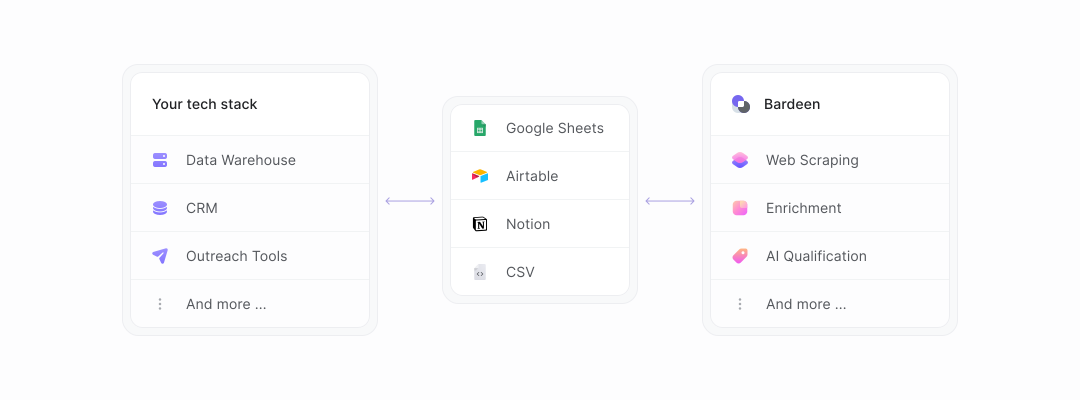
With our new Bardeen version, you can easily extract data from any website and discover new leads across the web. After extracting data from a website, use Bardeen’s powerful automation tools to validate and enrich your data, run additional scrapers on linked pages, or leverage AI to qualify leads and generate content automatically. Once your data is ready, you can easily export it to CSV, Google Sheets, Airtable, or Notion for further analysis and reporting.






SOC 2 Type II, GDPR and CASA Tier 2 and 3 certified — so you can automate with confidence at any scale.