

This automation scrapes rental estimate data from a specified Redfin URL and appends it to a designated Google Sheet. It's a powerful tool for real estate professionals, investors, and analysts looking to gather data on rental properties efficiently.
First, the automation activates a combined scraper model on the current browser tab that is navigated to a Redfin property page. This model is specifically designed to extract rental estimates, including potential rent prices, property details, and market comparisons. Once the data is extracted, it is then seamlessly appended to the specified Google Sheet. This process can be done for multiple properties, making it easy to build a comprehensive database of rental estimates.
Note: While this workflow is tailored for Redfin, Bardeen's scraper models can be adapted to work with other real estate platforms. Additionally, the output is not limited to Google Sheets; it can be modified to work with other applications like Airtable.
If you're looking to streamline your real estate analysis process, this workflow is a must-try. Install Bardeen to start automating your data collection and analysis today.
To start, ensure you have the Bardeen app installed on your device.
Open the Bardeen app and go to the Magic Box. Enter the following prompt:
scrape rental estimate from redfin, save into google sheets
Set up the necessary integrations for your workflow. This will involve connecting Scraper for scraping data from Redfin and Google Sheets for data storage.
After setting up, execute the workflow. This process will:
Scraping rental estimates from Redfin involves extracting data regarding potential rent prices, property details, and market comparisons from the platform. This data is crucial for real estate professionals, investors, and analysts who require up-to-date information on rental properties. The process can be manual, involving the direct extraction of data from the website, or automated, using web scraping tools and techniques.
Looking to streamline your real estate analysis process? Install Bardeen to start automating your data collection and analysis today. Try it now!
Manually, one would navigate to Redfin's website, search for properties, and manually record the rental estimates and relevant property details. This method, while straightforward, is time-consuming and not scalable for large datasets.
Automated scraping involves writing scripts or using web scraping tools to programmatically collect data from Redfin. Python, with libraries such as Requests and BeautifulSoup or frameworks like Scrapy, is commonly used for this purpose. These tools can automate the process of navigating the site, extracting the needed data, and saving it in a structured format like CSV or directly into databases or applications like Google Sheets.
Once rental estimate data is scraped from Redfin, integrating it into Google Sheets allows for better data organization, analysis, and sharing. This process can be manual, involving copying and pasting the data into a spreadsheet, or automated, using web scraping tools that support direct integration with Google Sheets or APIs that facilitate the transfer of data between applications.
Automating the integration of scraped data into Google Sheets can significantly enhance efficiency. Tools like Bardeen offer the capability to automate workflows, including scraping data from websites like Redfin and appending it directly to Google Sheets. This automation saves time, reduces errors associated with manual data entry, and ensures that the data in Google Sheets is always up-to-date.
Automate the extraction of rental estimates from Redfin and save them directly into Google Sheets with Bardeen. Get started now!
For those with programming knowledge, using Google Sheets API in combination with web scraping scripts allows for seamless integration. Scripts can be written to scrape data from Redfin and use the Google Sheets API to create, update, or append data in spreadsheets programmatically.
Regardless of the method chosen, integrating scraped rental estimate data from Redfin into Google Sheets enables real estate professionals to efficiently analyze data, make informed decisions, and maintain comprehensive records of rental properties in their market of interest.
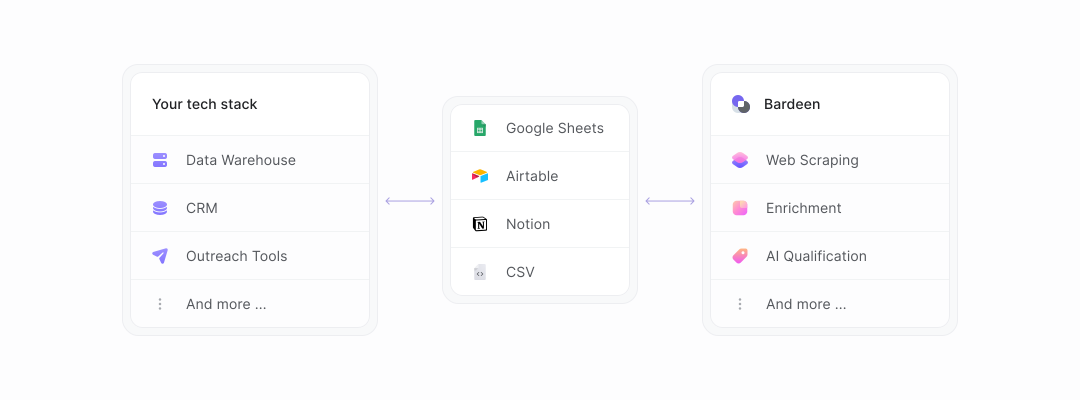
With our new Bardeen version, you can easily extract data from any website and discover new leads across the web. After extracting data from a website, use Bardeen’s powerful automation tools to validate and enrich your data, run additional scrapers on linked pages, or leverage AI to qualify leads and generate content automatically. Once your data is ready, you can easily export it to CSV, Google Sheets, Airtable, or Notion for further analysis and reporting.






SOC 2 Type II, GDPR and CASA Tier 2 and 3 certified — so you can automate with confidence at any scale.