
This automation simplifies the task of gathering interview information from Google Jobs listings by scraping the data and appending it directly to a Google Sheet. It leverages a scraper model to extract detailed interview insights from the active tab, which should be opened to Google Jobs.
The process involves:
Suitable for HR professionals, recruiters, and job seekers, this workflow streamlines the collection of interview-related data, aiding in preparation and strategy formulation.
Pro Tip: Customize the scraper model to extract specific data points relevant to your needs, such as interview questions, duration, and feedback times.
Enable this workflow with Bardeen for a more efficient job analysis and preparation process.
To initiate, ensure the Bardeen app is installed on your device.
Open the Bardeen app and proceed to the Magic Box. Enter the prompt:
scrape interviews from Google Jobs, save into google sheets
Make sure to set up the required integrations for the workflow. This includes the Scraper to collect the data and Google Sheets to store the information.
Now, execute the workflow. This workflow is designed to:
Scraping interviews from Google Jobs involves extracting interview-related information from job listings. This task can be approached manually by using web scraping techniques or through automated tools like Bardeen. The goal is to gather data such as interview questions, feedback times, and the interview process for various job listings, which can then be organized and analyzed for insights.
Streamline your job analysis and preparation process by enabling the Bardeen workflow to scrape interviews from Google Jobs directly into Google Sheets. Try it now!
Manually scraping Google Jobs requires knowledge of web scraping tools and programming languages like Python. One method involves using Selenium, a browser automation tool, to navigate the dynamically loading pages of Google Jobs. By automating browser actions, such as scrolling and clicking on job listings, you can extract the required information. This process involves identifying the HTML elements containing the interview information and using Selenium to extract and store this data. However, this approach requires handling pagination and dynamically loaded content, which can be complex due to Google Jobs' infinite scrolling feature.
Another technique involves using the Google Jobs API through services like SerpApi. This method bypasses the need to manually navigate and scrape the website. By sending requests to the API, you can retrieve structured data from Google Jobs, including interview information. This approach is more efficient and reliable but may involve costs associated with using a third-party API.
For those looking for a more straightforward and less technical solution, automating the scraping process with Bardeen and saving the data into Google Sheets is an excellent alternative. Bardeen can automate repetitive tasks without the need for coding, making it accessible to professionals with non-technical backgrounds. By leveraging Bardeen's capabilities, you can extract interview information from Google Jobs and directly append it to a Google Sheet. This method simplifies data collection and organization, enabling HR professionals, recruiters, and job seekers to analyze and prepare for interviews more effectively.
Automate the extraction of interview information from Google Jobs and save it directly into Google Sheets with Bardeen. Get started today!
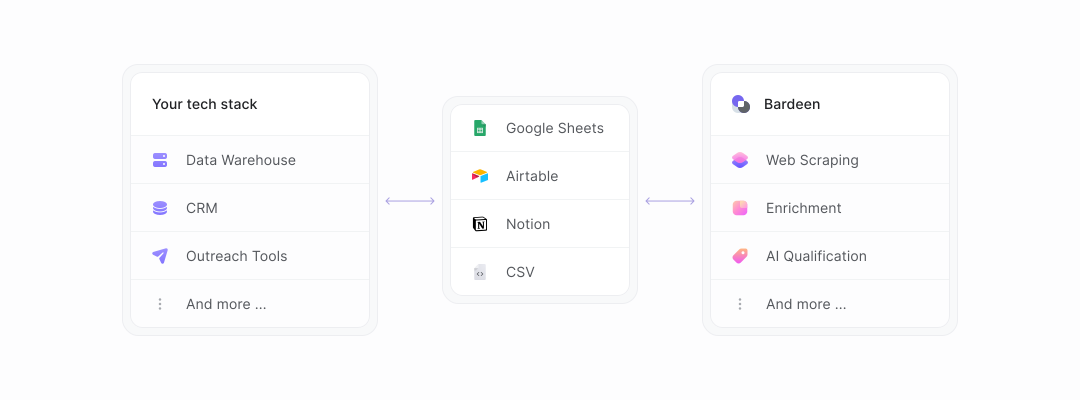
With our new Bardeen version, you can easily extract data from any website and discover new leads across the web. After extracting data from a website, use Bardeen’s powerful automation tools to validate and enrich your data, run additional scrapers on linked pages, or leverage AI to qualify leads and generate content automatically. Once your data is ready, you can easily export it to CSV, Google Sheets, Airtable, or Notion for further analysis and reporting.






SOC 2 Type II, GDPR and CASA Tier 2 and 3 certified — so you can automate with confidence at any scale.