

This automation scrapes company reviews from Glassdoor for a specified company and saves the results to a Google Sheet. It leverages a combined scraper model to extract reviews from custom HTML sources.
The process begins by scraping reviews from Glassdoor for the provided company name. Following the extraction, the data is then neatly appended into a specified Google Sheet. This workflow is ideal for:
Pro Tip: This workflow can be adjusted to scrape other types of information from Glassdoor or similar sites by modifying the scraper model.
Automate the process of collecting valuable insights from Glassdoor with Bardeen.
Begin by installing the Bardeen app on your device. You can find it here.
With the Bardeen app installed, proceed to the Magic Box and input the following prompt:
scrape company reviews from Glassdoor, save into google sheets
Make sure the necessary integrations are set up for your workflow. This includes integrations with Scraper for sourcing data from Glassdoor and Google Sheets for saving the data.
After setting up, execute the workflow. The workflow is designed to:
Scraping Glassdoor for company reviews can be a valuable way to gather insights about potential employers, analyze market trends, or enhance your data analysis projects. This guide will walk you through different methods to scrape Glassdoor reviews, covering both coding and no-code approaches. Whether you're a job seeker, a data analyst, or an HR professional, this guide will help you navigate the process of extracting valuable data from Glassdoor.
Ready to automate your data collection? Use Bardeen to scrape Glassdoor reviews effortlessly and save them directly into Google Sheets.
Before diving into the technical aspects of scraping Glassdoor, it's crucial to understand the legal considerations. Generally, scraping publicly available data from Glassdoor is legal, provided you do not breach any terms of use or engage in activities that harm the website's operation. Always respect robots.txt files and use scraping practices that do not overload Glassdoor's servers. Preparing for scraping involves setting up the right tools. For coding methods, Python is a popular choice, with libraries such as BeautifulSoup and Selenium for web scraping. For those preferring a no-code approach, tools like Octoparse offer a user-friendly interface for data extraction without writing a single line of code.
For those comfortable with coding, Python offers a powerful way to scrape Glassdoor reviews. The process involves using libraries like BeautifulSoup to parse HTML content and extract the needed data. You'll need to install Python and the necessary libraries, understand the structure of Glassdoor's web pages, and write a script to navigate the site and collect reviews. Selenium can be used for more complex interactions, such as dealing with JavaScript-rendered content or automating browser activities.
If coding isn't your forte, no-code tools like Octoparse simplify the scraping process. These platforms provide a graphical interface to select data fields and extract information without writing code. The steps typically involve creating a new task, selecting the data fields you want to scrape, and running the task to collect data. The extracted information can then be exported to formats like CSV or directly to databases such as Google Sheets. This approach is ideal for users looking for a straightforward solution to gather data from Glassdoor.
Automate your Glassdoor review collection with Bardeen and integrate your findings directly into your workflows.
Regardless of the method you choose, scraping Glassdoor reviews can provide valuable insights. Remember to always scrape responsibly, adhering to legal guidelines and ethical standards. Whether through coding or no-code tools, the data you collect can offer a wealth of information for analysis and decision-making.
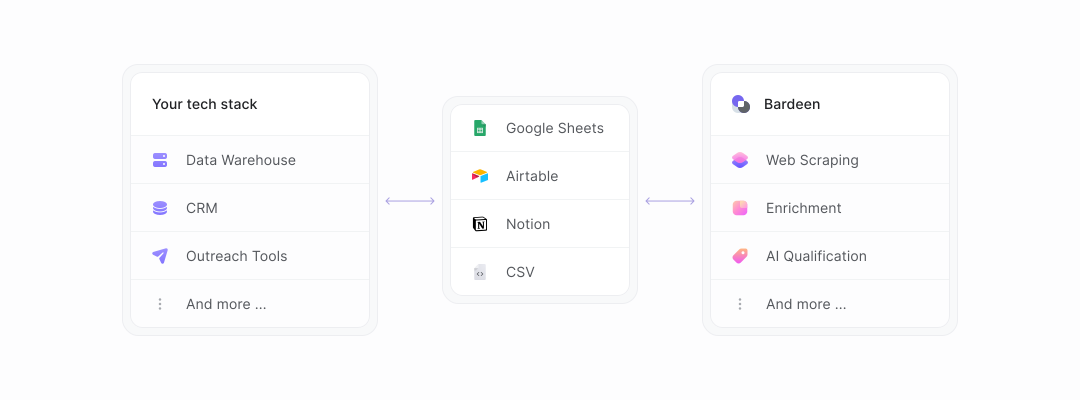
With our new Bardeen version, you can easily extract data from any website and discover new leads across the web. After extracting data from a website, use Bardeen’s powerful automation tools to validate and enrich your data, run additional scrapers on linked pages, or leverage AI to qualify leads and generate content automatically. Once your data is ready, you can easily export it to CSV, Google Sheets, Airtable, or Notion for further analysis and reporting.






SOC 2 Type II, GDPR and CASA Tier 2 and 3 certified — so you can automate with confidence at any scale.