
This automation scrapes general data from a specified Facebook URL and saves it directly into a Google Sheets document. It's a simple, yet powerful way to collect and analyze data from Facebook pages or profiles.
The process begins by scraping general data, such as posts, comments, likes, and other publicly accessible information from the Facebook URL. Following the scraping, this data is then automatically appended to a specified tab within your Google Sheets document. This can be particularly useful for:
Note: Bardeen can be integrated with a variety of apps and platforms, allowing you to further analyze or manipulate the data collected from Facebook or store it across different platforms like Airtable, Coda, or even your CRM.
Streamline your data collection and analysis process by leveraging this automated workflow with Bardeen.
To get started, first install the Bardeen app on your device.
Open the Bardeen app and proceed to the Magic Box. Enter the following prompt:
Scrape Facebook General Data then save into Google Sheets
Make sure to set up the required integrations for this workflow. This includes the Scraper for collecting data from Facebook and Google Sheets for storing the data.
Once everything is set, execute the workflow. This workflow is designed to:
Scraping Facebook data involves the automated collection of publicly available information from Facebook's platform. This process can range from manually copying data to using sophisticated software that mimics human interactions to gather data more efficiently. While Facebook's vast user base makes it a goldmine for data collection, it's crucial to navigate the legal and ethical considerations. Facebook has stringent policies against unauthorized data scraping, emphasizing the need for compliance with its terms of service and respecting user privacy.
Streamline your Facebook data collection by leveraging Bardeen's automation. Start now to save time and enhance accuracy.
For those seeking to scrape Facebook data legally, using Facebook's Platform APIs is a recommended approach. These APIs provide controlled access to a variety of data types, including user profiles, photos, and posts, ensuring compliance with data protection laws. However, it's important to monitor API usage to avoid rate limiting, which could disrupt data collection efforts.
Manually collecting Facebook data can be a laborious task, especially for large-scale projects. This method is prone to errors and may not be feasible for gathering comprehensive datasets. On the other hand, automated tools and Facebook scrapers offer a more efficient solution. These tools can collect data from multiple Facebook pages or profiles at scale, saving time and reducing the likelihood of inaccuracies.
Python-based scrapers, utilizing libraries such as Scrapy, Beautiful Soup, and Selenium, provide a powerful option for those with programming skills. These libraries allow for the extraction of specific data points by parsing HTML content and locating desired information on a web page. For those without a technical background, no-code Facebook scrapers and pre-made datasets offer a user-friendly alternative, enabling data collection without the need for programming knowledge.
Automate your Facebook data scraping and integration into Google Sheets with Bardeen. Simplify your workflow and focus on analysis rather than data collection. Try it now.
Regardless of the method chosen, it's essential to adhere to best practices for ethical and legal data collection. This includes checking Facebook's robots.txt file for scraping permissions and ensuring compliance with applicable laws and regulations, such as GDPR or CCPA. By respecting these guidelines, users can collect Facebook data responsibly and effectively.
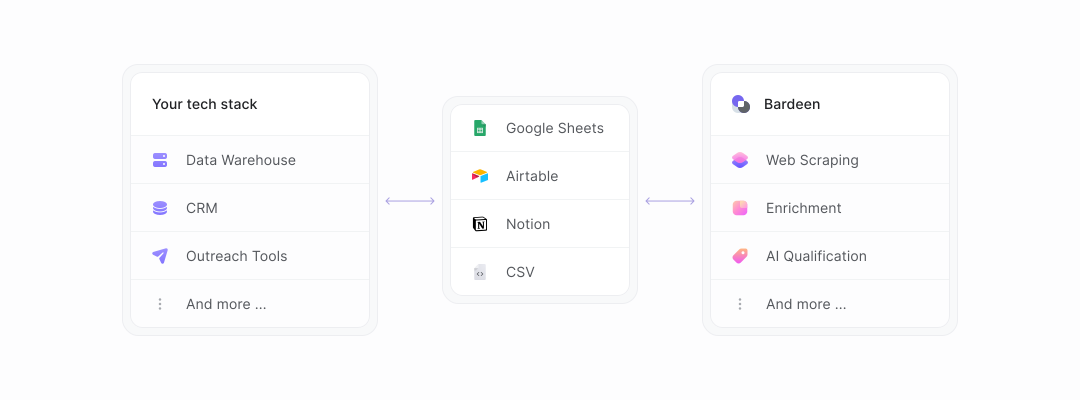
With our new Bardeen version, you can easily extract data from any website and discover new leads across the web. After extracting data from a website, use Bardeen’s powerful automation tools to validate and enrich your data, run additional scrapers on linked pages, or leverage AI to qualify leads and generate content automatically. Once your data is ready, you can easily export it to CSV, Google Sheets, Airtable, or Notion for further analysis and reporting.






SOC 2 Type II, GDPR and CASA Tier 2 and 3 certified — so you can automate with confidence at any scale.