

This automation extracts data from Amazon search results and saves it directly into a Google Sheet, making it a powerful tool for market research, price tracking, or aggregating product information.
The process begins when the user activates the combined scraper model on the currently active browser tab, which should display Amazon search results. This scraper is tailored to extract specific details such as product names, prices, ratings, and possibly stock status. Following the successful extraction, the data is then seamlessly appended to a designated tab within a user-specified Google Sheet.
Note: The effectiveness of this automation relies on the specificity of the scraper model for Amazon. Custom models can be developed to cater to specific data extraction needs.
This workflow streamlines the process of collecting and organizing product information from Amazon, making it invaluable for ecommerce analysis, competitor monitoring, or personal shopping comparisons.
To start, ensure you have the Bardeen app installed on your device.
After installation, proceed to the Magic Box and input the following instruction:
Scrape Amazon Search Results then save into Google Sheets
Make sure to set up the necessary integrations for the workflow. This includes the Scraper for extracting data from Amazon and Google Sheets for data storage.
To complete the setup, execute the workflow. This workflow is specifically designed to:
Scraping Amazon search results is a valuable technique for gathering data on products, prices, ratings, and more. This process can be instrumental for market research, competitor analysis, or even personal shopping decisions. While Amazon does not officially support scraping, there are methods to extract this data responsibly without violating terms of service or causing undue strain on Amazon's servers.
Ready to streamline your data collection from Amazon? Automate the process with Bardeen. Start now!
Manually, one can scrape Amazon by using web scraping tools or writing custom scripts. However, this requires technical knowledge in programming languages like Python and familiarity with web scraping libraries such as Beautiful Soup and Requests. For those without coding expertise, using a no-code tool like Bardeen can simplify the process, enabling you to scrape Amazon search results efficiently and save them into Google Sheets without writing a single line of code.
Once you've scraped Amazon search results, the next step is to organize this data. Google Sheets is an excellent platform for this purpose due to its accessibility and functionality. Manually, this would involve copying and pasting the data into a spreadsheet, which is time-consuming and prone to errors. Automating this process not only saves time but also ensures accuracy in data transfer.
Bardeen offers an automation that extracts data from Amazon search results and saves it directly into a Google Sheet. This process begins when the user activates the combined scraper model on the currently active browser tab, which should display Amazon search results. The scraper is tailored to extract specific details such as product names, prices, ratings, and possibly stock status. Following the successful extraction, the data is then seamlessly appended to a designated tab within a user-specified Google Sheet.
Automate your Amazon data collection and organization with Bardeen. Try it today!
This workflow streamlines the process of collecting and organizing product information from Amazon, making it invaluable for e-commerce analysis, competitor monitoring, or personal shopping comparisons. The effectiveness of this automation relies on the specificity of the scraper model for Amazon. Custom models can be developed to cater to specific data extraction needs.
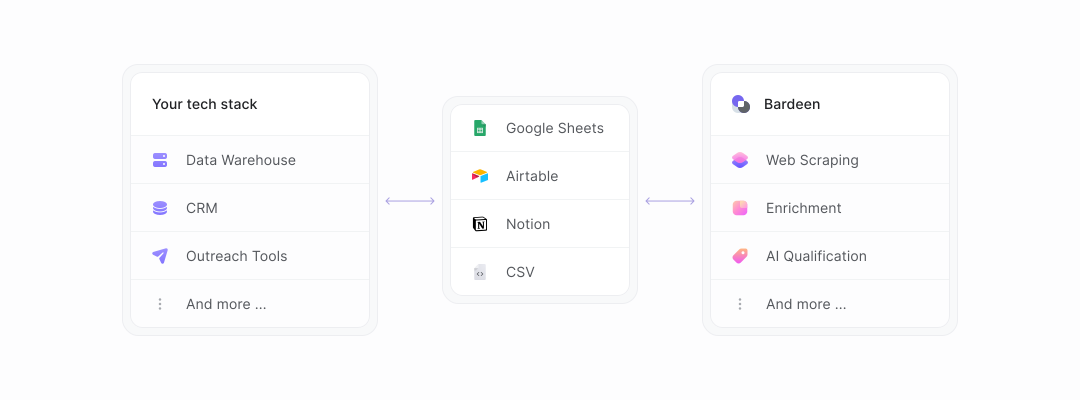
With our new Bardeen version, you can easily extract data from any website and discover new leads across the web. After extracting data from a website, use Bardeen’s powerful automation tools to validate and enrich your data, run additional scrapers on linked pages, or leverage AI to qualify leads and generate content automatically. Once your data is ready, you can easily export it to CSV, Google Sheets, Airtable, or Notion for further analysis and reporting.






SOC 2 Type II, GDPR and CASA Tier 2 and 3 certified — so you can automate with confidence at any scale.