
This automation scrapes product data from a Shopify store and saves it directly to a specified Google Sheets tab. By leveraging a predefined scraper model tailored for Shopify, it efficiently extracts product information.
The process initiates with the scraper model activated on the user's active tab, aimed at the Shopify store URL provided. Once the product data is scraped, it's appended to the chosen Google Sheet tab. This workflow is particularly beneficial for:
Pro Tip: Bardeen's automation can be further customized to scrape additional details or to integrate with other platforms like Airtable, or CRMs for enhanced data management and analysis.
Utilize this workflow to streamline your e-commerce data management with Bardeen.
To kick things off, ensure the Bardeen app is installed on your device.
Next, open the Magic Box and input the following prompt:
Scrape Shopify Products then save into Google Sheets
Make sure to set up the necessary integrations for the workflow. This involves connecting both your Shopify for the product source and Google Sheets for the destination.
Finally, execute the workflow. This workflow is crafted to:
Scraping Shopify products is a crucial task for various purposes such as market research, competitor analysis, and inventory management. While Shopify does not directly support exporting product data to Google Sheets, there are several methods to achieve this. One can manually export data from Shopify and import it into Google Sheets or use Shopify apps and Google Sheets add-ons to automate the process.
Streamline your Shopify product data management by automating the scraping process with Bardeen. Try it now!
Manually exporting data involves generating a CSV file from Shopify and then importing this file into Google Sheets. This method is straightforward but can be time-consuming, especially if you need to export data regularly. To export, log into your Shopify admin, navigate to the relevant section (Orders, Products, or Customers), and select the 'Export' option. Choose the data range and format, then download the CSV file. In Google Sheets, use the 'Import' function under the File menu to upload and integrate this data into your spreadsheet.
For a more efficient and automated approach, using Shopify apps or Google Sheets add-ons like SyncWith can significantly simplify the process. These tools allow for direct data transfer from Shopify to Google Sheets, enabling real-time data updates and eliminating the need for manual file handling. After installing the add-on or app, you can select the specific Shopify data you wish to import into Google Sheets and configure it to refresh automatically at set intervals.
Automate your workflow and save time by using Bardeen to connect Shopify with Google Sheets. Get started today!
Another option is to leverage Chrome extensions designed for scraping Shopify stores, such as Shopify Scraper. These extensions can extract detailed product information directly from Shopify stores and export it into a CSV file, which can then be imported into Google Sheets. While this method offers a high degree of flexibility in terms of the data captured, it may require more setup and oversight compared to integrated apps and add-ons.
Regardless of the method chosen, automating the transfer of Shopify product data into Google Sheets can significantly enhance your e-commerce data management, allowing for more informed decision-making and streamlined operations.
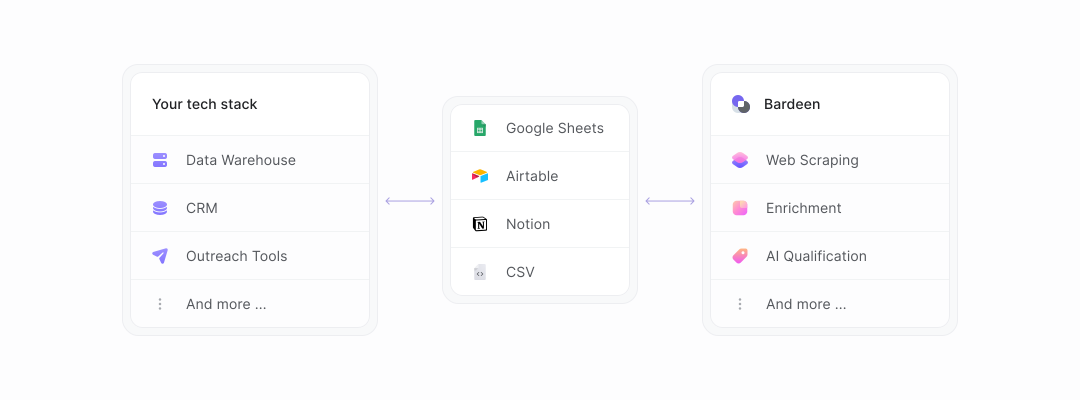
With our new Bardeen version, you can easily extract data from any website and discover new leads across the web. After extracting data from a website, use Bardeen’s powerful automation tools to validate and enrich your data, run additional scrapers on linked pages, or leverage AI to qualify leads and generate content automatically. Once your data is ready, you can easily export it to CSV, Google Sheets, Airtable, or Notion for further analysis and reporting.






SOC 2 Type II, GDPR and CASA Tier 2 and 3 certified — so you can automate with confidence at any scale.