
This automation scrapes Google Trends data and saves it directly to a specified Google Sheet. It leverages a scraper model tailored for Google Trends, ensuring accurate and efficient data extraction.
The process begins with the scraper model being applied on the active tab displaying Google Trends. The data, once scraped, is then appended to the designated Google Sheet. This workflow is perfect for:
Pro Tip: You can customize the scraper model to fit specific data extraction needs or to extend functionality to other platforms.
Utilize this workflow to streamline your trend analysis and save valuable time. Install Bardeen to automate this process effortlessly.
To kick off, ensure you have the Bardeen app installed on your device.
With the Bardeen app ready, head over to the Magic Box and enter the command:
Scrape Google Trends then save into Google Sheets
Next, set up your workflow integrations properly, which involves Scraper for extracting data from Google Trends and Google Sheets for storing the data.
Now, you're set to execute the workflow. This process is designed to:
Scraping Google Trends involves extracting data from Google's platform, which showcases the popularity of search queries over time. This can be valuable for various professionals, including marketers and SEO specialists, to understand search trends, compare keyword popularity, and derive insights for content strategy. While Google Trends does not offer an official API for public use, there are ways to programmatically access this data.
Looking to streamline your trend analysis process? Automate the scraping of Google Trends data and save it directly into Google Sheets with Bardeen. Try it now!
To manually scrape Google Trends data, one could use Python scripting with libraries like 'httpx' for sending requests and 'pandas' for handling data. This method involves identifying API requests made by the Google Trends website to fetch JSON data related to search terms, geographical locations, and time ranges. However, this approach requires a good understanding of programming and might be subject to Google's data use policies.
For those looking to integrate Google Trends data directly into Google Sheets without extensive coding, tools like Two Minute Reports offer a more accessible solution. This tool allows users to connect Google Trends to Google Sheets, enabling the extraction of daily search trends, interests by time or region, and related queries or topics. Users can schedule automatic data refreshes, making it easier to keep track of trends over time.
Enhance your productivity by automating the transfer of Google Trends data to Google Sheets. With Bardeen, you can focus on analysis rather than data collection. Get started now!
Another innovative approach involves using a Google Sheets template combined with a Python script that runs in Google Colab. This method allows users to specify their search criteria directly in a Google Sheet, and the script fetches the data from Google Trends, populating the sheet with results. This method is particularly useful for handling large numbers of queries and offers a balance between manual and fully automated solutions.
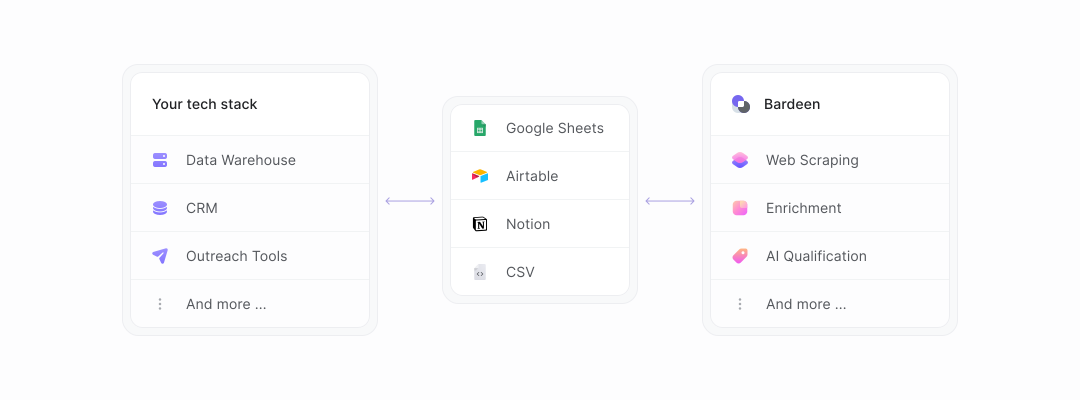
With our new Bardeen version, you can easily extract data from any website and discover new leads across the web. After extracting data from a website, use Bardeen’s powerful automation tools to validate and enrich your data, run additional scrapers on linked pages, or leverage AI to qualify leads and generate content automatically. Once your data is ready, you can easily export it to CSV, Google Sheets, Airtable, or Notion for further analysis and reporting.






SOC 2 Type II, GDPR and CASA Tier 2 and 3 certified — so you can automate with confidence at any scale.