

This workflow automates the process of reviewing and saving data from Facebook's Ads Library to a Google Sheet. It captures and organizes ad data, making it easier to analyze your competitors' ads or track your own ad performance over time.
The process begins by scraping data from the active browser tab, which should be opened to Facebook's Ads Library, using a pre-defined scraper model. Then, the extracted data is automatically appended to a specified tab in a Google Sheet. This workflow is ideal for:
Note: The scraper model can be customized to extract specific data points according to your needs. Additionally, Bardeen supports a variety of other data stores and can integrate with CRM tools, making it flexible for various business applications.
Streamline your ad analysis process by adopting this easy-to-use workflow with Bardeen.
First off, ensure the Bardeen app is installed on your device.
Open the Magic Box in the Bardeen app and input the following prompt:
Review Facebook's Ads Library then save into Google Sheets
Before proceeding, integrate the workflow's required integrations, particularly the Scraper for collecting data from Facebook's Ads Library and Google Sheets for data storage.
To complete the process, run the workflow. This workflow is designed to:
Reviewing and saving data from Facebook's Ads Library into Google Sheets can be a game-changer for marketing professionals and businesses. This process allows for a streamlined analysis of ad performance, competitor strategies, and market trends. While there are several methods to achieve this, starting with the manual approach sets a solid foundation for understanding the data you're working with.
Firstly, navigating to the Facebook Ads Library is your starting point. Here, you can search for ads based on various filters like advertiser name, topics, or keywords. Once you've identified the ads you wish to analyze, the manual process involves copying the relevant data such as ad text, impressions, spend, and engagement metrics, and pasting them into a Google Sheet. This method, while straightforward, can be time-consuming and prone to errors, especially with large datasets.
To streamline this process and automate data extraction, consider using a workflow automation tool like Bardeen. This not only saves time but also ensures accuracy in the data captured. Start automating with Bardeen now.
For those looking for a more automated solution, tools like Apify's Facebook Ads Scraper come into play. This tool allows for the extraction of detailed ad data from Facebook pages or Ads URLs. You can specify the data points you need, such as page details, ad spend, impressions, and more. The extracted data can then be downloaded in formats like JSON, CSV, or Excel, which are compatible with Google Sheets.
Once you have your Facebook Ads data ready, the next step is to import it into Google Sheets. If you've used a tool like Apify, you'll likely have the data in a CSV or Excel format. Google Sheets supports importing these file types directly. Simply open a new Google Sheet, go to File > Import, and upload your file. Google Sheets will then populate with your Facebook Ads data, ready for analysis.
For those who prefer a direct connection between Facebook Ads and Google Sheets, automation tools such as Zapier or Make can be utilized. These platforms offer integrations that automatically transfer data from Facebook Ads to a Google Sheet in real-time. This method requires setting up a Zap or Scenario where Facebook Ads is the trigger, and Google Sheets is the action. You can specify which data points to transfer and even schedule regular data refreshes to keep your analysis up-to-date.
Automating the transfer of Facebook Ads data to Google Sheets not only saves time but also provides real-time insights into your ad performance. Explore Bardeen's capabilities to connect these platforms seamlessly. Automate with Bardeen.
Regardless of the method chosen, moving Facebook Ads data into Google Sheets opens up a plethora of analysis possibilities. From creating custom dashboards to performing in-depth competitor analysis, the integration of these two powerful tools is invaluable for data-driven decision-making in marketing strategies.
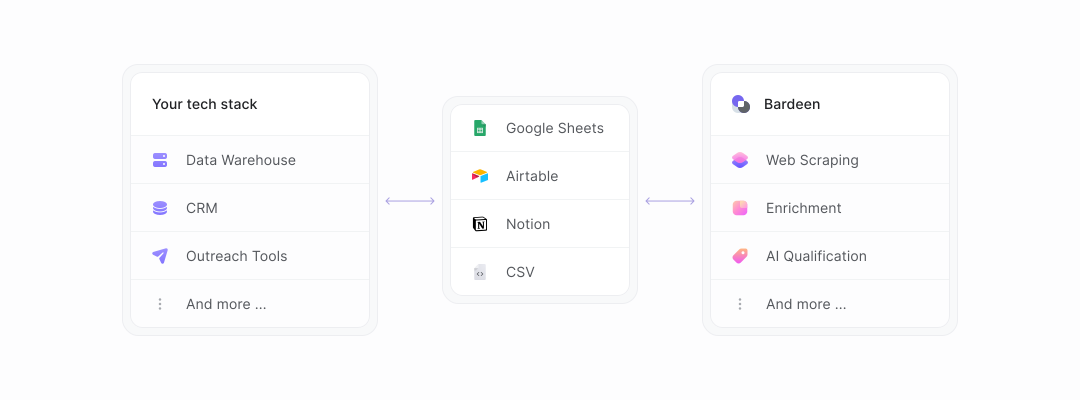
With our new Bardeen version, you can easily extract data from any website and discover new leads across the web. After extracting data from a website, use Bardeen’s powerful automation tools to validate and enrich your data, run additional scrapers on linked pages, or leverage AI to qualify leads and generate content automatically. Once your data is ready, you can easily export it to CSV, Google Sheets, Airtable, or Notion for further analysis and reporting.






SOC 2 Type II, GDPR and CASA Tier 2 and 3 certified — so you can automate with confidence at any scale.