This article dives into comparing Apollo and lemlist as cold outreach tools, aiming to help you decide which tool is better for your needs by offering a detailed comparison.
The goal is to assist you in picking the best tool for your outreach efforts, providing a detailed analysis of how each platform performs in cold outreach. While both tools offer a range of features, this article specifically focuses on their capabilities in cold outreach.
At Bardeen, we're experts in sales automation and tooling. Our team has decades of sales, founder, and ops experience to help you pick the best tools!
Here's a brief summary before we dive in:
For creating complex and visually organized email sequences, lemlist holds the edge over Apollo.
While Apollo supports basic linear sequences and activities across email and social platforms, it lacks in advanced features like conditional branching. However, for those who prefer simplicity and primarily focus on linear sequences, Apollo's straightforward approach might be sufficient.
By using Bardeen, you can enrich your outreach further. Bardeen's AI Agent can find fresh and relevant information to personalize your emails, potentially increasing your open and response rates.
In conclusion, if your sales strategy requires sophisticated, multi-layered sequences with conditional logic, lemlist is the better choice. For sales teams with simpler sequence needs, Apollo's streamlined sequence creation may be more than adequate.
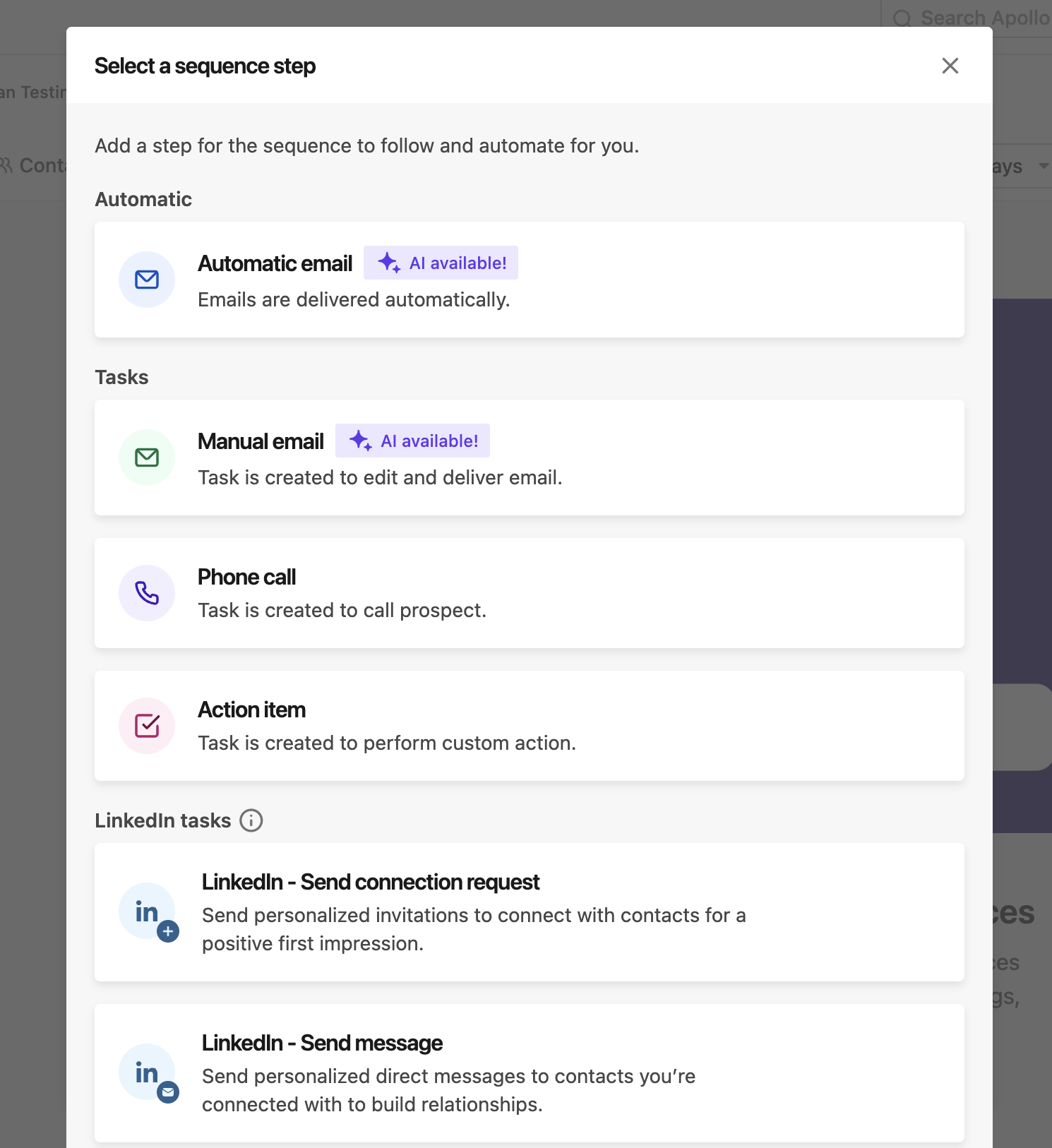
Apollo's Sequences feature in the Campaign Creation sub-feature lets you set up a series of emails, messages, and tasks to target and convert sales leads. While powerful, it has a more linear approach to sequences, focusing on simple, straightforward automation rather than complex branching paths.
Key features of Apollo's Sequences:
Reddit feedback indicates mixed views on Apollo's Sequences, with users exploring alternatives and reporting issues with email scheduling and quality.
🤔 "Seeking better alternatives for cold emailing than Apollo.io" - r/Emailmarketing
👎 "when you actually schedule emails to be sent out it doesn't work or it works so badly that it is useless" - r/LeadGeneration
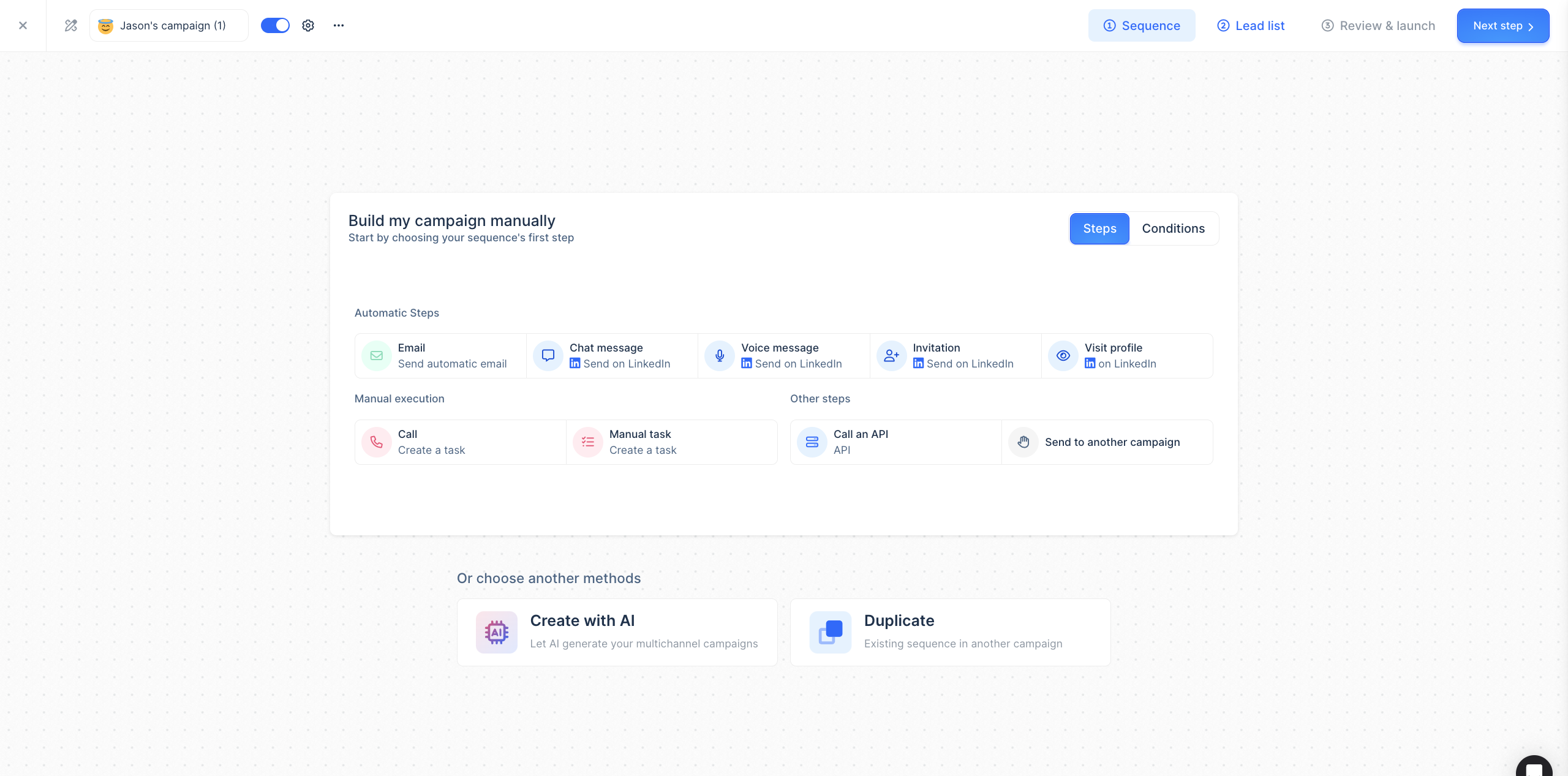
When we use lemlist's Sequences for Campaign Creation, we can send tailored emails, engage on social platforms like LinkedIn, and set tasks to effectively reach and close sales leads. The visual arrangement of branching conditions and sequences in a sandbox format simplifies the creation of complex campaigns, catering to the needs of advanced users.
😐 "Lemlist, in theory, is great. I have a whole list of reasons I stopped using it." - r/Emailmarketing
👍 "Using LemList to create 'custom' automated email campaigns" - r/Emailmarketing
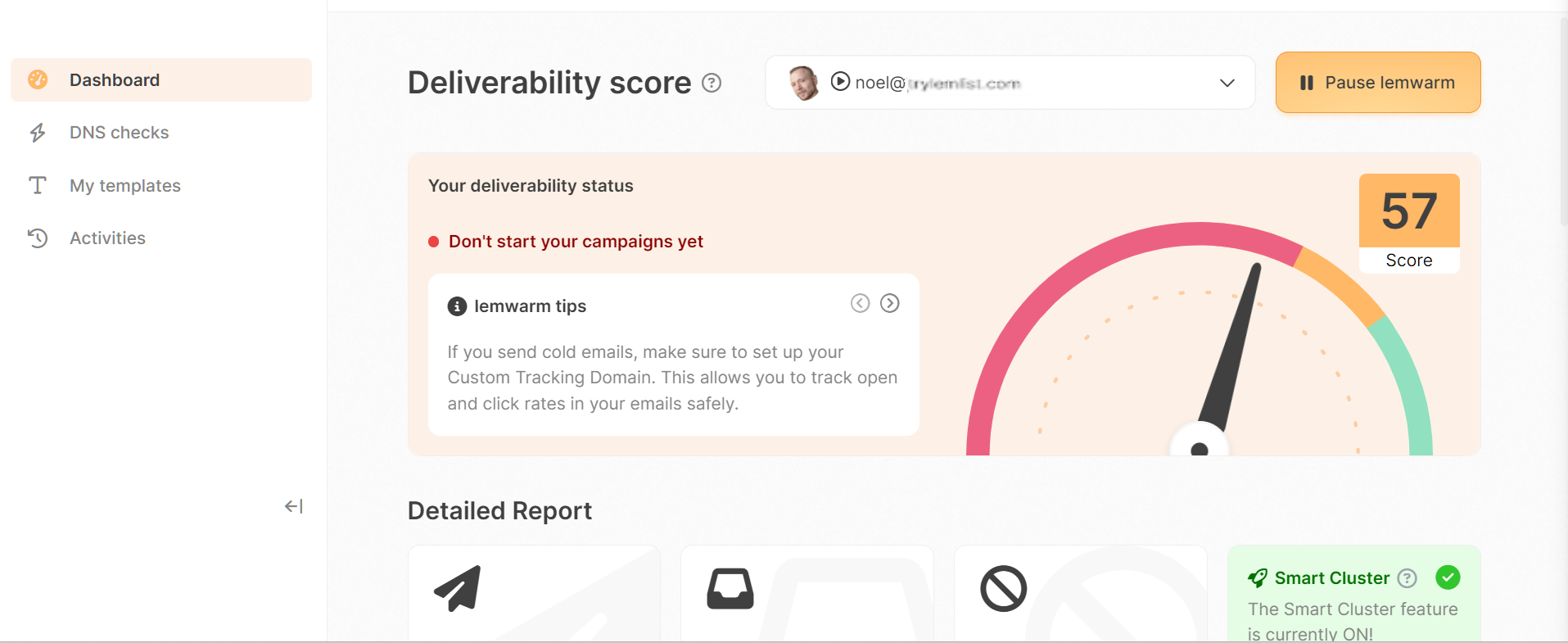
When comparing deliverability features, lemlist's lemwarm offers a more comprehensive solution for email warming and spam avoidance.
Apollo allows you to manage multiple mailboxes and set rate limits, but without a native mail warming feature, your deliverability may not be as robust unless you integrate an additional service.
To further optimize email campaigns, consider using Bardeen to craft personalized one-liners with their playbook, which can lead to better open and response rates, ultimately enhancing your sender reputation.
For users needing an all-in-one package to boost deliverability, lemlist's integrated lemwarm service is the clear choice, despite the additional cost.
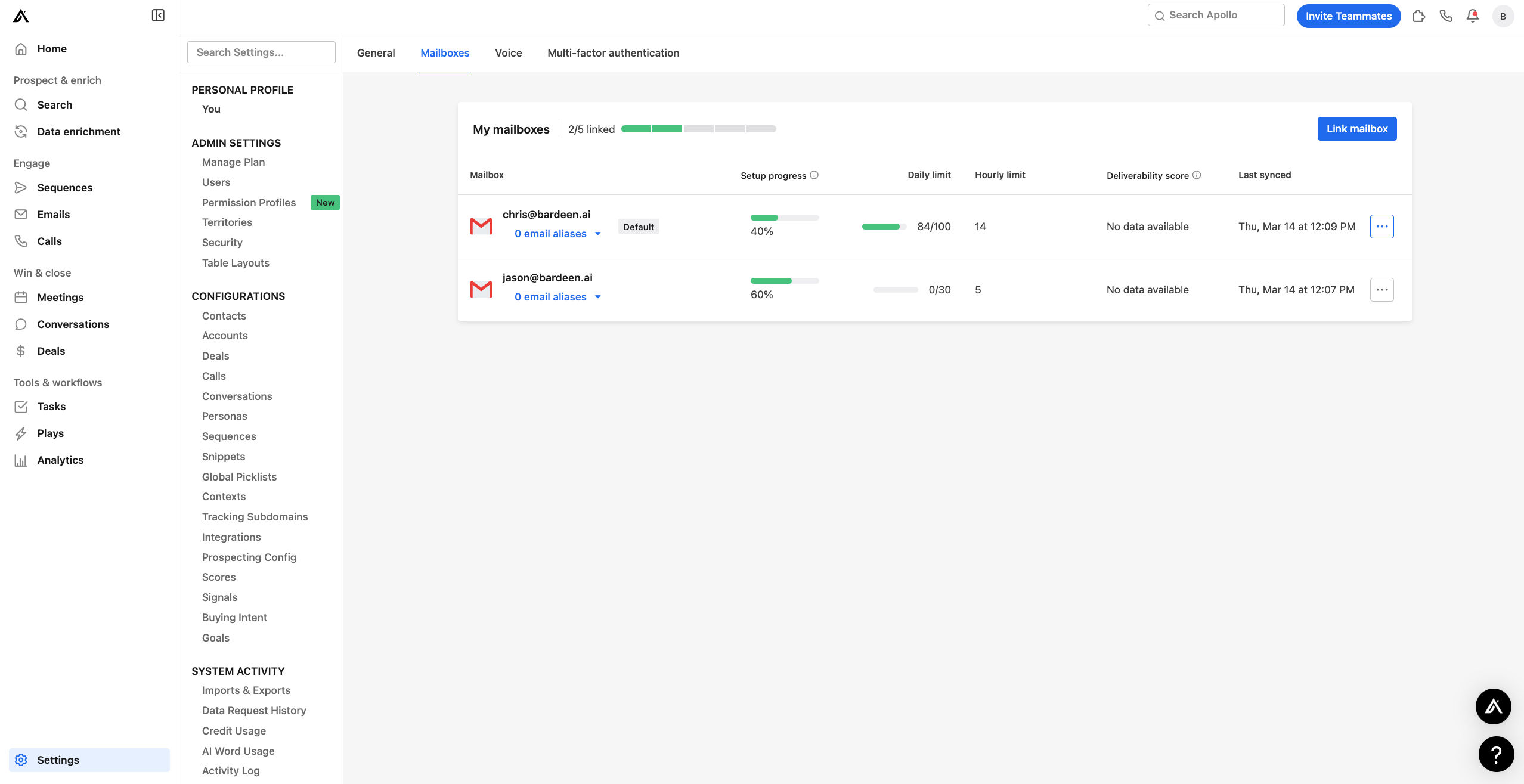
Apollo's Sequences feature deals with deliverability by allowing users to manage multiple mailboxes. However, it's important to note that while Apollo supports multiple mailboxes, it does not offer email warming services, which can be crucial for avoiding spam filters and maintaining a good sender reputation. For those services, you would need to use a different product.
Key aspects of deliverability features:
On Reddit, users discuss the effectiveness and risks associated with Apollo's email sequences:
😐 "mediocre results...screw up your domain reputation" - r/sales
😐 "Allowing link tracking adds some inherent risk when sending emails" - r/Emailmarketing
Deliverability is critical for any sales engagement platform, and lemlist addresses this with lemwarm, a dedicated product designed to improve email deliverability. Lemwarm requires an additional subscription, but it offers vital features for those serious about their email campaigns.
🤔 "Be sure that DMARK/SPF/DKIM are working." - r/agency
Apollo's personalization features are more robust, offering a vast array of variables from its enrichment database and the ability to add other dynamic content like meeting invites.
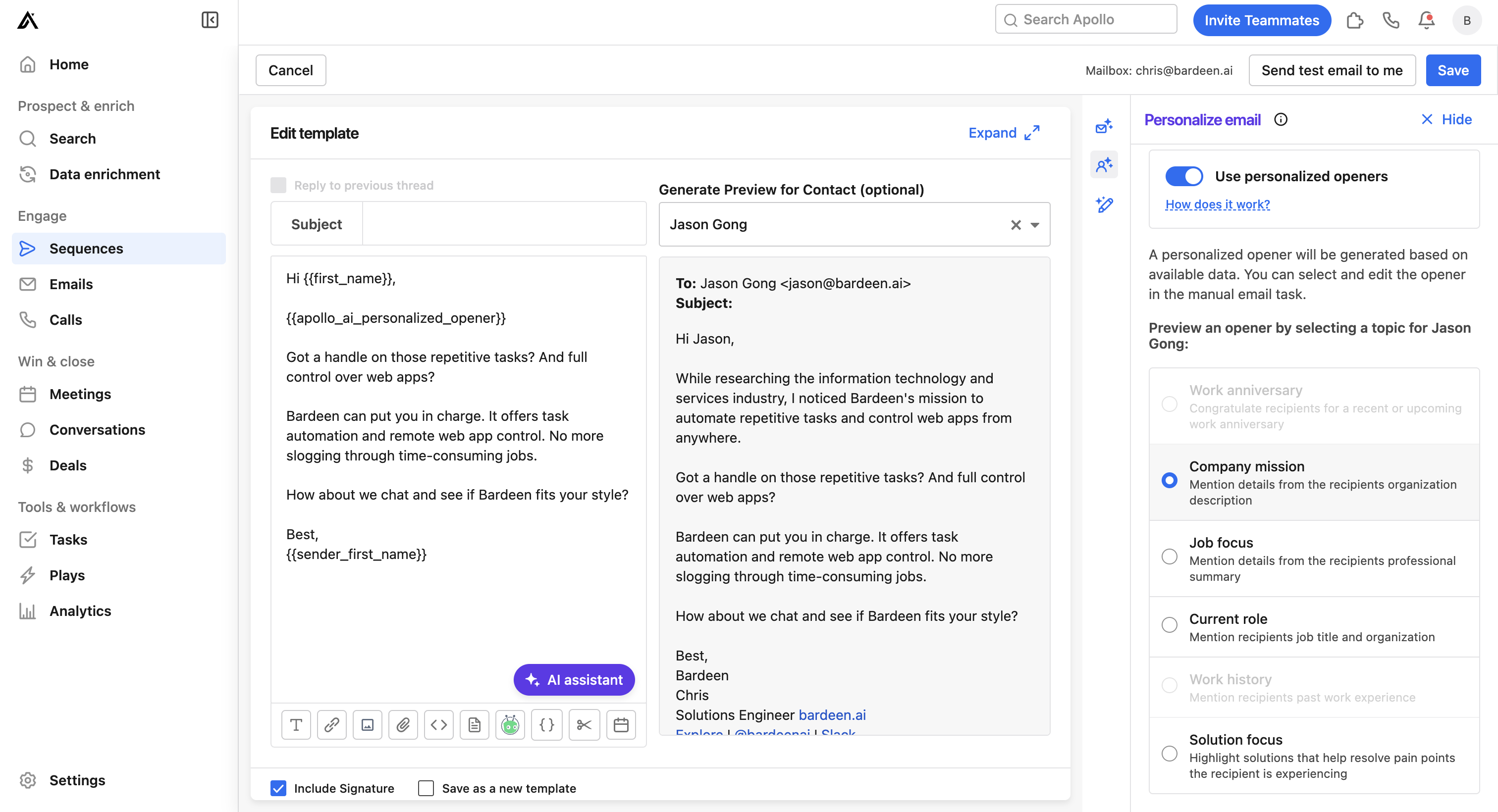
lemlist, while simpler, allows for basic customization using dynamic variables and offers liquid syntax for conditionals and fallback values.
For those who need depth in their personalization, Apollo's extensive data and personalization options are superior. Yet, if you're looking to integrate OpenAI's tools for even more tailored messages, Bardeen can enhance your efforts with additional data and AI-driven content creation.
Choose Apollo for a comprehensive personalization toolkit, but consider lemlist for straightforward campaigns with less complexity.
Apollo's Sequences feature allows for high levels of customization in email campaigns. The personalization sub-feature includes dynamic variables from Apollo's extensive enrichment database, which can be used directly in the email body to make each message feel more personal and relevant to the recipient.
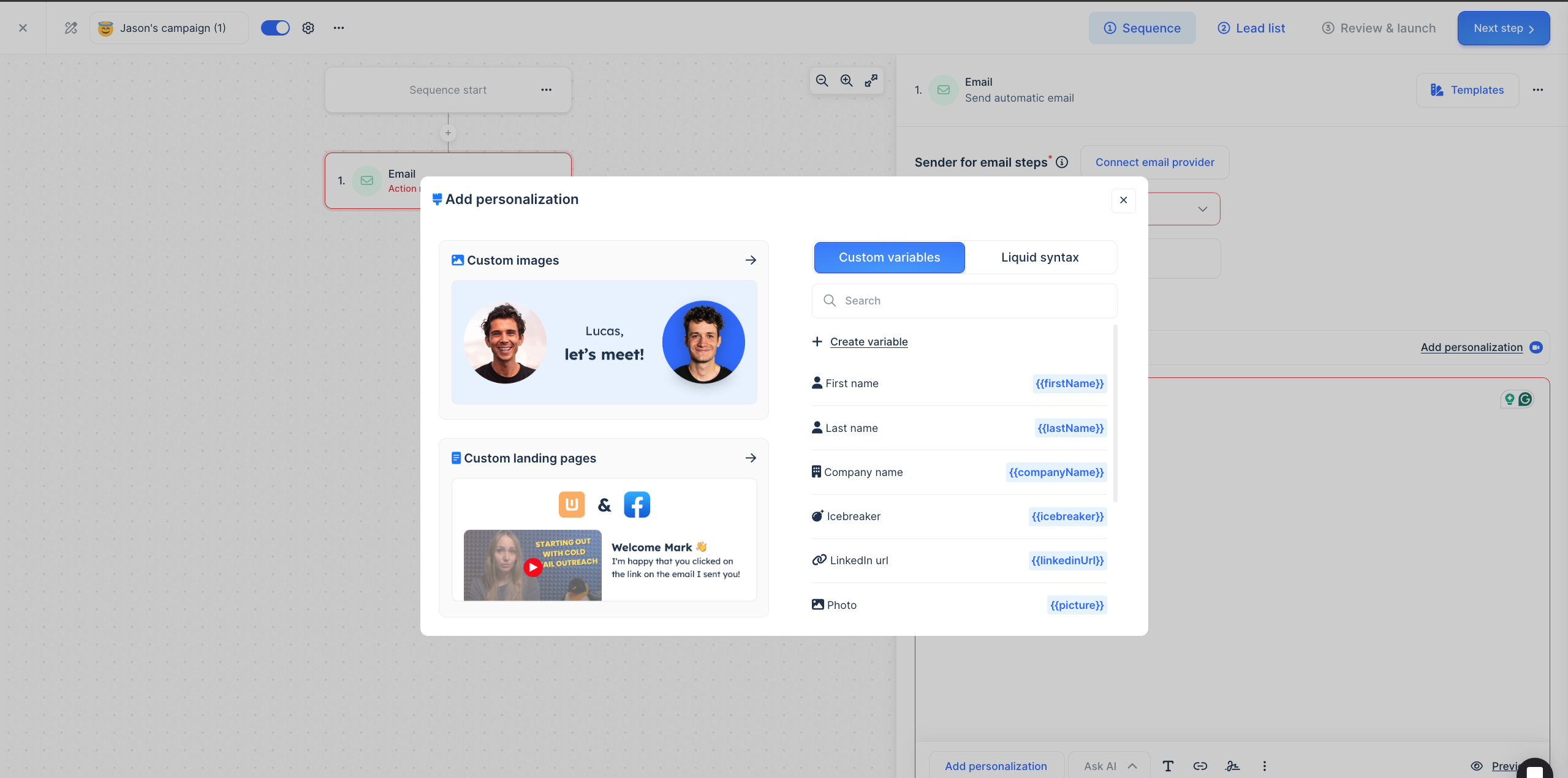
Personalization is key in engaging leads effectively, and lemlist offers features that let you customize each email in a sequence. You can insert dynamic variables like the recipient's name or company, which helps in making emails feel more personal and less like a mass message.
Apollo's AI capabilities for sequences stand out for their deep customization options, allowing you to craft tailored messages based on your company and product details, as well as lead-specific signals.
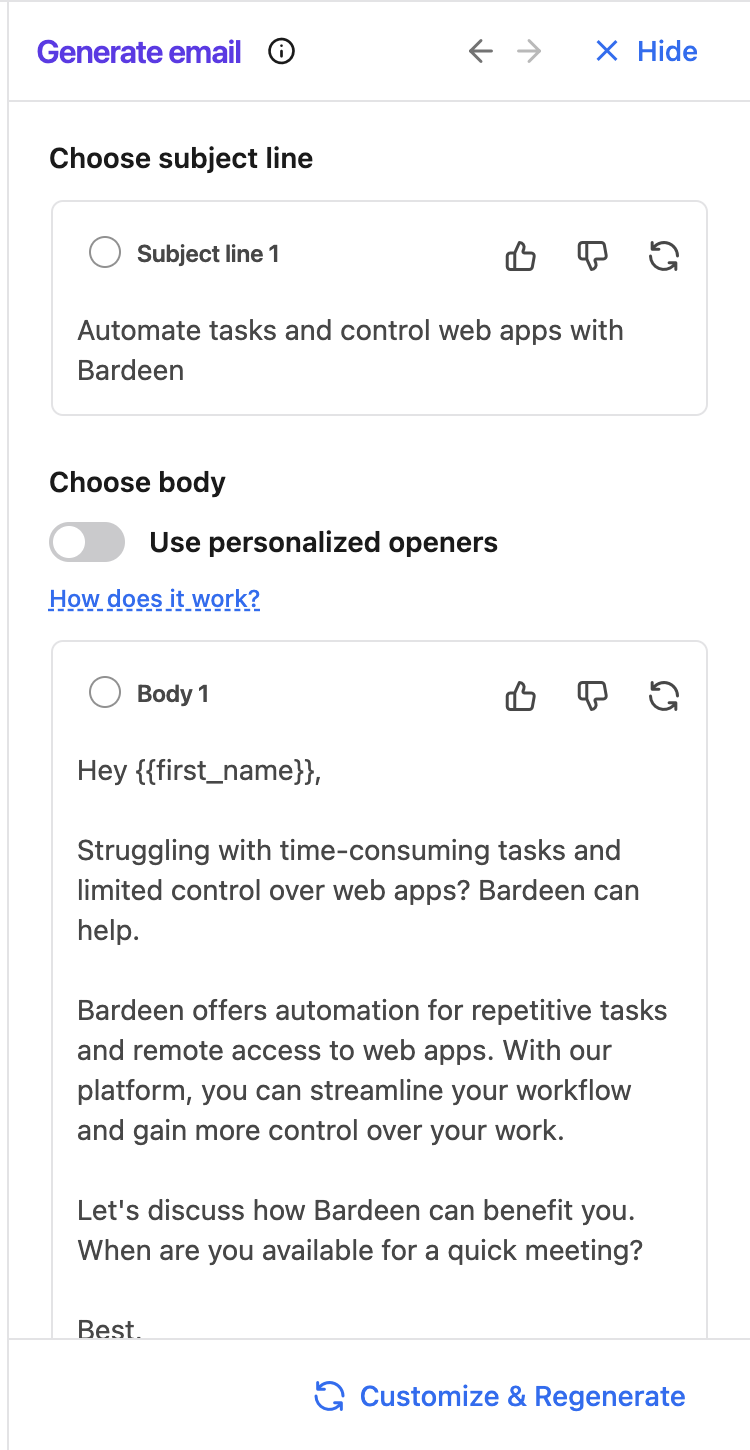
lemlist, while providing a strong campaign-level AI tool, lacks the same level of detail in personalization at the email and messaging level.
In this case, Apollo has the upper hand with its ability to record, transcribe, and analyze video call meetings automatically, a feature lemlist does not offer.
For users seeking a more granular control over their AI-driven sequences, Apollo's robust AI features, combined with Bardeen's ability to add contextual data about leads, present a compelling package.

Apollo's AI feature in the Sequences tool lets us write full sentences and allows us to use custom signals for each lead. This feature can significantly improve our engagement with prospects by providing personalized and relevant content.
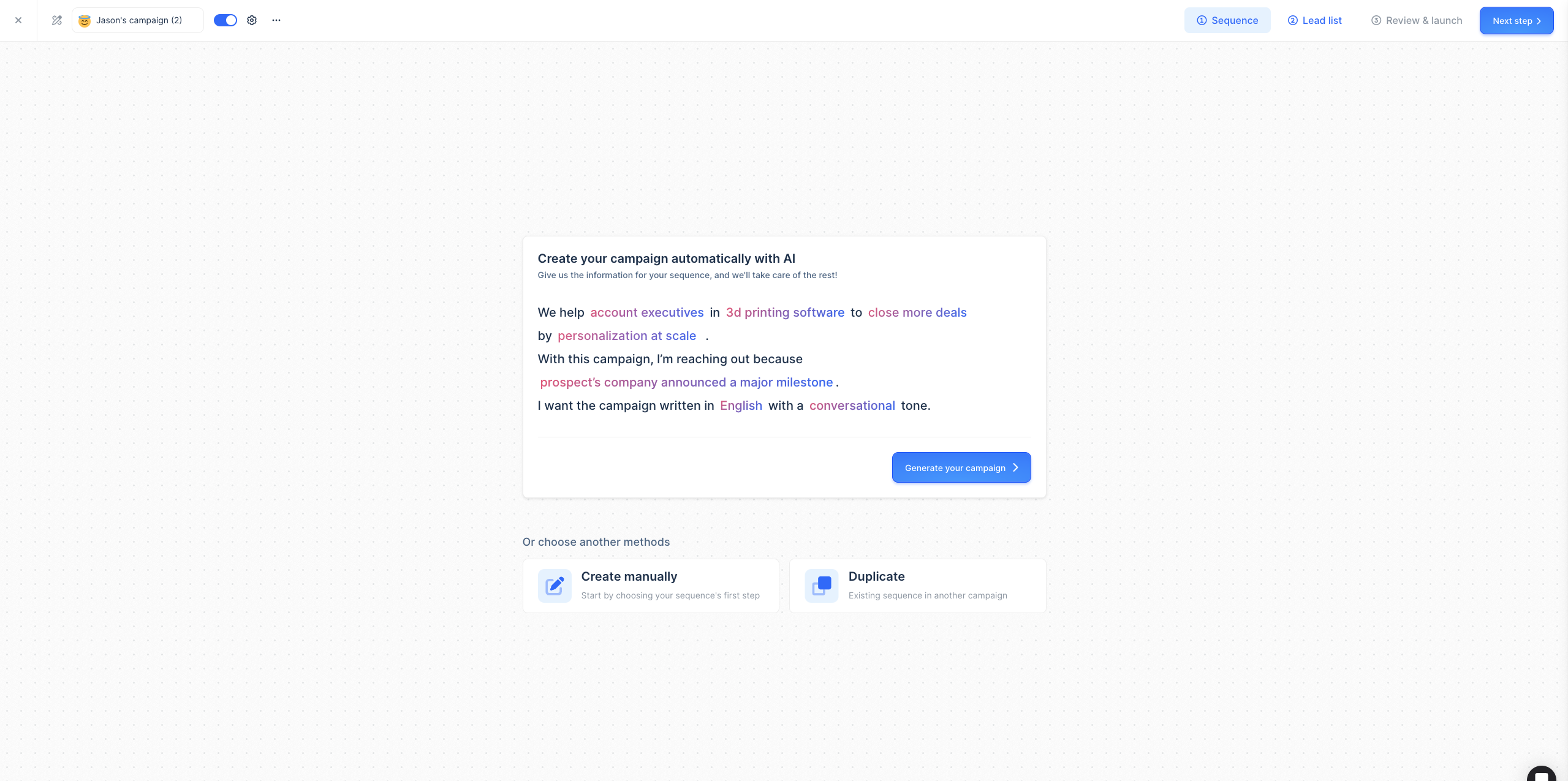
Lemlist's AI features within the Sequences tool help you create entire campaigns by providing input fields where you can enter specific details about the target audience and campaign objectives. However, the AI does not offer extensive customization options for each lead's unique signals.
Apollo has the upper hand when it comes to native enrichment capabilities, providing detailed, up-to-date insights on leads and companies.

lemlist's enrichment tools are more basic and may not provide the same level of detail or freshness of data. When you need deeper insights or have to find information on platforms like LinkedIn or company websites, Bardeen's integration with Apollo can enhance your workflow by automating manual tasks.
For sales teams that rely heavily on accurate and extensive lead information for personalized outreach, Apollo's native enrichment is likely the better choice.
Apollo's Native Enrichment feature stands out by offering in-depth data on companies and leads. This feature is particularly useful for personalizing emails and other communications based on a variety of enrichment parameters. The buyer signals, coupled with additional data from various sources, provide rich insights into your leads, enhancing the ability to target them effectively.
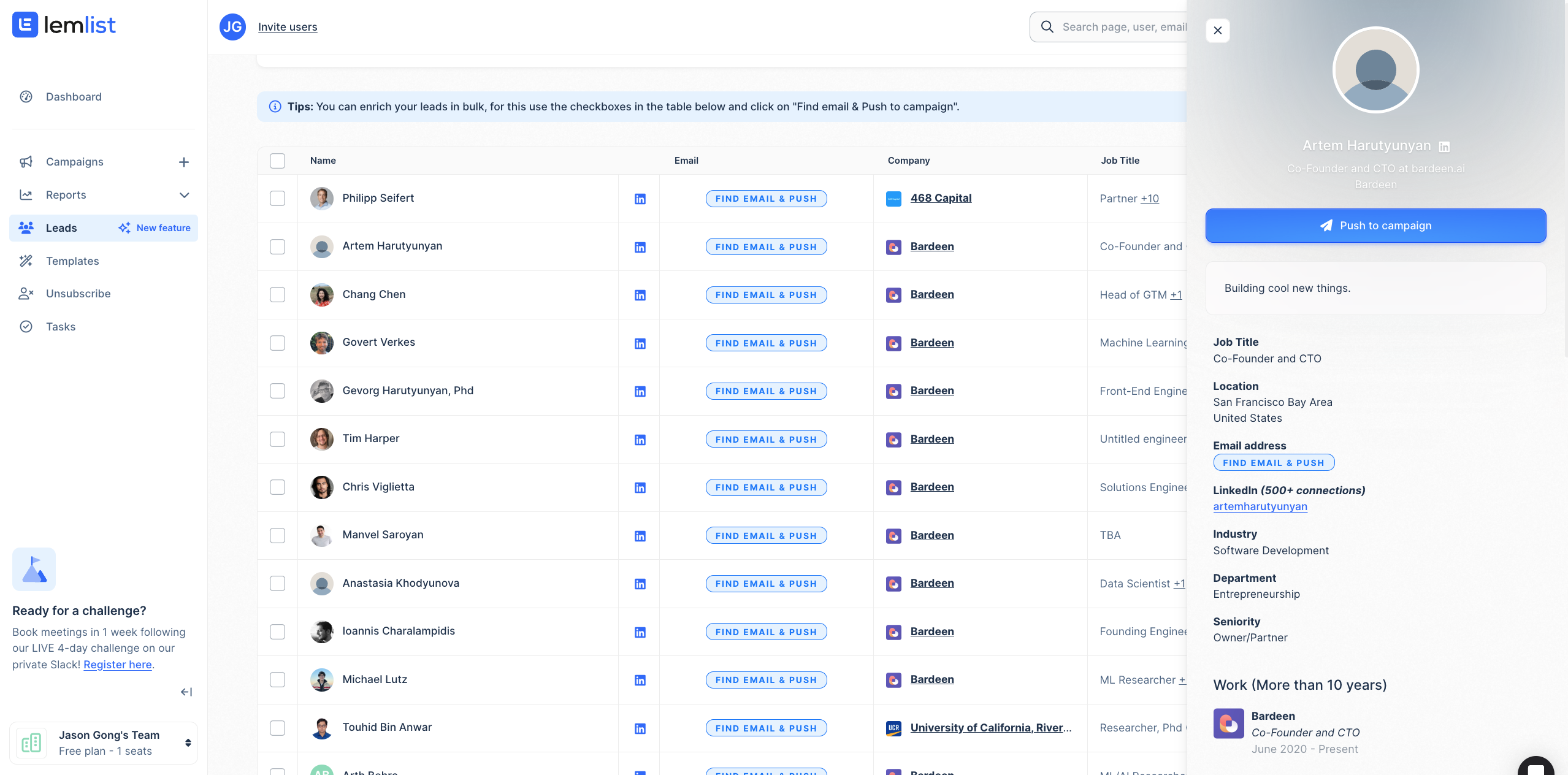
Lemlist's Native Enrichment within the Sequences feature offers basic lead enrichment capabilities. It provides buyer signals and data from various sources to give you more insights about your leads. Although it's not as comprehensive as dedicated enrichment tools, it can be a good starting point for learning more about your prospects.
Apollo stands out with its ability to automate social tasks, particularly on LinkedIn, without manual intervention, which can be a major time-saver for users.
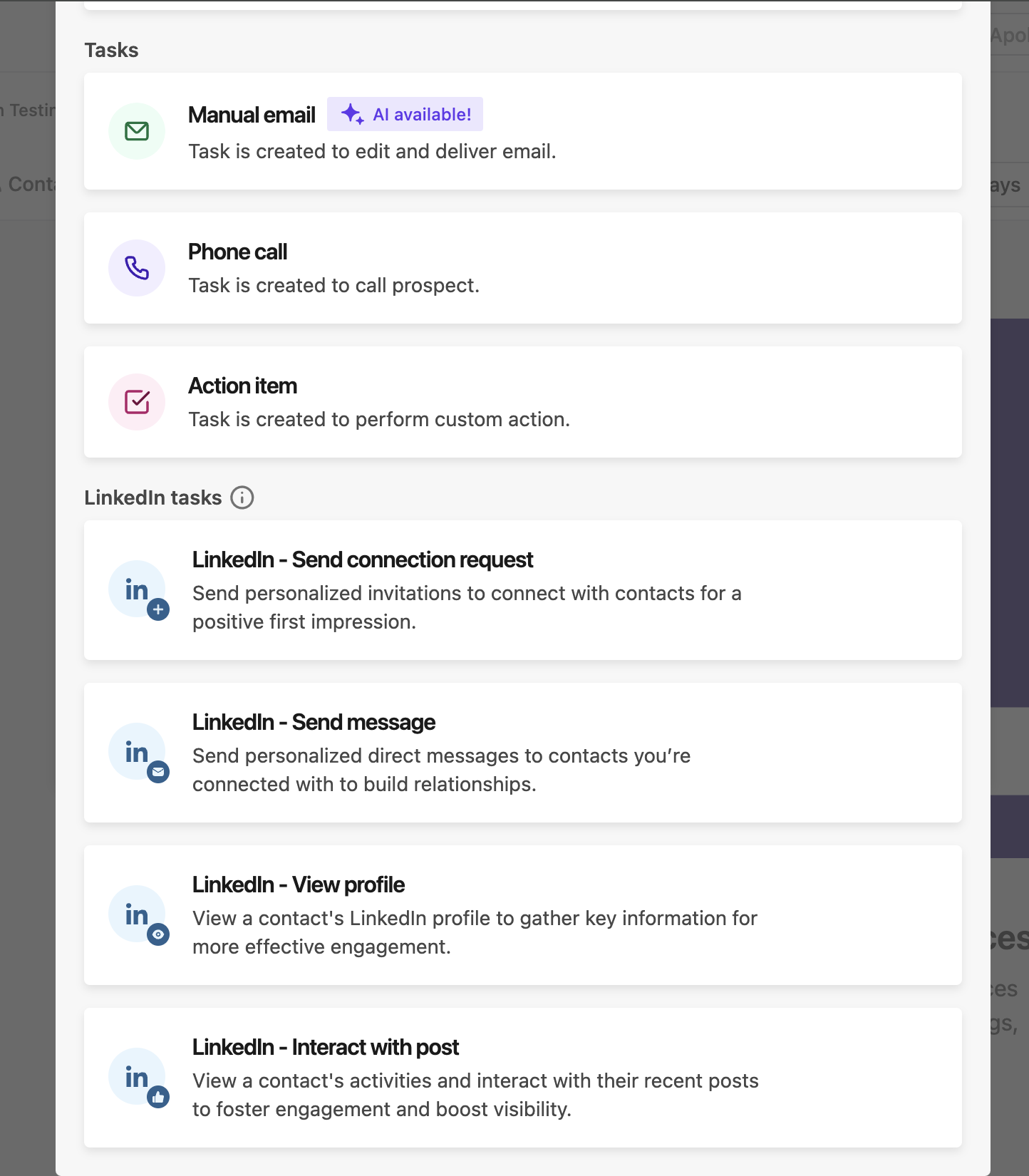
While lemlist also facilitates LinkedIn automation, it does so through a browser extension that requires local execution, which may not be as efficient for users managing high volumes of social interactions.
Considering the automated social engagement features, Apollo may provide better efficiency for users who prioritize automated social interactions, especially within LinkedIn. However, lemlist's approach can offer more control, as actions are performed locally, potentially giving users peace of mind regarding the authenticity of their social presence.
To further boost your LinkedIn automation and integration with other sales tools, you might explore the options offered by Bardeen, which also provides enrichment and automation in beta.
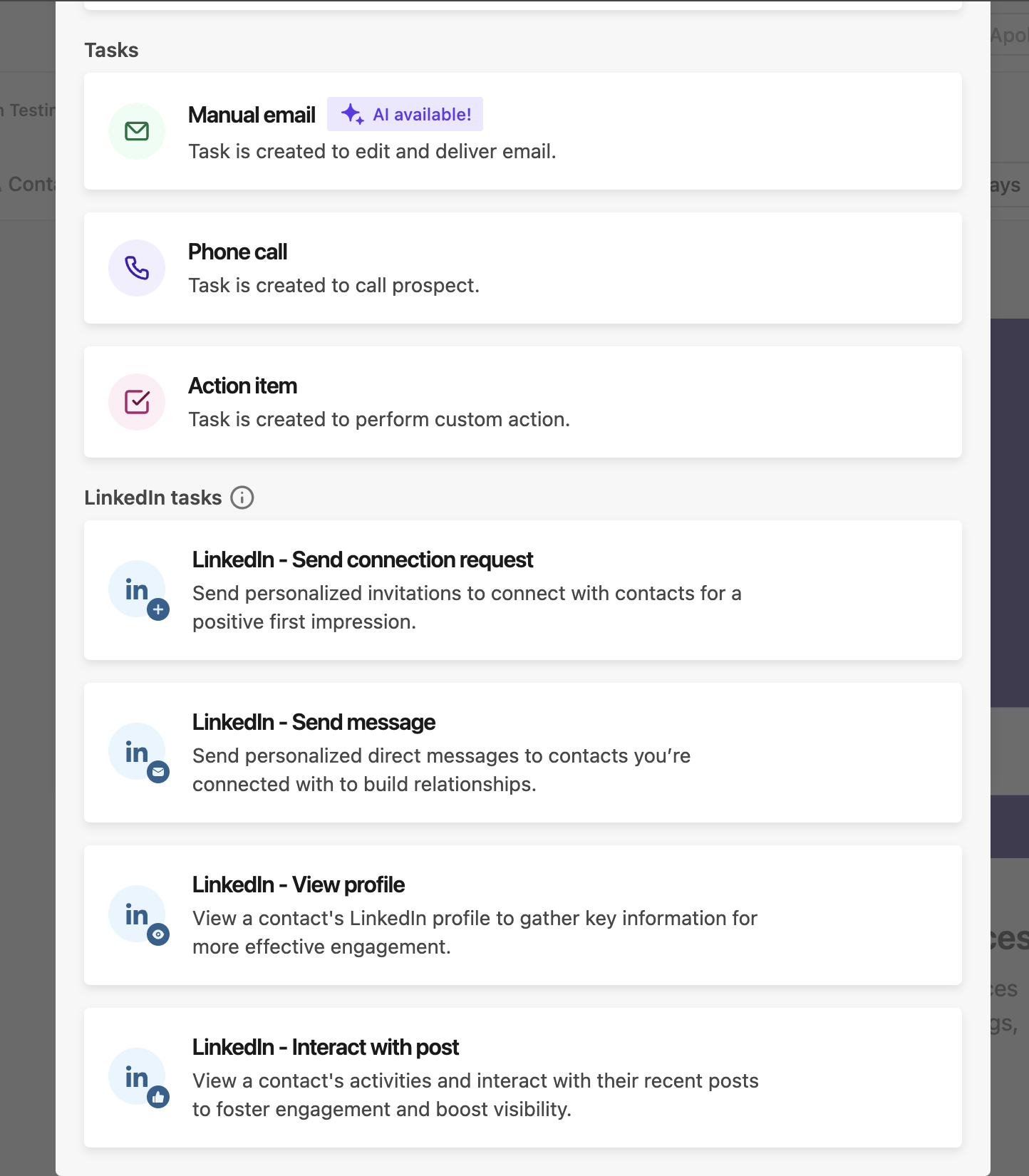
Apollo's Sequences feature for Social Automation gives you the power to automate tasks and social interactions, especially on LinkedIn. You can set up tasks for calls, emails, and LinkedIn actions without having to do them manually. This is great for staying on top of your sales process and making sure you don't miss any chances to connect with leads.

Lemlist's Sequences feature includes a robust social automation component, specifically designed to automate actions on LinkedIn. It leverages a browser extension to perform tasks locally, which gives users the ability to automate LinkedIn connection requests, messaging, and even post engagement, which can significantly boost your sales outreach efforts.







SOC 2 Type II, GDPR and CASA Tier 2 and 3 certified — so you can automate with confidence at any scale.