If you're using HubSpot, try Bardeen's HubSpot automation. It helps automate sequences, follow-ups, and more. Save time and focus on closing deals.
Enrolling a list in a sequence on HubSpot is a powerful way to automate your marketing and sales efforts. In this step-by-step guide, we'll walk you through the process of creating lists, setting up sequences, and automating enrollment using workflows. By the end, you'll have a solid understanding of how to leverage HubSpot's sequence functionality to nurture leads and drive conversions.
Understanding HubSpot Sequence Enrollment
HubSpot Sequences are a powerful tool that allows you to automate your sales outreach while keeping interactions personalized at every stage of the sales process. With Sequences, you can:
Nurture leads and prospects with timely, relevant emails
Save time by automating follow-ups and tasks
Ensure no prospects slip through the cracks
The primary benefits of using HubSpot Sequences for your marketing and sales efforts include:
Increased efficiency by automating repetitive tasks
Improved lead nurturing with personalized, targeted content
Higher engagement rates and faster response times
Better alignment between marketing and sales teams
Comprehensive reporting to track and optimize performance
By leveraging HubSpot Sequences, you can automate sales prospecting, build stronger relationships with prospects, and ultimately close more deals.
Prerequisites for Sequence Enrollment
To start using HubSpot Sequences, you'll need to meet the following requirements:
A Sales Hub Professional or Enterprise account
At least one user with a paid Sales Hub or Service Hub seat
A connected personal email inbox for each user who will be enrolling contacts in sequences
It's crucial to have a connected email inbox to utilize sequences effectively. This allows HubSpot to track email opens, clicks, and replies, which are used to determine when a contact should be automatically unenrolled from a sequence.
Without a connected inbox, you won't be able to automate your outreach or track engagement, limiting the effectiveness of your sequences.
Make your outreach more efficient with Bardeen’s automated follow-ups. Save time and keep track of all your communications effortlessly.
Creating and Managing Lists in HubSpot
Lists in HubSpot allow you to segment your contacts, companies, deals, or custom objects based on specific criteria. Here's how to create a list:
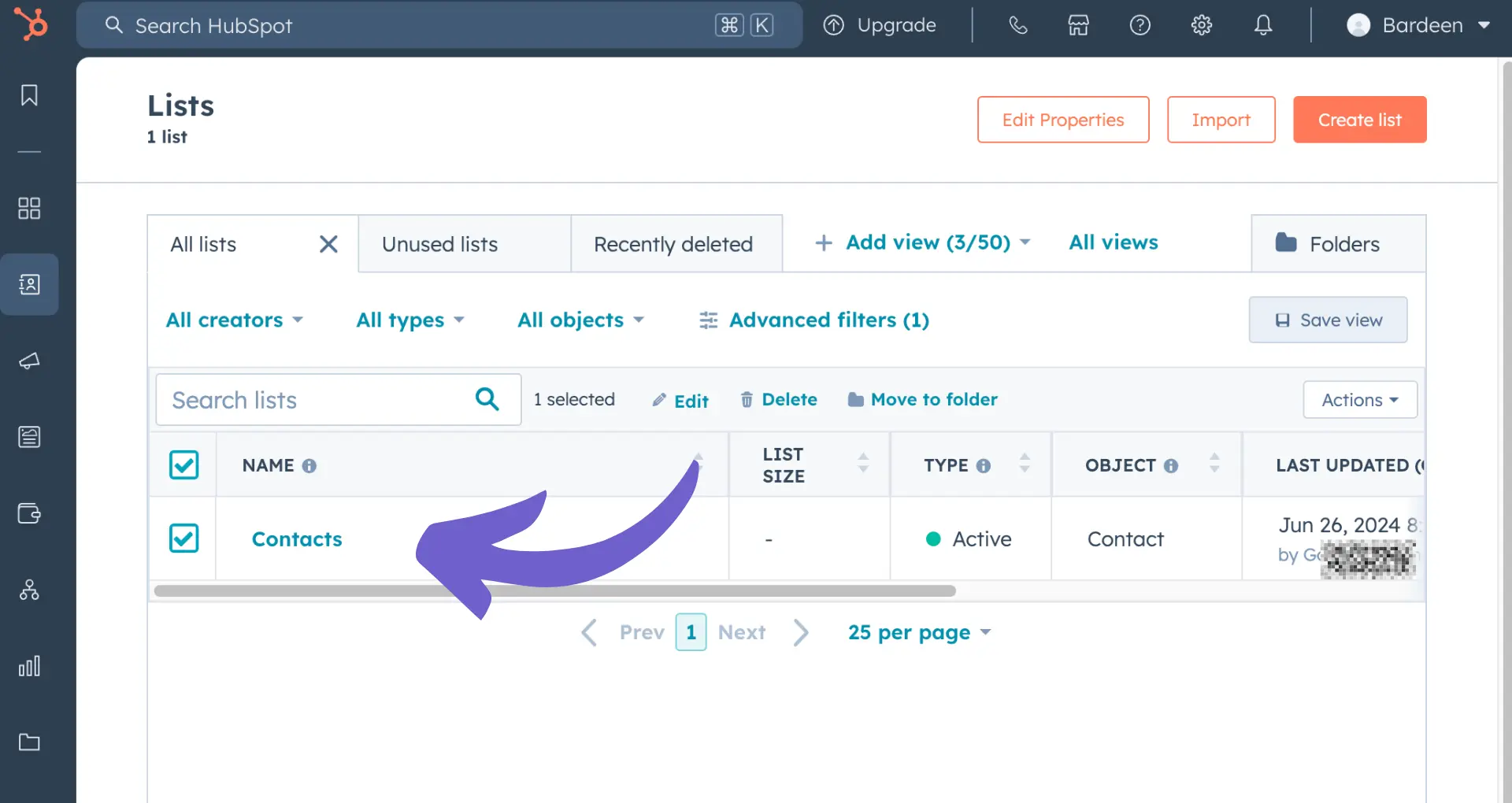
Navigate to CRM > Lists
Click "Create list" in the upper right
Select the type of list: Contact-based, Company-based, or Deal-based
Enter the list details, including name, description, and type (active or static)
Click "Next" and set your list criteria using properties and filters
Save your list
Click "Create list" in the upper right
When setting criteria, you can choose from a variety of property and activity filters. Some examples include:
Company property values (e.g., industry, number of employees, annual revenue)
Deal property values (e.g., deal stage, amount, close date)
Behavioral data (e.g., email opens, page views, form submissions)
You can create complex segments by combining multiple filters and using AND/OR logic. Test your criteria to ensure the list includes the right records.
Once saved, your list will automatically update its membership if it's an active list. For static lists, you can manually add or remove records as needed.
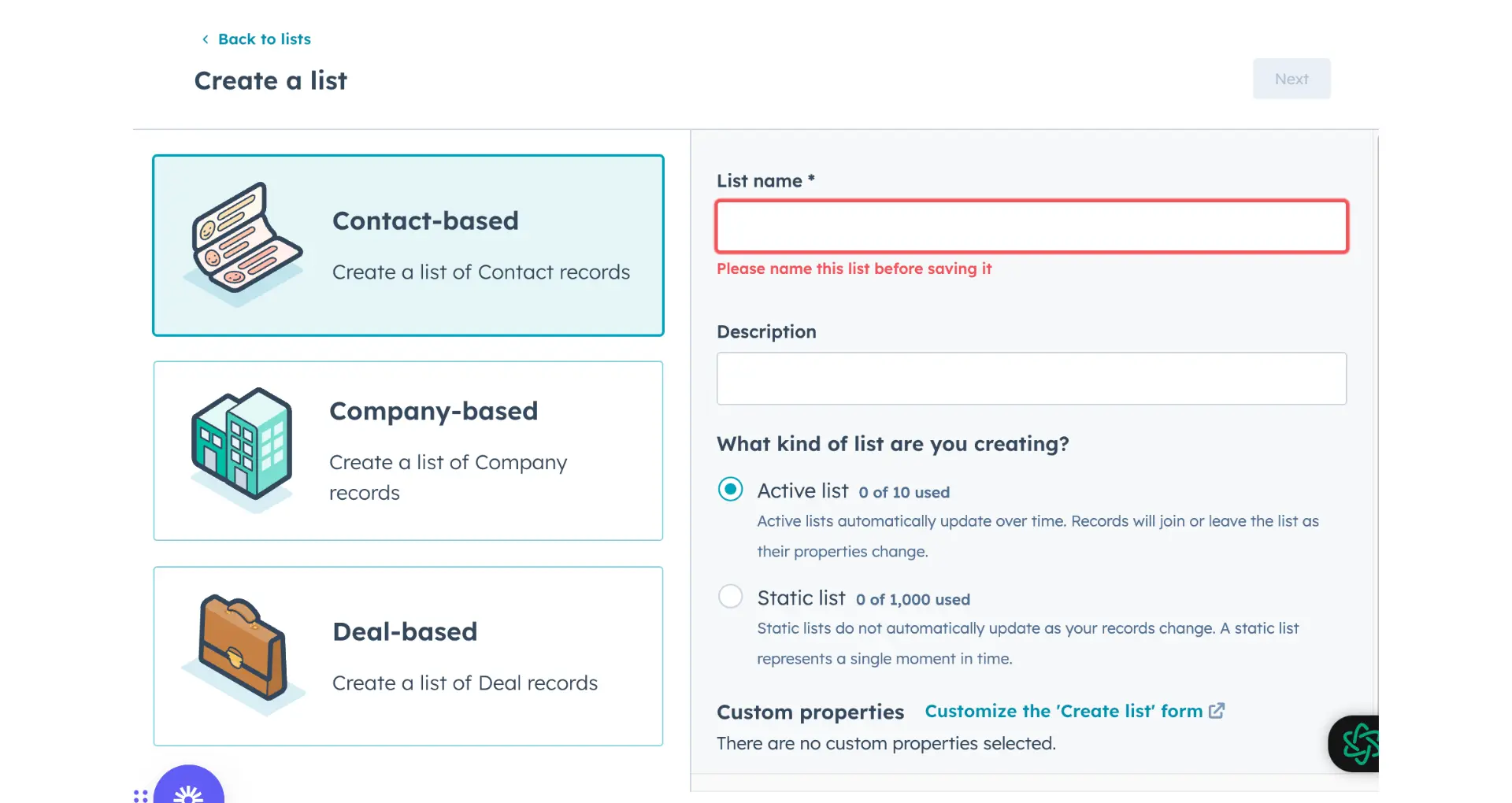
Select the type of list: Contact-based, Company-based, or Deal-based
For more advanced segmentation, you can use sales prospecting tools to help build your lists efficiently.
Enrolling a List into a Sequence
To enroll a list of contacts into a HubSpot sequence, follow these steps:
Navigate to your contacts list by going to Contacts > Lists
Click on the name of the list you want to enroll in the sequence
Select the checkboxes next to the contacts you want to enroll, or select all contacts by checking the box in the top left of the table
Click the "Enroll in sequence" button at the top of the table
In the dialog box that appears, select the sequence you want to enroll the contacts in from the dropdown menu
Customize the enrollment options, such as:some text
Choose the step where contacts should start the sequence
Select the time zone for executing the steps
Override the sequence's default follow-up settings, if desired
If using placeholder tokens in emails, enter values for any missing tokens
Select the email address to send sequence emails from, if you have multiple connected inboxes
Click "Enroll [number] contacts" to start the sequence enrollment process
Select the checkboxes next to the contacts you want to enroll, or select all contacts by checking the box in the top left of the table
Keep in mind that when bulk enrolling contacts, HubSpot limits the sending to a maximum of three emails per minute and adheres to daily email sending limits. This means your sequence emails may not be sent immediately. Consider using automated lead enrichment to improve your process.
Save time on lead enrichment and qualification by using automated processes from Bardeen. Focus on important tasks while automating repetitive ones.
After enrollment, you can manage the contacts in the sequence, view their progress, and unenroll them if needed from the sequence's performance page.
Automating Sequence Enrollment with Workflow
HubSpot workflows allow you to automate the enrollment of contacts into sequences based on specific criteria or actions. This saves time and ensures that the right contacts are enrolled in the appropriate sequences at the right time. Here's how to set up a workflow for automating sequence enrollment:
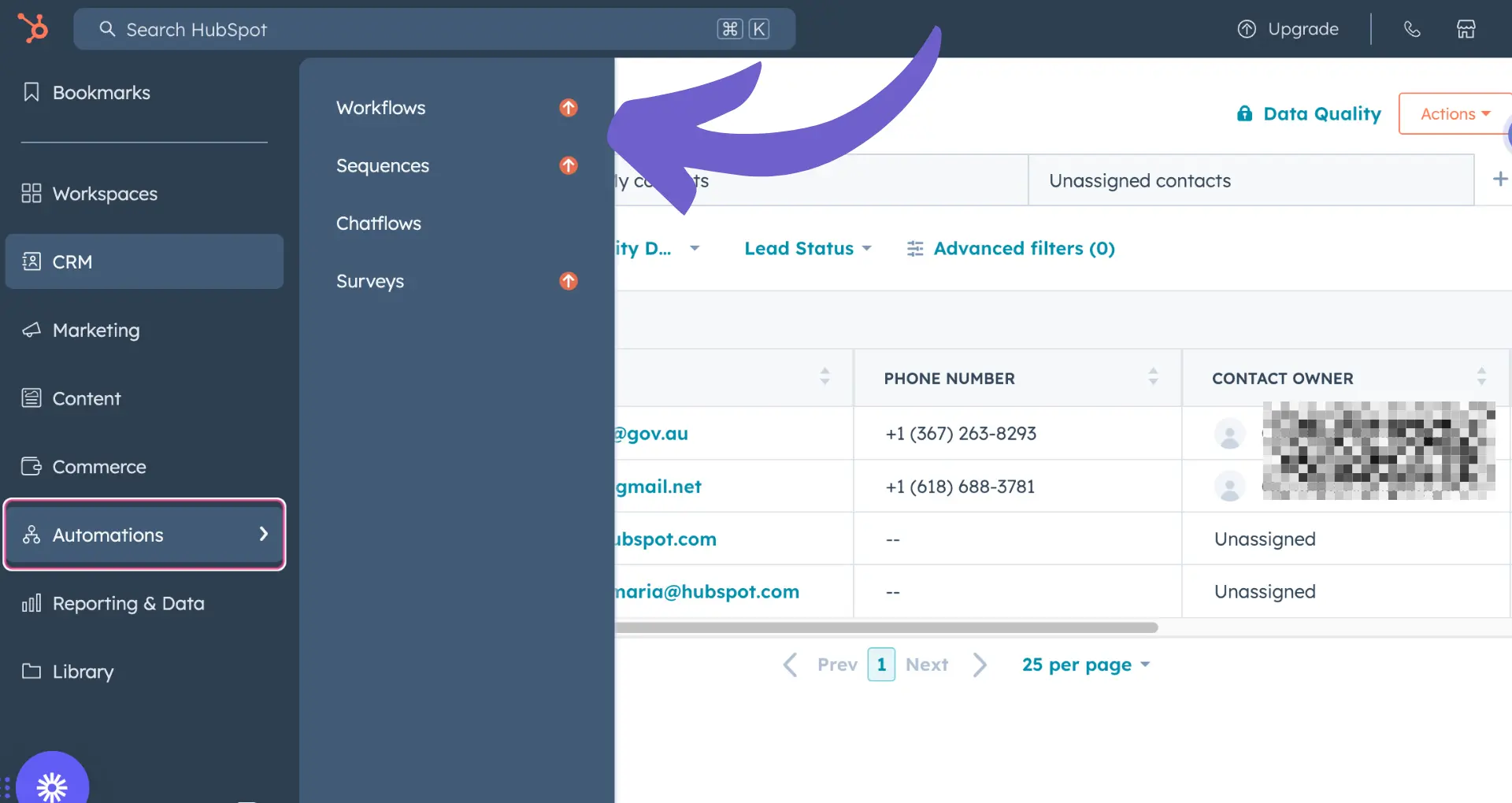
Navigate to Automation > Workflows in your HubSpot account
Click "Create workflow" or edit an existing one
Set up your enrollment trigger, such as when a contact submits a specific form or meets certain criteria
Click the "+" icon to add an action to your workflow
Select "Enroll in a sequence" from the actions panel
Choose the sequence you want to enroll contacts in from the dropdown menu
Select the sender type (specific user or contact owner) and configure the action accordingly
Save your changes and activate the workflow
Click "Create workflow" or edit an existing one
For example, you can create a workflow that enrolls contacts in a follow-up sequence after they submit a form to schedule a meeting. The workflow would be triggered by the form submission, and the action would automatically enroll the contact in the designated follow-up sequence.
Keep in mind that contacts can only be enrolled in one sequence at a time, and if a user exceeds their daily send limit, the contact will skip the enrollment action. Additionally, using placeholder tokens in sequences automated by workflows is not recommended, as the token values cannot be set before enrollment. Learn more about how to automate sales prospecting with Bardeen.
Best Practices and Common Pitfalls
When managing sequence enrollments in HubSpot, it's essential to follow best practices to ensure effectiveness and avoid common pitfalls. Here are some tips to keep in mind:
Segment your lists accurately based on factors such as lead source, persona, or stage in the buyer's journey to ensure the right contacts receive the most relevant sequences
Personalize your sequence emails by using personalization tokens and tailoring the content to the specific segment or persona
Monitor sequence performance regularly and make data-driven adjustments to improve open rates, click-through rates, and overall engagement
Set a reasonable sending frequency to avoid overwhelming contacts with too many emails in a short period
Provide a clear unsubscribe link in your sequence emails to maintain compliance with email marketing regulations and respect your contacts' preferences
Some common pitfalls to avoid when enrolling lists in sequences include:
Enrolling too many contacts at once without considering the impact on your sending reputation and potential for triggering spam filters
Using generic, one-size-fits-all sequences that fail to address the specific needs and interests of different segments
Neglecting to test and optimize your sequences based on performance data, leading to suboptimal results
Failing to set up proper exclusion criteria, resulting in contacts receiving irrelevant or duplicate sequences
Not providing enough value in your sequence emails, causing contacts to disengage or unsubscribe
By following these best practices and being mindful of potential pitfalls, you can effectively leverage HubSpot's sequences feature to nurture leads, drive engagement, and ultimately convert more contacts into customers. For more insights, consider learning about cold outreach techniques.
Discover how to automate sales prospecting and save time on repetitive tasks. Bardeen helps you focus on high-impact activities.

SOC 2 Type II, GDPR and CASA Tier 2 and 3 certified — so you can automate with confidence at any scale.
Frequently asked questions
What is Bardeen?
Bardeen is an automation and workflow platform designed to help GTM teams eliminate manual tasks and streamline processes. It connects and integrates with your favorite tools, enabling you to automate repetitive workflows, manage data across systems, and enhance collaboration.
What tools does Bardeen replace for me?
Bardeen acts as a bridge to enhance and automate workflows. It can reduce your reliance on tools focused on data entry and CRM updating, lead generation and outreach, reporting and analytics, and communication and follow-ups.
Who benefits the most from using Bardeen?
Bardeen is ideal for GTM teams across various roles including Sales (SDRs, AEs), Customer Success (CSMs), Revenue Operations, Sales Engineering, and Sales Leadership.
How does Bardeen integrate with existing tools and systems?
Bardeen integrates broadly with CRMs, communication platforms, lead generation tools, project and task management tools, and customer success tools. These integrations connect workflows and ensure data flows smoothly across systems.
What are common use cases I can accomplish with Bardeen?
Bardeen supports a wide variety of use cases across different teams, such as:
Sales: Automating lead discovery, enrichment and outreach sequences. Tracking account activity and nurturing target accounts.
Customer Success: Preparing for customer meetings, analyzing engagement metrics, and managing renewals.
Revenue Operations: Monitoring lead status, ensuring data accuracy, and generating detailed activity summaries.
Sales Leadership: Creating competitive analysis reports, monitoring pipeline health, and generating daily/weekly team performance summaries.