Adding contacts to your HubSpot CRM is a crucial step in managing your business relationships and driving growth. HubSpot offers multiple methods to input contacts, each catering to different needs and preferences. In this guide, we'll walk you through 5 efficient ways to add contacts to HubSpot, providing step-by-step instructions to help you master contact management within the platform.
Manual Entry of Contacts in HubSpot
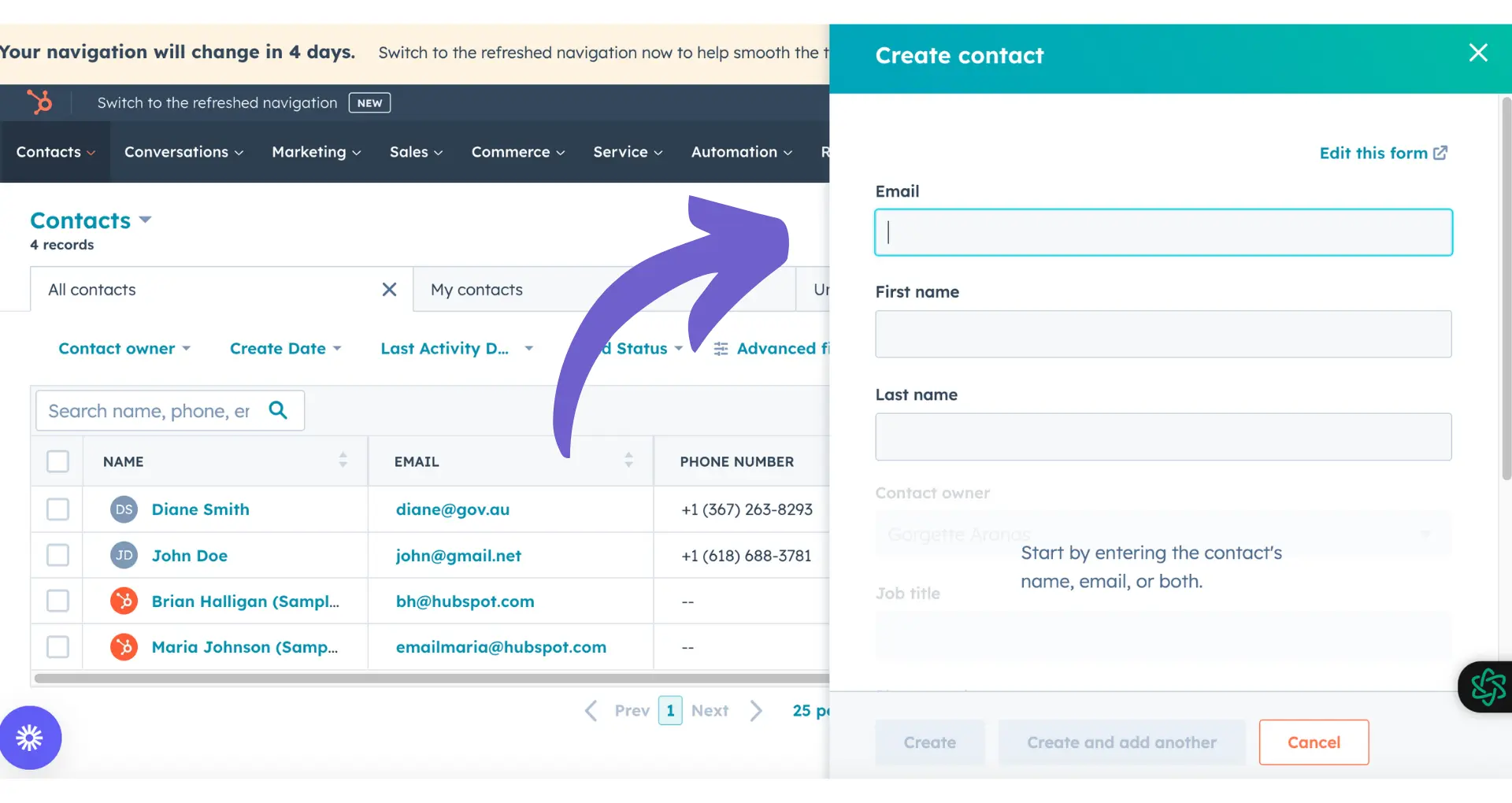
For businesses with a low volume of contacts to add, manually entering contacts through the HubSpot interface is a straightforward solution. This method allows you to input contact details one at a time, ensuring accuracy and control over the information added to your CRM. Here's how to manually create a contact in HubSpot:
Navigate to the Contacts page in your HubSpot account.
Click on the "Create contact" button located in the upper right corner.
In the right panel, fill in the contact's properties, such as their name, email address, phone number, and any other relevant information.
If applicable, associate the contact with any related records, such as companies or deals.
Select the appropriate options for data privacy settings and marketing preferences.
Click "Create contact" to save the new contact record or "Create and add another" to save and immediately create another contact.
When manually adding contacts, it's essential to ensure the accuracy and completeness of the information entered. Consistent data entry helps maintain a clean and reliable database, making it easier to segment and engage with your contacts effectively. For managing larger volumes of contacts, consider automating lead enrichment to save time and improve accuracy.
Importing Bulk Contacts into HubSpot
HubSpot's bulk import feature allows you to quickly add or update large volumes of contacts using CSV, XLSX, or XLS files. This method is ideal for businesses migrating their contact database from another system or maintaining an extensive contact list. Here's how to prepare your file and import contacts in bulk:
Ensure your file is in CSV, XLSX, or XLS format with only one sheet.
Include a header row with each column corresponding to a HubSpot property, such as First Name, Last Name, and Email.
For existing contacts, include their email addresses or HubSpot record IDs to update records and avoid duplicates.
If you're importing contacts with multiple email addresses, include an Additional email addresses column, separating values with semicolons.
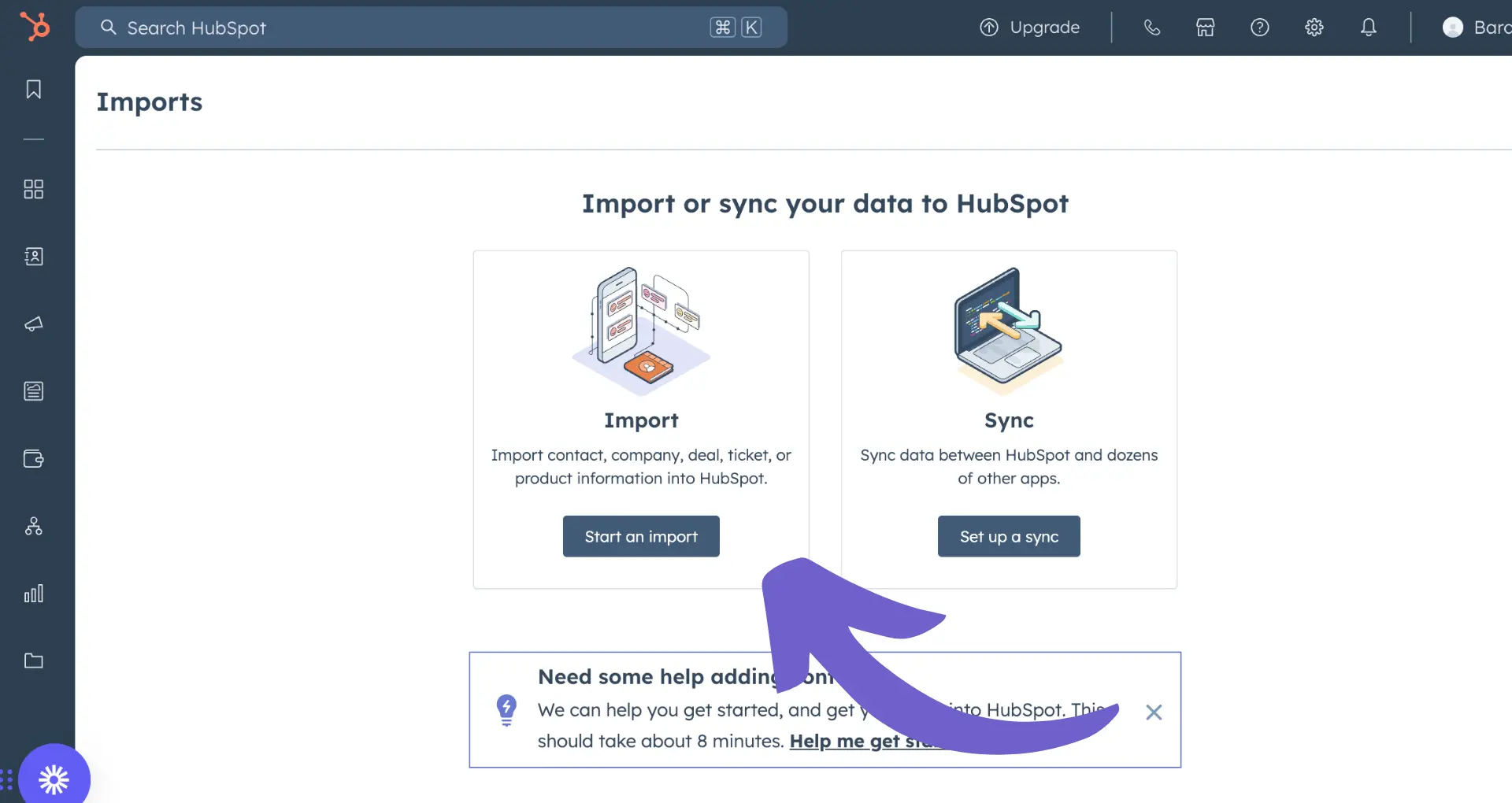
Once your file is ready, navigate to your HubSpot account's Contacts page and click Import in the top right corner.
Select One file > One object, choose Contacts, then upload your file.
Map your column headers to HubSpot properties, matching them with existing properties or creating new custom ones if needed.
Review your import options, such as creating a list or setting the legal basis for processing contact data.
Click Finish import to start the bulk import process.
After importing, review your records to ensure data accuracy and completeness. If you encounter any issues, refer to HubSpot's troubleshooting guide or build a prospect list for additional guidance.
Utilizing Email Integrations to Add Contacts
Integrating your email platform with HubSpot streamlines the process of adding and updating contact information automatically. By connecting email services like Gmail or Outlook to HubSpot, you can sync contacts from email interactions directly into your CRM. Here's how email integration simplifies contact management:
Set up the integration by navigating to your HubSpot account settings, selecting the Integrations tab, and choosing your email provider.
Follow the prompts to grant HubSpot access to your email account and specify the sync settings, such as which folders to sync and how often to update.
Once the integration is active, HubSpot will automatically create new contact records based on the people you communicate with via email.
Existing contacts will be updated with new information, such as email addresses or job titles, as they change in your email conversations.
You can also enable two-way sync, allowing changes made in HubSpot to reflect in your email platform's contact list.
Email integration eliminates the need for manual data entry and ensures your HubSpot contact database stays current. By leveraging this feature, you can focus on engaging with leads and customers while HubSpot handles the contact management behind the scenes. For more efficiency, consider using automation tools for outreach.
Leveraging Business Card Scanning in HubSpot
HubSpot's mobile app offers a convenient feature for professionals who frequently attend networking events: business card scanning. This tool allows you to quickly add contact details from physical business cards directly into your HubSpot CRM. Here's how to leverage this feature:
Open the HubSpot mobile app on your iOS or Android device and navigate to the Contacts tab.
Tap the "+" icon and select "Scan business card" from the menu.
Position the business card within the scanning frame and ensure it's well-lit and in focus. HubSpot will automatically capture the card's information.
Review the scanned details, make any necessary edits, and assign the contact to a company if applicable.
Tap "Create contact" to save the new contact in your HubSpot CRM.
By using the business card scanning feature, you can:
Save time by eliminating manual data entry
Reduce the risk of errors or lost information
Instantly access new contacts' details from your mobile device
Quickly follow up with leads while their interest is fresh
Implementing business card scanning in your networking process automates contact management and ensures you never miss an opportunity to connect with valuable leads.
Save even more time by automating your sales prospecting tasks with Bardeen's AI tools. Automate lead research, build lists, and integrate with your CRM effortlessly.
Capturing Contacts via HubSpot's Website Tools
HubSpot offers a range of website tools that can help you capture contact details from visitors, converting them into leads for your CRM. Two of the most effective tools for this purpose are:
Live Chat: Implement HubSpot's live chat feature on your website to engage visitors in real-time conversations. As you chat with potential leads, you can gather their contact information and automatically sync it with your HubSpot CRM.
Forms: Create custom forms using HubSpot's drag-and-drop form builder and embed them on your website. Use forms to capture visitor details such as name, email, phone number, and company name. Data collected through forms is automatically added to your HubSpot CRM.
To maximize contact acquisition and lead generation using these tools:
Place live chat and forms strategically on high-traffic pages and pages that indicate a visitor's interest in your product or service.
Customize chat greetings and form fields to match your brand voice and gather the most relevant information for your business.
Set up chatbots to qualify leads and provide instant answers to common questions, even when your team is offline.
Optimize forms for mobile devices to ensure a seamless user experience across all platforms.
By leveraging HubSpot's website tools, you can efficiently capture contact details, nurture leads, and grow your business.