
This automation efficiently scrapes Google Search Engine Results Pages (SERP) for a given query and saves the results into a specified Google Sheet. It's an excellent tool for conducting market research, SEO analysis, or competitor monitoring.
The process begins with scraping search results from Google SERP based on the provided query. The automation captures essential details such as the Title, URL, and Description of each search result. Following the data extraction, the automation appends the collected data into a designated Google Sheet. This workflow is particularly useful for:
Pro Tip: You can customize the search query and the structure of the Google Sheets to fit your specific research needs. Bardeen supports a wide array of modifications to make your workflow as efficient as possible.
Using this workflow can save hours of manual data collection and entry, allowing you to focus on analyzing the data and making informed decisions.
To start, ensure you install the Bardeen app on your device.
After installation, proceed to the Magic Box and input the following prompt:
Scrape Google SERP then save into Google Sheets
Make sure to integrate the necessary integrations for the workflow. This includes Scraper for extracting Google SERP data and Google Sheets for saving the scraped data.
Lastly, run the workflow. This process involves:
Scraping Google's Search Engine Results Pages (SERP) is a valuable skill for professionals in market research, SEO analysis, and competitor monitoring. However, it can be challenging due to Google's efforts to block automated scraping tools. To scrape Google search results effectively, you can either use specialized scraping tools or APIs designed for this purpose. One straightforward solution is to leverage SERP APIs, which allow you to bypass the complexities of web scraping by making simple API calls to retrieve the data you need. This method saves time and avoids the hassle of dealing with CAPTCHAs, IP blocks, and the need to parse HTML content.
Discover how to automate and streamline your data collection process with Bardeen. Try our workflow now at https://www.bardeen.ai/download.
Before starting, it's crucial to understand the structure of Google SERPs, which include organic results, ad results, local results, and more. Knowing this structure helps in extracting relevant information efficiently. For those preferring a manual approach, tools like SerpApi offer a user-friendly platform to scrape your first results without coding.
For many professionals, the end goal is not just to scrape Google search results but to save this data into Google Sheets for further analysis. This can be achieved by using tools that integrate directly with Google Sheets, offering a no-code solution for scraping and organizing data. The process involves using functions or add-ons within Google Sheets that can extract up to 300 organic Google results per query, including data points like title, description, URL, and date.
Using these tools, you can specify the number of results, choose the Google domain and results language, and even filter results by publication date. This level of customization allows for precise data collection tailored to your research needs. Additionally, the ability to automate scraping and keep data up-to-date in real-time enhances research capabilities and provides valuable insights.
Maximize your productivity and data analysis with Bardeen's automation capabilities. Get started today at https://www.bardeen.ai/download.
For advanced users, integrating scraping tools with Google Sheets via API offers the flexibility to automate data collection processes further. This method ensures that the extracted data is directly saved into Google Sheets, allowing for immediate analysis and collaboration.
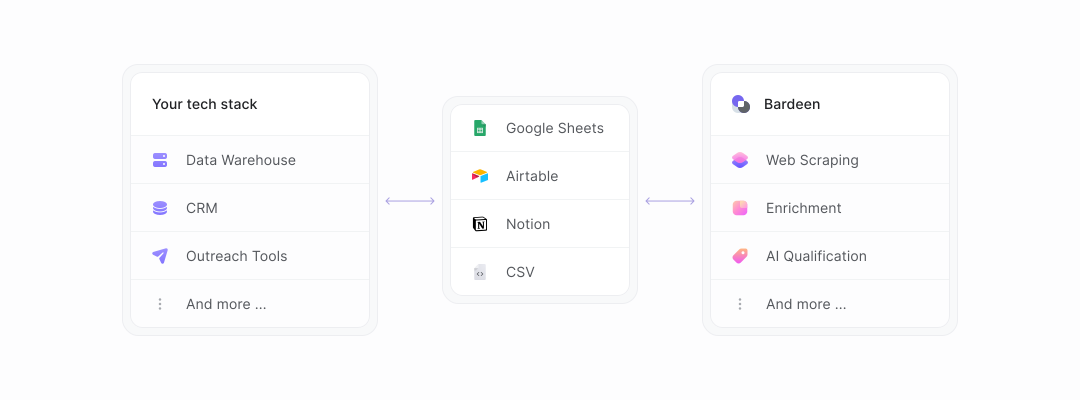
With our new Bardeen version, you can easily extract data from any website and discover new leads across the web. After extracting data from a website, use Bardeen’s powerful automation tools to validate and enrich your data, run additional scrapers on linked pages, or leverage AI to qualify leads and generate content automatically. Once your data is ready, you can easily export it to CSV, Google Sheets, Airtable, or Notion for further analysis and reporting.






SOC 2 Type II, GDPR and CASA Tier 2 and 3 certified — so you can automate with confidence at any scale.