Data enrichment (also known as data appending) is the process of improving the accuracy and reliability of your raw customer data by filling in missing or incomplete information and verifying it against third-party sources. It is often used in sales to generate high-quality leads, one of the core features of lead generation software.
Enriched data gives you a deeper understanding of your target audience. Obtaining accurate data is crucial to understanding your customers’ wants and needs, which in turn helps you improve their experience with your company and personalize your sales efforts accordingly.
Here’s one popular Bardeen automation template that’s only possible with enriched data:


How does this playbook work?
This playbook will analyze the last few posts from the LinkedIn profile and create a personalized intro message.
There are many ways to enrich the data you find. For example, enriching internal sales data with third-party advertisement data can improve the understanding of advertising effectiveness.
In this complete guide, we dive deep into data enrichment and show you the best data enrichment tools and techniques, including how to enrich with AI.
Data enrichment begins by using your internal data. You can combine first-party data from internal sources with disparate data from other internal systems or third-party data from external sources. That makes data enrichment the process of adding extra information to make your proprietary data more accurate.
This approach enables you to compile a clearer, more accurate database. The information you gather will be more valuable to your company as it will contain deeper insights into industry trends and more reliable contact information.
You can initiate this process by manually collecting data from the web or utilizing AI web scraping tools like Bardeen. Our AI data enrichment tool helps you find reliable information using natural language inputs. Plus, it offers an easy-to-install Chrome extension.
There are several ways to enrich the data you collect. To figure out the one that’s right for you, first gather your internal data. Then, decide whether you want to enrich it using data from other internal systems or third-party data from external sources. Finally, pick either a manual or automatic approach.
We recommend using automated data enrichment solutions, as manually updating your data can be tedious and time-consuming. AI data enrichment tools like Bardeen can autonomously find enriched data and add it to your Google spreadsheet, favorite CRM such as HubSpot or Salesforce, or database.
Discover the three main data enrichment methods in this section: manual research, scraping, and using automated tools. Read each carefully to determine which best suits your budget and needs.
The rise in technology has created many useful tools, from efficient AI web scrapers to generative AI tools. However, not every company can keep up with inflated tech budgets and software demands.
You may prefer to manually enrich the data if you’re working with a tight budget. By researching different sites and manually entering data into a database or spreadsheet, you can save yourself a lot of money. It’s also ideal for small amounts of data.
However, this method can be excessively slow and monotonous, especially in the case of lead enrichment. Plus, it facilitates human error, which could end up causing you more problems than it’s worth. In some cases, the money you waste from costly errors or valuable employee time can greatly outweigh the costs you save by not buying data enrichment solutions.
Small budgets don’t necessarily mean you have to do everything yourself. Check out Bardeen’s free trial via a Chrome extension to discover automations that can save you huge amounts of effort without spending anything. Here’s one of the templates you can test:
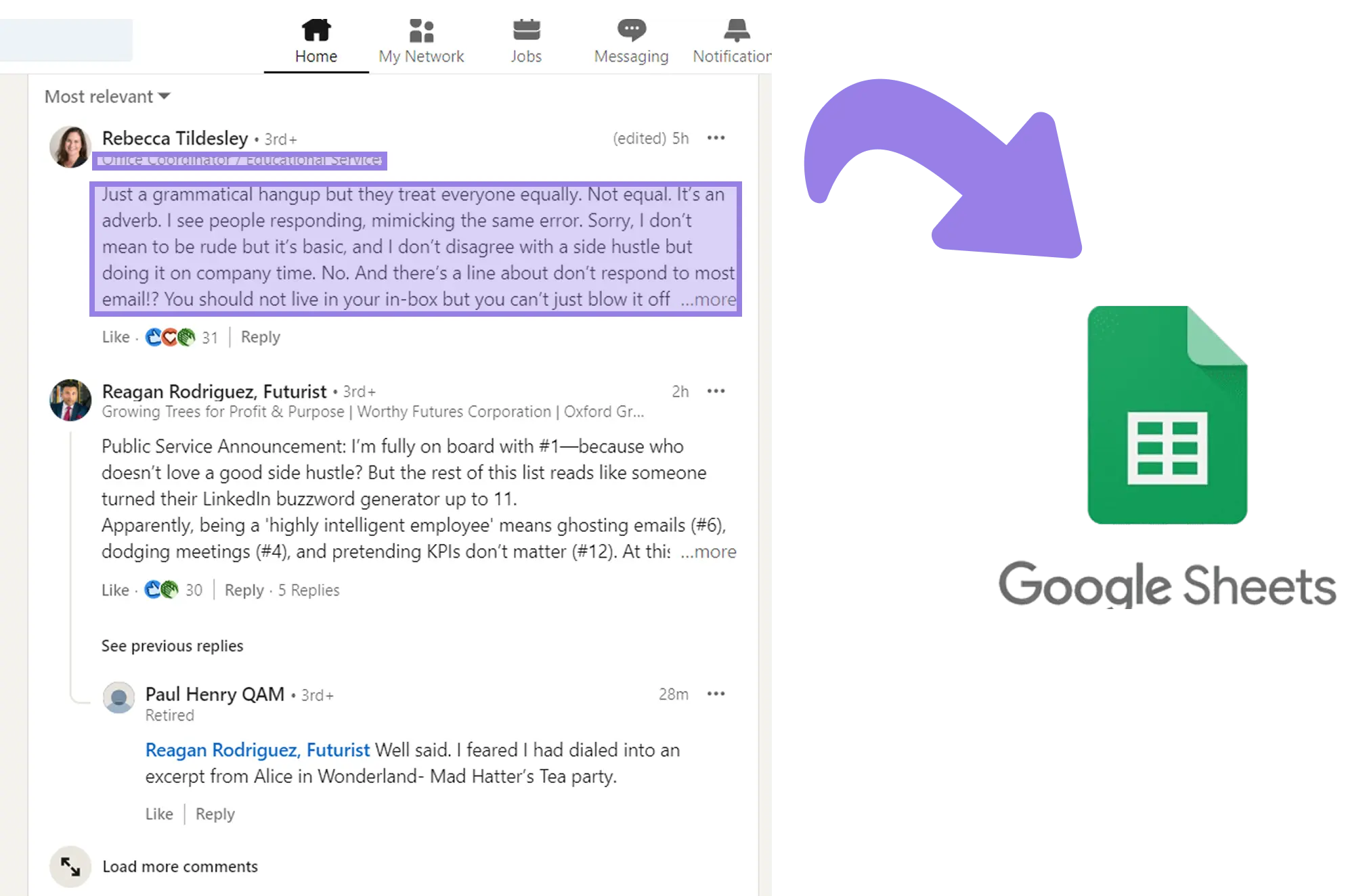
How does this playbook work?
Exporting LinkedIn post commenters to a spreadsheet is time-consuming. This playbook scrapes commenter data from a LinkedIn post and adds it to a Google Sheet with a single click, making it easy to analyze and use the data.
Web scraping involves using specialized software or coding scripts to extract data from websites or other online sources. A web scraper is an efficient method for collecting large amounts of data, but it may require some technical expertise and can be time-consuming.
Scraping works by sifting through a website or page’s code to find all the information relevant to you, such as email addresses or job listings, and displaying it coherently in a single place.
It can save you vast amounts of time and money spent manually trawling through the internet for data. Web scraping can speed up and help with automating a variety of business processes, including:
However, always consider the ethical and legal implications of data scraping before utilizing a scraper tool.
Bardeen’s instant data scraper improves data accuracy by quickly collecting information from various sites. You can then connect your internal data from CRMs or other platforms with our data enrichment service. Some of the 100+ apps we natively integrate with:
The most popular source of data used for enrichment is LinkedIn, and Bardeen offers hundreds of ready-to-use automations for any purpose. If you want to experiment, here are some our users loved the most:

How does this playbook work?
Need to quickly pull data from a LinkedIn profile? This playbook scrapes key information from the active LinkedIn profile tab, giving you structured data in seconds.

How does this playbook work?
Extracting LinkedIn comments is a time-consuming copy-paste task. This playbook scrapes all comments from the active LinkedIn post and outputs them in a structured format, ready for analysis or export.
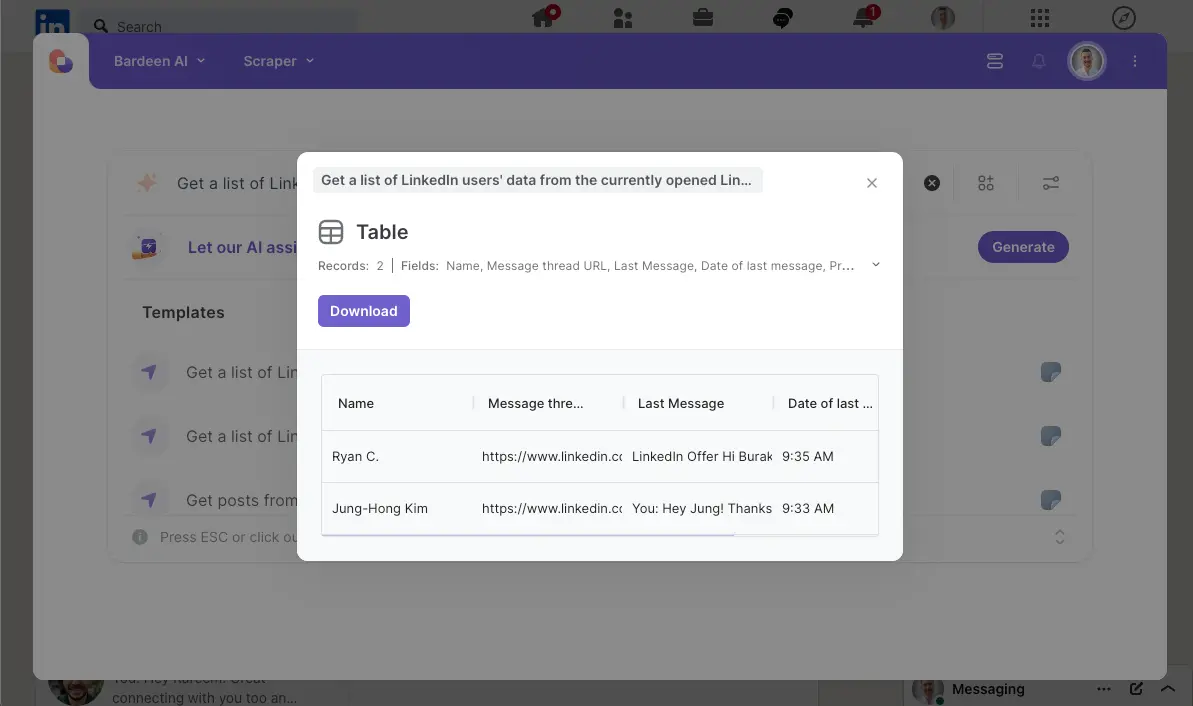
How does this playbook work?
Extracting LinkedIn user data from messages is a chore. This playbook scrapes the current LinkedIn messaging page and outputs a structured list of user data with a single click.
These include software or services that gather, organize, clean, and format data from third-party sources and aggregate it from different sources. P datnrichment tools include Apollo.io. With Bardeen, you can easily enrich your data using our native integrations for data enrichment.
These tools can be effective, but they may be limited in terms of the data points and sources available (unless you employ waterfall enrichment and check many tools for the information you’re looking for). Luckily, Bardeen offers that; however, data scraping still offers more flexibility in selecting data points and sources.
Data enrichment is about adding supplemental information that helps strengthen your CRM or database. It takes many forms, particularly when done using external software. Data enrichment AI tools expand the possibilities of extracting and collating information that can then be used to generate leads or personalize cold emails.
Below, we’ve explained the various types of data enrichment techniques, for different use cases. You can use this list to understand how to use data enrichment to your advantage within your company.
By adding data to your data set, you combine data from several sources to form a more comprehensive, accurate, and consistent set. For example, combining customer data from your CRM, financial system, sales and marketing platform, and third-party data providers can offer a better overall image of your customer than any single system alone.
Data categorization is the process of classifying unstructured information to make it structured and analyzable. It can be divided into two methods:
The process of substituting values for missing or inconsistent data within fields is known as data imputation. This approach allows for a more accurate analysis of your data compared to treating missing values as zeros, which would skew aggregations.
For instance, if the order value is unknown, it can be estimated based on the customer's past purchases or the specific bundle of goods.
This involves extracting useful structured data from unstructured or semi-structured data. Entities that can be identified include people, locations, organizations, concepts, numerical expressions (like dates, hours, money, and phone numbers), and temporal expressions (such as dates, time, duration, and frequency).
This involves adding demographic information, such as gender, age, marital status, social media profiles, location, and income level, to an existing dataset. This can significantly improve prospect list building and targeted efforts by enabling personalized outreach via LinkedIn or email. Be sure to consider the end purpose so that you can obtain a relevant database.
This is where you enrich data with firmographic information, such as valid business emails, job titles, and work experience. This process allows you to extract more value from your customer data. You must validate the contact data you already have, such as names, email addresses, and LinkedIn profiles, and then append additional data like company, job role, and work experience. For company data enrichment, you could add details like company industry, revenue estimation and range, employee count, and tech stack.

How does this playbook work?
Sales and marketing teams need company data for outreach, but manually gathering it from LinkedIn is time-consuming. This playbook scrapes key details from a company's LinkedIn page with a single click, making research more efficient.

How does this playbook work?
Building email lists from websites is time-consuming. This playbook takes a Google Sheet of URLs, scrapes each site for email addresses, and adds them to the sheet – automating the entire process.
Enriching data based on purchase interest and intent provides brands with a more accurate understanding of a potential customer's likelihood to make a purchase. By gathering actual shopping data and tracking product view frequencies, sales teams and marketers can develop targeted campaigns that emphasize performance and appeal to the right consumers, ultimately guiding them toward a purchase decision.
App usage data provides insights into which apps customers interact with, which operating systems they use to access the app, and what devices the app is accessed through. By enriching datasets with this behavioral information, you can more effectively identify user preferences and enhance the overall customer experience.
Data enrichment is a valuable process for many purposes and businesses. For instance, you can use enriched data to advance customer segments based on third-party data with dimensions like purchase intent or app usage. This better equips you to find new customers and create content tailored specifically towards those different groups’ interests.
Similarly, automated data enrichment solutions enhance lead scoring, which can be tedious when done manually. For example, say a lead had interacted with a business previously but had never subscribed to a mailing list. They then subscribe to your mailing list and enter the business database with just their first and last names, no email or address.
A data enrichment tool using socio-demographic data would be able to compare the entered data against accurate postal records and automatically append address data. This could boost their lead score and increase conversion rates while also developing an effective working relationship between sales and marketing teams.
A final example comes from the world of lending. Credit scoring is built on data enrichment. Banks or loan providers access third-party databases to compile a complete profile of the customers they’re dealing with (and hopefully reject potential defaulting customers). Here, data enrichment is vital to ensuring streamlined credit scoring.
While every company’s enrichment process will depend on its unique data types and strategic business goals, there are common best practices that can benefit brands no matter whether you enrich with AI or manually.
During the process, you must define data enrichment goals and the criteria that help you measure these goals. For example, if you’re looking to improve the completeness and accuracy of customer data, you might set a goal of having 90% or better data accuracy in customer profiles when tested against a third-party verification source. If targets aren’t met, you know more work is needed.
Designing and implementing new processes over and over again is a waste of time and money. By creating frameworks for data analysis that are consistent and reliable, you can apply them to more than one enrichment effort. Consider the process of verifying customer profile data using a set of standard third-party sources. By creating a process that automatically checks these sites for specific data types, you can simply reapply the function as necessary.
As your data volumes grow, you will need enrichment efforts that can scale in tandem. In practice, this means implementing enrichment automation wherever possible to eliminate manual touchpoints that could introduce additional complexity or unexpected errors.
Consider how your data enrichment processes will generalize to other datasets. For example, if you create a process to verify customer data submitted via desktop website forms, it’s a good idea to use partners or services capable of ensuring this process is also applicable to mobile users.
The more accurate data you have, the smarter your business decisions can be. This helps you stay on top of trends, move into new markets, reduce customer friction, improve outreach, and increase overall sales. Data enrichment helps you personalize your strategies to attract a world of benefits.
In recent years, businesses have shifted their approaches to place more value on personalization, using data enrichment to help enhance the customer experience. This research indicates the value of personalized outreach:
Accurate, enriched data is the key to creating targeted, personalized customer experiences—and the lack thereof can turn customers away. This process is important because it helps you learn more about your users without asking them for extra information, reducing the risk of user friction or a slow user experience.
There are numerous other benefits to data enrichment, including:
With a solid data enrichment strategy, your focus shifts to keeping data that matters to your company, such as customer contact information or transaction histories. Other, less relevant data can then be deleted or shifted to lower-cost long-term storage sites. This saves you money because you don’t store irrelevant or outdated information, as data enrichment makes it possible to detect and eliminate redundant data to reduce overall spending.
Enriched data promotes personalized communications and increases the likelihood of meaningful customer relationships and business opportunities. With relevant customer data, your business can develop communication strategies that meet customer preferences and needs.
Data enrichment helps identify segments of customers to be nurtured. A segment offers value-driven information that has the potential to trigger a purchase.
Personalization is the future of sales and marketing, and many businesses are realizing that a one-size-fits-all approach does not work. An organization requires data enrichment to segment data effectively for targeted sales and marketing to be successful.
Data enrichment ensures you have a clean and accurate contact list to increase sales efficiency and boost ROI. It provides opportunities for cross-selling and upselling because you’ll have the right data and know your customers well.
Redundant data costs a company significantly. It results in revenue loss, customer loss, and damaged reputation. Outdated and duplicate data is common in organizations because they are uncertain which data to let go of and which to keep. Data enrichment enables you to get rid of redundant data and enhance your overall data quality.
Customers have enormous expectations when it comes to their experience with brands. They expect companies to know them, anticipate their needs, and provide relevant interactions. Data enrichment enhances customer experiences by providing unique information on customers. Your business can anticipate customer needs and remain relevant through personalized marketing.
Data cleansing is the process of removing inaccurate, irrelevant, or outdated data. Before the main CRM enrichment process, you should do this to make room for the updated and supplemental information you collect.
Your CRM should contain only the highest-quality data that best represents your leads and customers. If your email list is growing but your engagement rate is dropping, you know it’s time to clean up your data. The same goes for other information you use to connect with your leads and customers.
Keep a close eye on your engagement rates (including opens and click-through rates) versus your total subscribers. These metrics will tell you how healthy your database is. Ensure you regularly monitor your data performance and perform data cleansing every six months or so.
What are the best tools you can use for data enrichment? Depending on the size of your database, you may be turned off by the prospect of manually combing through hundreds or thousands of data points. We don’t blame you. So, we compiled this helpful list of data enrichment AI tools to help you clean and manage your data.
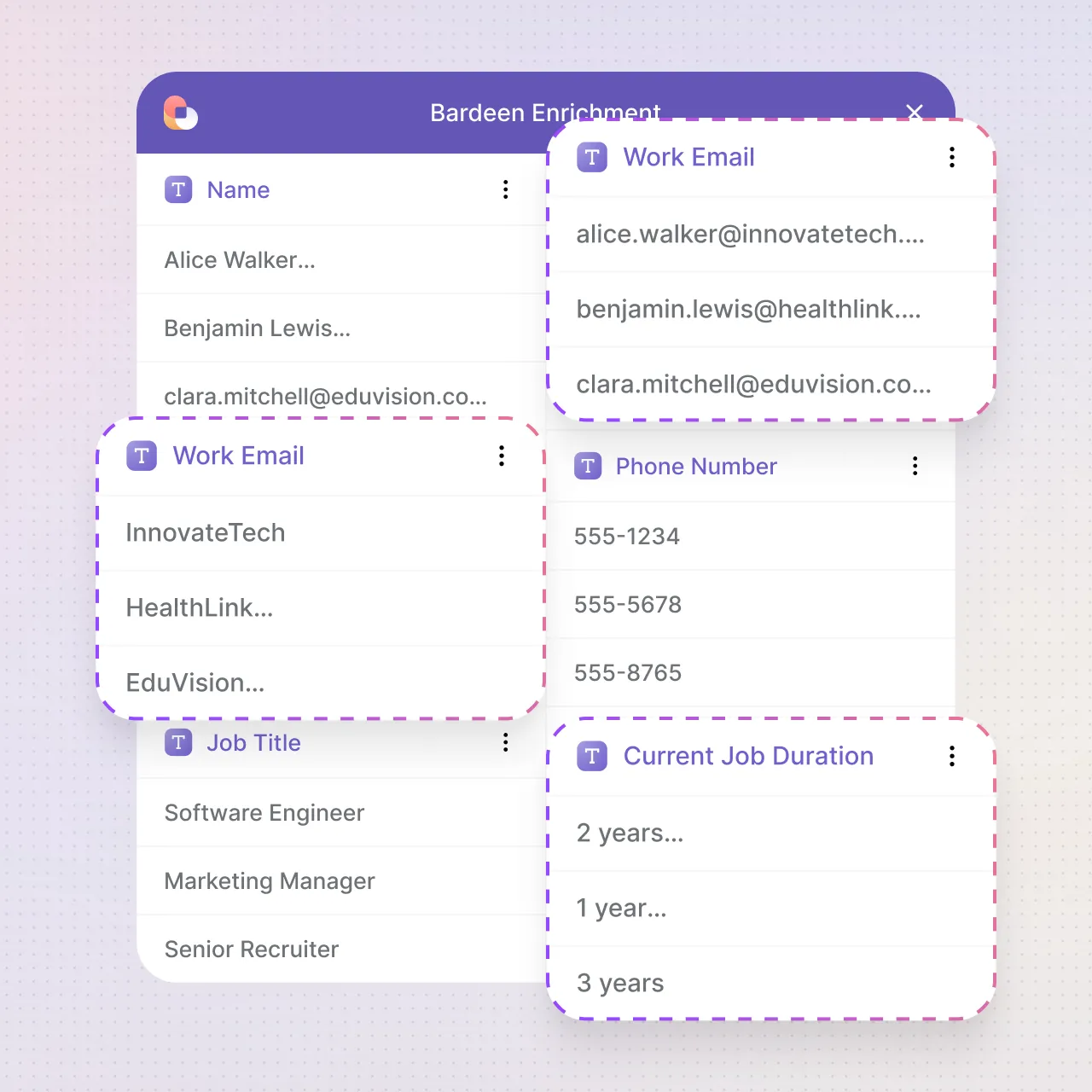
Bardeen is a simple yet sophisticated tool that automates many of the processes involved in data enrichment. By combining easily understandable workflows that use natural language, you can create reliable data enrichment techniques and strategies.
Although paid plans offer a lot of extraordinary features, Bardeen is also available under a free trial as a Google Chrome extension. This makes it ideal for all kinds of businesses, including small companies with limited budgets and large enterprises with vast databases.
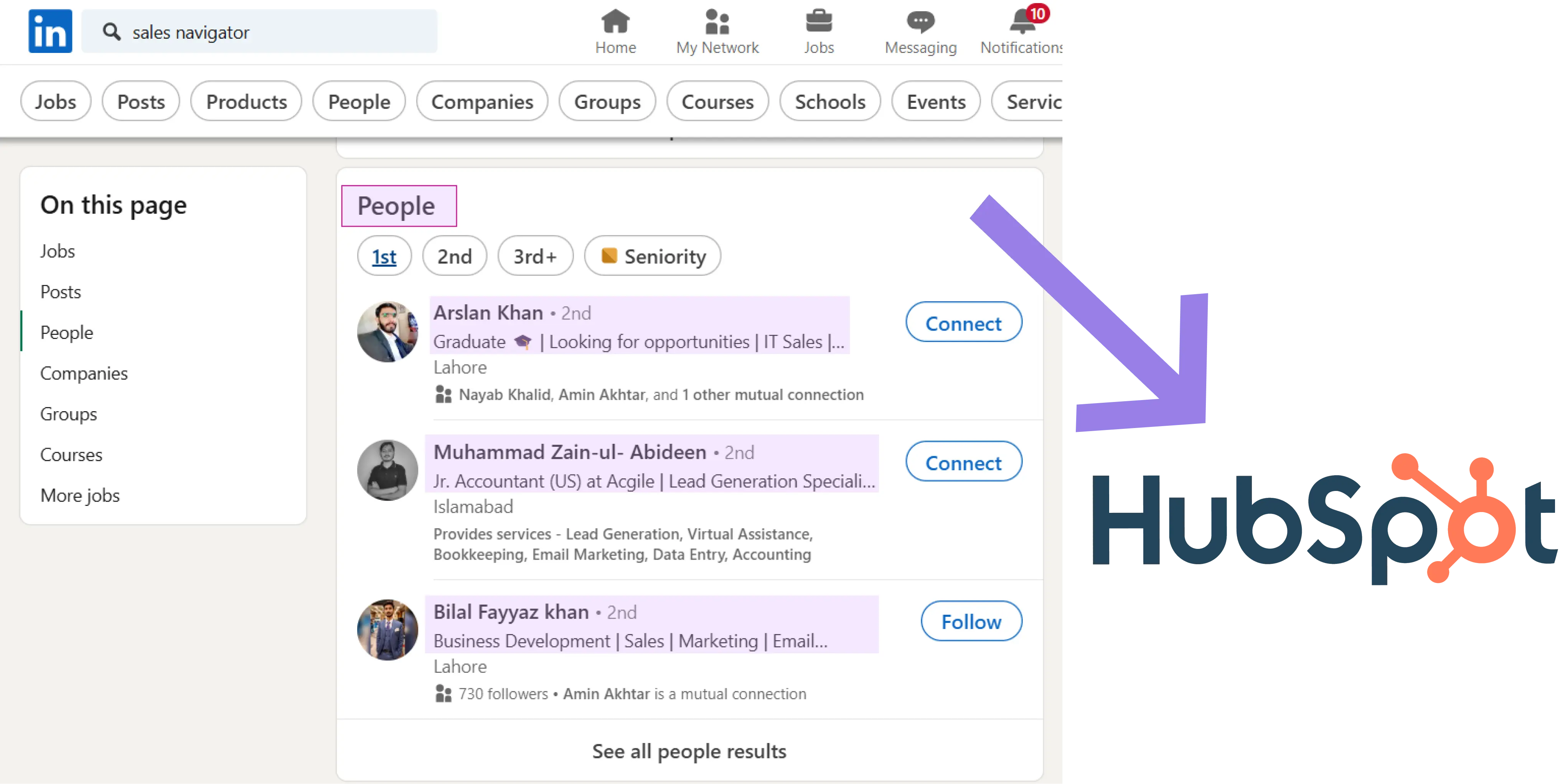
Bardeen offers many routes to fast and cost-effective data enrichment. For instance, you can scrape LinkedIn profiles and use the data to enrich your HubSpot CRM. Or, you can directly extract data from other social media sites like Instagram and Facebook and display the information neatly in a spreadsheet. Here are those automations to get you started:
How does this playbook work?
Adding LinkedIn leads to your CRM is time-consuming. This playbook scrapes a LinkedIn profile, extracts key info like name and email, and automatically creates a new HubSpot contact.

How does this playbook work?
Finding and tracking relevant Facebook pages is time-consuming. This playbook scrapes Facebook search results, extracts key business page data, and adds it to a Google Sheet for easy analysis and outreach.



How does this playbook work?
Collecting Instagram profile data is time-consuming. This playbook extracts data from a list of Instagram links in Google Sheets and updates the sheet with profile info like bio, followers, and posts.

Vainu is a B2B business database and sales intelligence software. This tool allows you to filter through a database of millions of companies and identify prospects that fit your ideal customer personas. You’ll find easy access to data and integrations with multiple platforms. Vainu offers native integrations with HubSpot, Salesforce, Pipedrive, and many other sales tools.
However, your budget may not align with their paid plans, and you may find issues with the data if you don’t pay attention to the search filters. Also, a certain reliance on technical proficiency is required to achieve your desired results.

Clearbit offers updated company and contact information for your sales records, helping you focus on B2B lead enrichment, qualification, and scoring. This platform provides access to more than 200 million contacts and continuously updates and enriches contact information automatically.
You can easily integrate the data you find with your other platforms or apps to help you transfer findings and data from one place to another for easy analysis.

You can quickly find and connect with your next customer using Datanyze. With this tool, you can capture data while you browse social media to connect with potential prospects. You can also tag contacts and companies to create segmented lists. Datanyze integrates with a variety of CRMs and provides data on millions of companies worldwide.
However, it’s worth knowing that Datanyze is very limited in its free version. Many users have also reported issues with the quality of the data and the customer service responsiveness.

LeadGenius allows you to verify B2B lead information to ensure your team is reaching out to the most accurate, engaged prospects. You can give your team the personalized datasets they need to make better connections with potential customers.
It’s a robust tool but does come with downsides. For instance, many users complain about its costly price, particularly when compared with alternatives. Also, LeadGenius lacks certain advanced features like purchase intent data, which may cause issues with sales teams.

Apollo.io lets you find accurate, representative data to keep your sales outreach in full flow. You can maintain high-quality data through advanced enrichment features, enhancing the customer experience and prospect engagement levels.
However, like most AI data enrichment tools, you must be wary of the accuracy and quality of the data provided. Any information given to you by third-party tools is less reliable than details you acquire yourself, such as by web scraping. Some users also reported a steep learning curve when using Apollo.io.
Effective data enrichment requires ongoing effort to ensure that collected information is relevant, accurate, and timely. Data never stops flowing throughout your organization, and your data environment is constantly changing. To ensure you’re getting the most value from data sources, you must carry out continual enrichment using reliable and accessible tools.
Bardeen is the best data enrichment tool available. It has integrations with hundreds of top platforms like Salesforce or HubSpot, and it offers an easy way into comprehensive automation. With its accessible workflows and free Chrome extension, Bardeen makes the perfect addition to your sales and marketing toolkit.
Download Bardeen today to find accurate contact information and improve your outreach. Our tool is a cost-effective way to increase personalization and boost your overall conversions.
And if you have any further questions about data enrichment, head over to our forum to find the answers.







SOC 2 Type II, GDPR and CASA Tier 2 and 3 certified — so you can automate with confidence at any scale.