Importing opportunities into Salesforce is a crucial task for sales teams looking to manage their sales pipeline effectively. Salesforce provides several methods to import opportunities, ensuring that users can choose the approach that best fits their needs. This guide will cover the key methods and steps involved in importing opportunities into Salesforce, including using the Salesforce Data Import Wizard and considerations for importing opportunities with products.
Yes, Salesforce allows users to import opportunities along with other essential sales data. This capability is fundamental for businesses transitioning to Salesforce or those looking to integrate Salesforce with other sales tools. Importing opportunities helps in maintaining a seamless sales process, ensuring that all sales data is centralized within Salesforce for better tracking and management.
The Salesforce Data Import Wizard is a user-friendly tool designed to simplify the process of importing opportunities into Salesforce. It supports the import of various standard and custom objects, including opportunities, accounts, contacts, leads, and custom objects. Here's how to use the Salesforce Data Import Wizard for opportunities:

2. Under the 'Data' section, click on 'Data Import Wizard'.
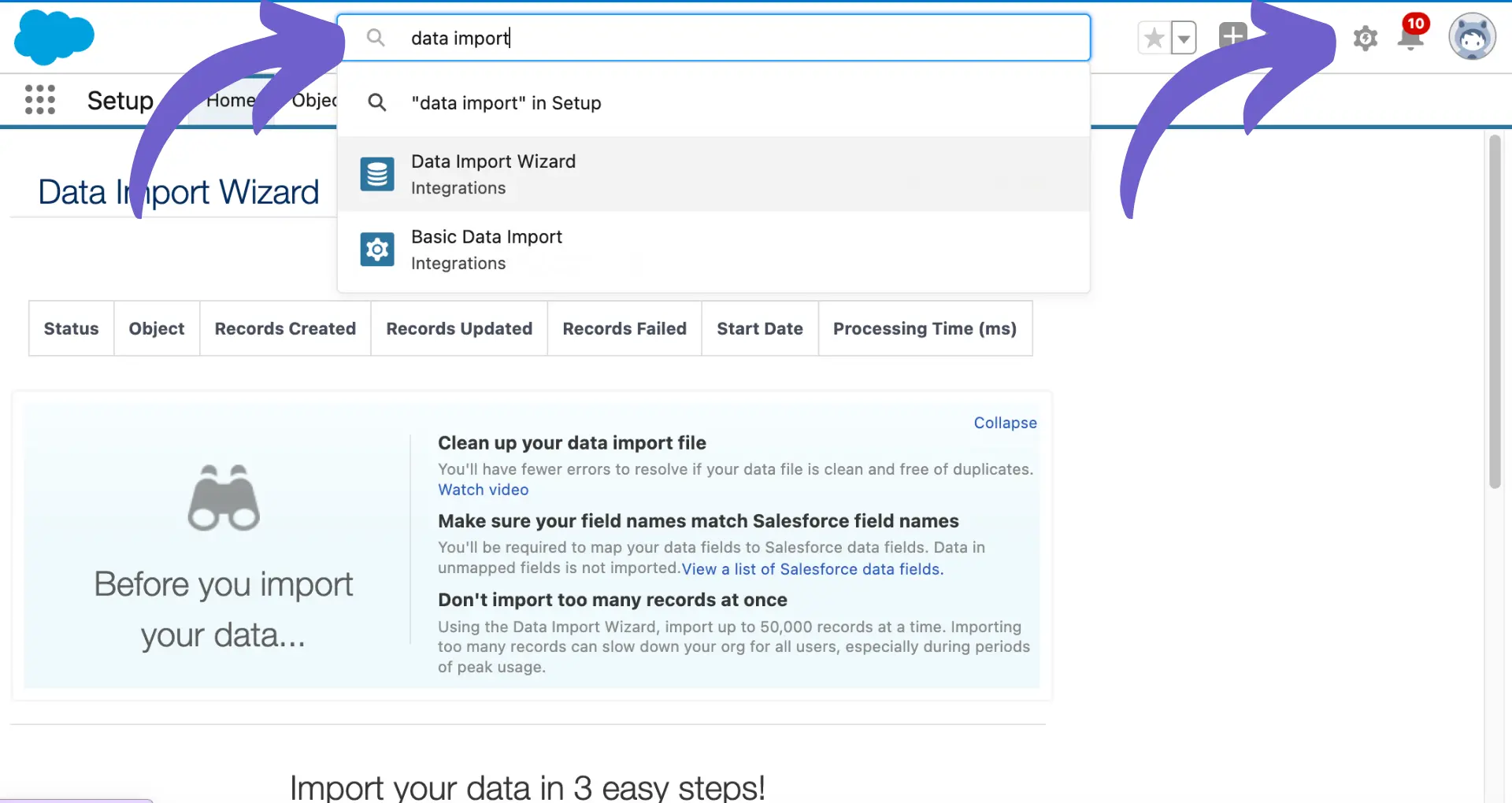
3. Choose 'Launch Wizard' under the 'Opportunities & Products' section.

4. Select 'Opportunities' as the record type you wish to import.
5. Follow the prompts to upload your CSV file containing the opportunity data.
6. Map the CSV file columns to the corresponding Salesforce opportunity fields.
7. Review your selections and start the import process.
Looking to streamline your Salesforce workflow? Download Bardeen and discover how our automation playbooks can transform your sales process.
The Data Import Wizard provides a guided process, including error checking and the ability to preview your data before finalizing the import, ensuring data integrity and reducing the likelihood of import errors.
Importing opportunities with associated products into Salesforce requires a more detailed approach, as it involves linking products to opportunities, which may include setting up product schedules and quantities. To import opportunities with products:
Enhance your sales team's productivity by automating the import of opportunities into Salesforce. Check out our playbooks for Salesforce to get started.
Importing opportunities with products may require additional steps, such as setting up product catalogs in Salesforce beforehand and ensuring that product codes in your CSV file match those in Salesforce.
Importing opportunities into Salesforce is a straightforward process with the right preparation and understanding of the Salesforce Data Import Wizard. Whether you're importing simple opportunities or those with associated products, Salesforce provides the tools and features needed to ensure a smooth import process. Proper mapping of fields and careful preparation of your CSV files are key to successful data import, helping your sales team to efficiently manage and track opportunities within Salesforce.
From the Blog: Discover how to automate sales for SDRs and Sales Ops teams with our Salesforce Integration Workflow Automation Guide, providing helpful automations to save time and increase impact.







SOC 2 Type II, GDPR and CASA Tier 2 and 3 certified — so you can automate with confidence at any scale.