Exporting contacts from Salesforce is a common requirement for users who wish to utilize their contact data across different platforms or for backup purposes. Salesforce provides various methods to export contacts, including native options within the platform and using third-party tools for automation or integration with other software. This guide covers multiple approaches to export contacts from Salesforce, ensuring you can choose the method that best fits your needs.
Automate your Salesforce contact management with Bardeen to save time and enhance efficiency.
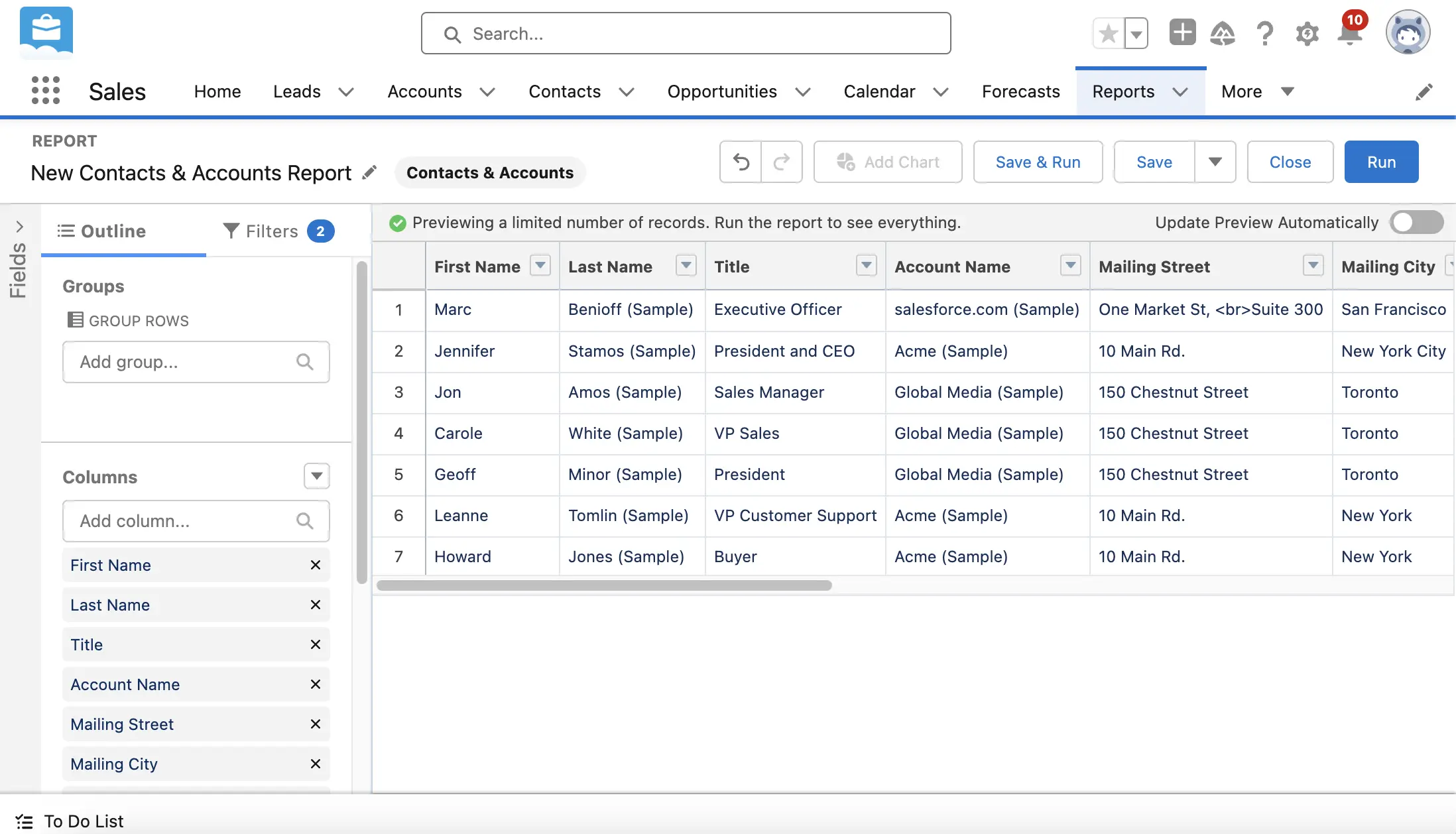
The native method to export contacts from Salesforce involves creating a custom report. This process allows you to select specific contact fields and export them in formats such as Excel (.xlsx) or CSV. Here are the steps:
Exporting contacts directly to Excel requires generating a contact report first, as Salesforce does not support direct contact exports to Excel. After creating and customizing the report as mentioned above, select the 'Export' option and choose the 'Formatted Report' for an Excel file. This method ensures that your data is neatly organized in an Excel spreadsheet for further analysis or record-keeping.
If you prefer a CSV file, follow the same report generation process. When exporting, select the 'Details Only' view to get a CSV file. This format is particularly useful for importing your Salesforce contacts into other CRM platforms or email marketing tools that require CSV format.
To export contacts from Salesforce to Outlook, you can use Salesforce's native export functionality to first export the contacts as a CSV file. Then, use Outlook's import function to bring your Salesforce contacts into Outlook. This process involves exporting the Salesforce contacts report as detailed above, saving it as a CSV file, and then importing this file into Outlook through the 'File' > 'Open & Export' > 'Import/Export' > 'Import from another program or file' option.

To export all contacts, ensure that when you're creating the custom report, you do not apply any filters that would limit the contacts being reported. This way, the report will include all contacts in your Salesforce CRM. After generating this comprehensive report, follow the export steps as previously described.
For users of the Salesforce Lightning interface, the process remains similar to the Salesforce Classic. Navigate to the Reports tab, create a new report with 'Contacts & Accounts', customize it as needed, and export. Salesforce Lightning offers a user-friendly interface that simplifies the report creation and export process.
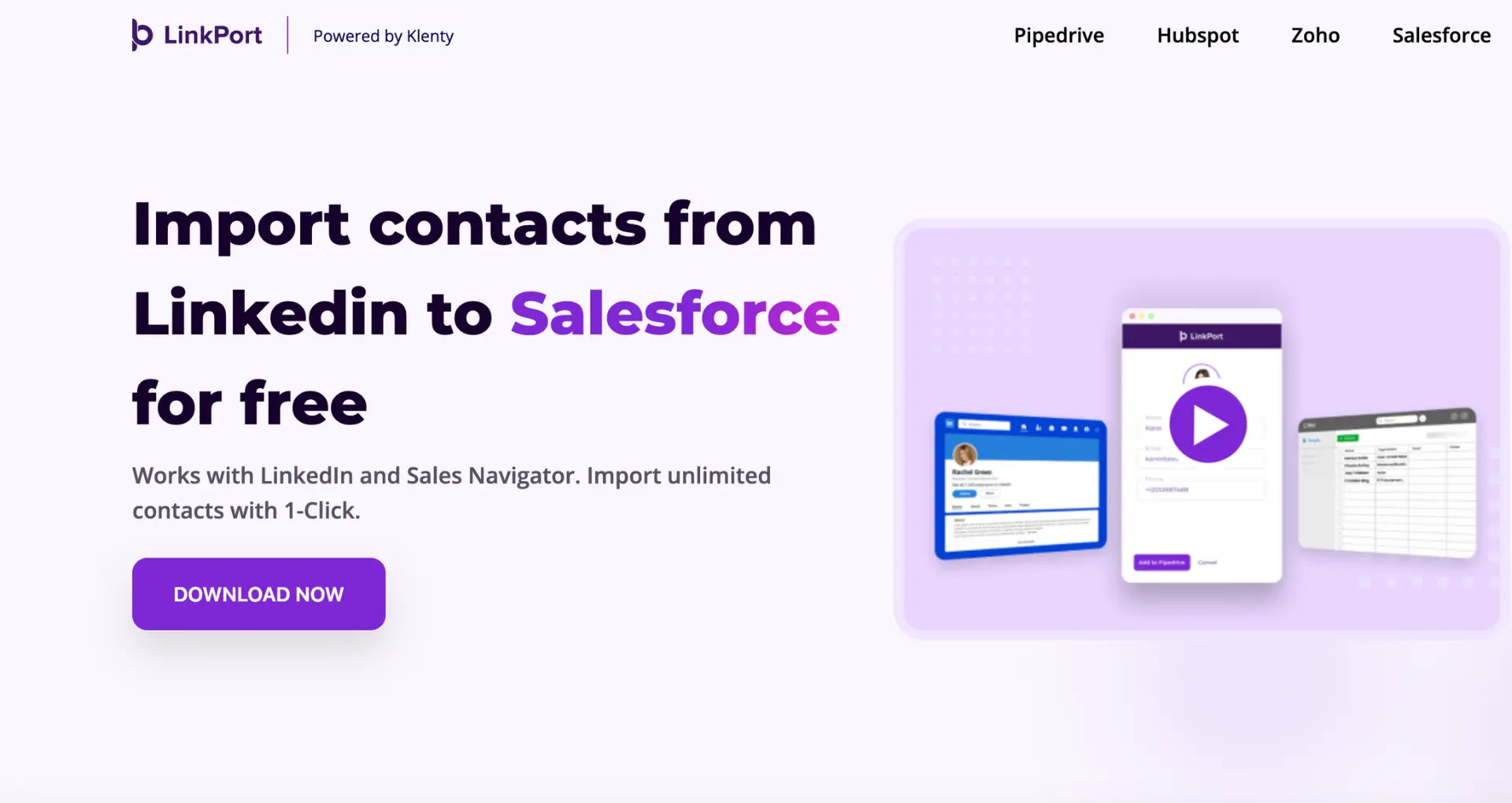
Exporting LinkedIn contacts to Salesforce can be achieved through LinkedIn's Sales Navigator integration with Salesforce or using third-party tools like LinkPort. These tools allow you to directly import LinkedIn contact information into Salesforce, enriching your CRM data with valuable LinkedIn insights.
The process to export contacts from Salesforce Lightning involves creating a custom report to filter and select the specific contacts you need, then exporting the report. Salesforce Lightning's interface provides an intuitive and streamlined process for report creation and data export.
To export Salesforce contacts to an iPhone, you can use Salesforce's Lightning Sync feature or third-party tools. Lightning Sync automatically syncs your Salesforce contacts with your email platform, which can then be synced with your iPhone's contacts. For Gmail users, additional steps in Google Contacts may be required to ensure all Salesforce contacts sync correctly to the iPhone.
For detailed steps on using Lightning Sync or configuring your iPhone to receive Salesforce contacts, refer to Salesforce's official documentation or the support pages of the third-party tools you choose to use.
Reiterating the process for exporting contacts to Outlook, the key is to first export your Salesforce contacts as a CSV file and then import this file into Outlook. This method ensures that your Salesforce contacts are accessible within Outlook, allowing for seamless communication and scheduling.
For a guide on automating sales for SDRs and Sales Ops teams and helpful automations, visit our Salesforce Integration Workflow Automation Guide.








SOC 2 Type II, GDPR and CASA Tier 2 and 3 certified — so you can automate with confidence at any scale.