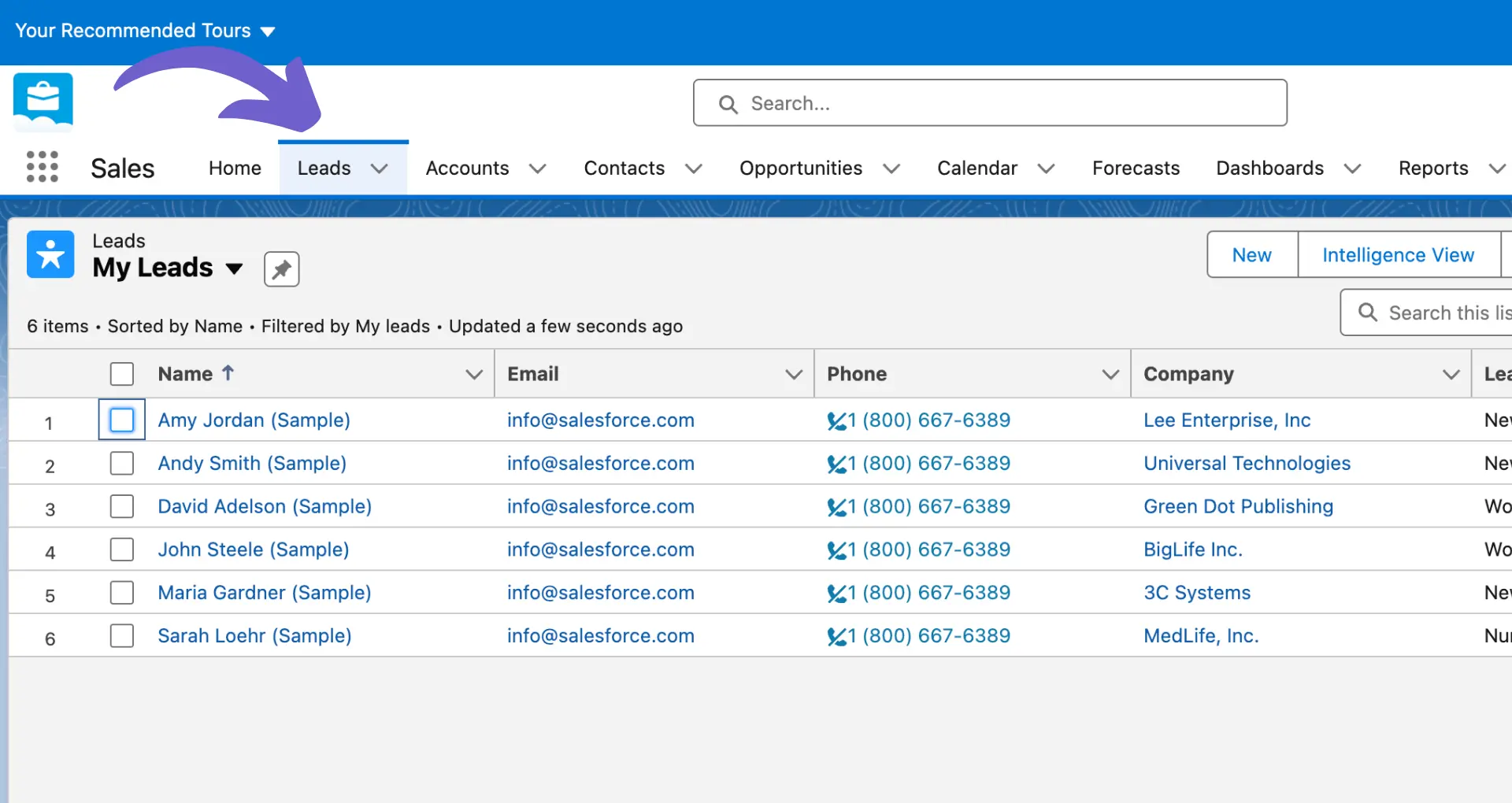
Converting leads in Salesforce is a critical process for moving potential customers through the sales funnel. This guide covers various aspects of lead conversion in Salesforce, including converting leads to contacts, opportunities, customizing the conversion process, mapping, automation, and mass conversion.
Automate your Salesforce lead conversion process with Bardeen to save time and increase efficiency. Download the Bardeen app to get started.
To convert a lead to a contact in Salesforce Lightning, follow these steps:
3. Choose the lead you wish to convert by clicking on its name.

4. Click on the Convert option next to the Submit for Approval button.
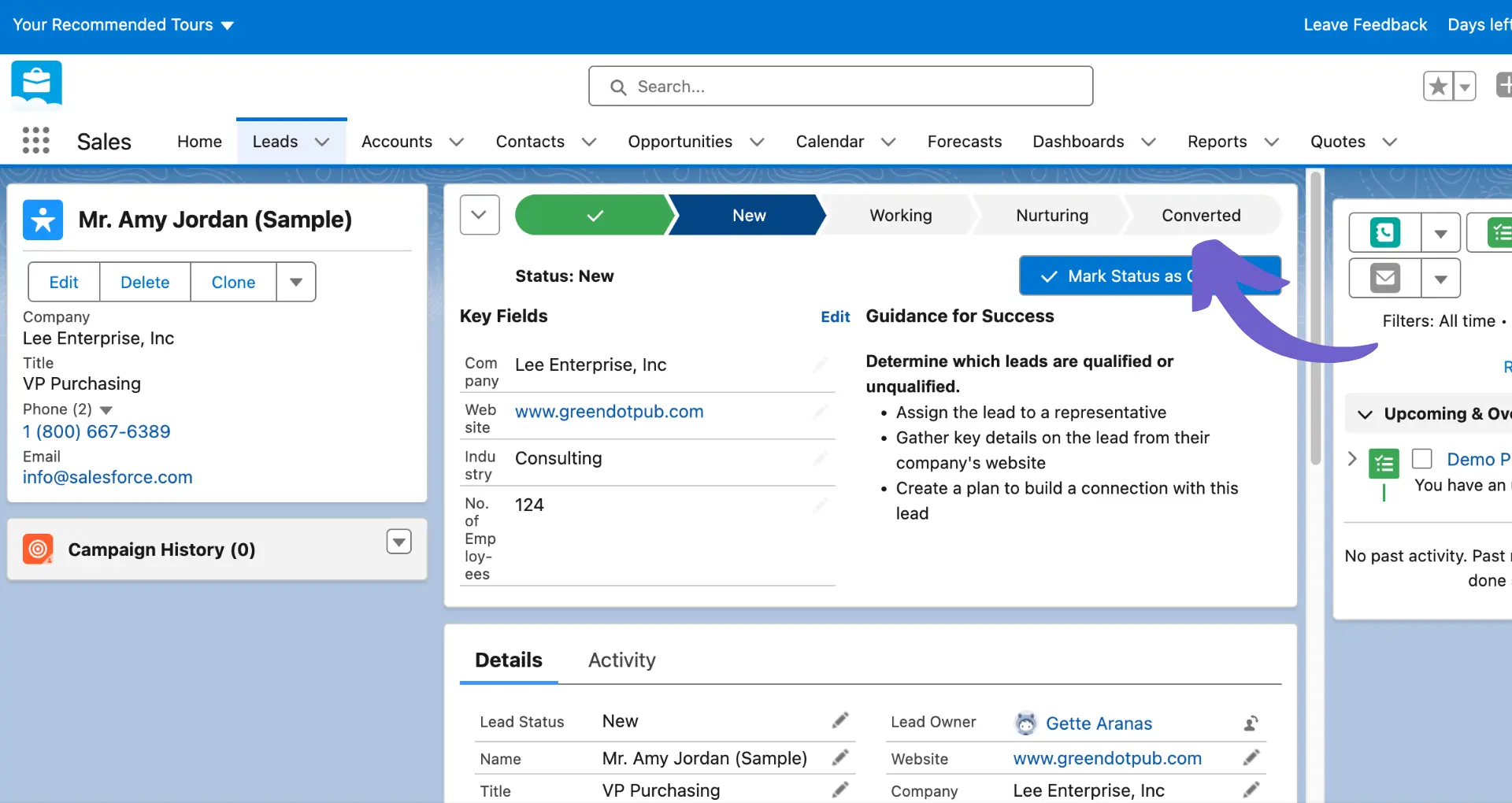
5. Update the contact information on the pop-up page.
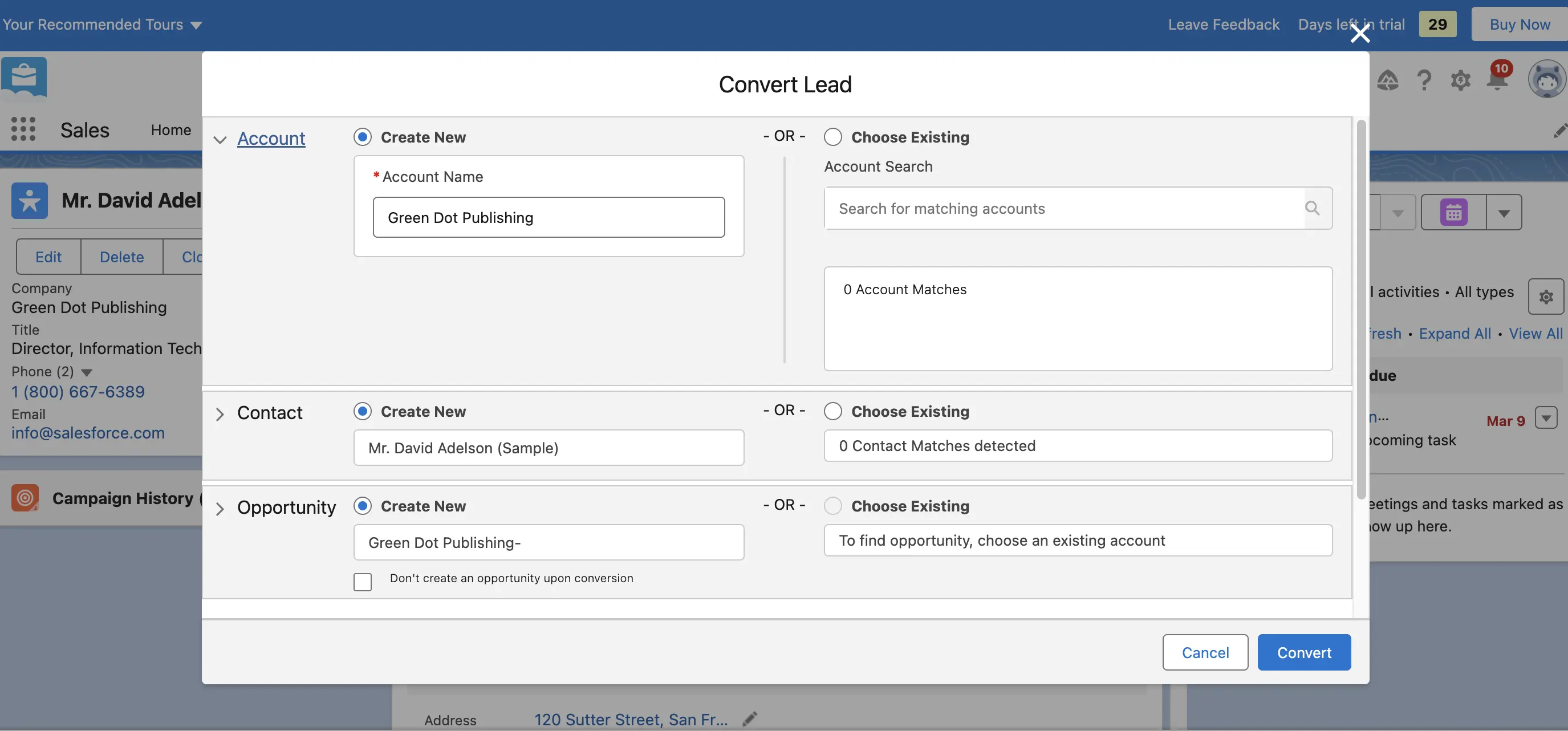
6. Click Convert after filling out the fields.
To convert a lead to a contact in Salesforce Classic:
During the lead conversion process, you have the option to create an opportunity. This is optional and can be selected during the conversion step where you update the contact and account information. If you choose to create an opportunity, you'll need to provide additional details such as opportunity name and close date.
Discover how to automate sales for SDRs and Sales Ops teams with our guide on Salesforce integration workflow automation.
The Salesforce lead conversion process involves converting a lead into an account, contact, and optionally, an opportunity. This process is initiated by clicking the Convert button on a lead's detail page. Salesforce then prompts you to confirm the conversion details, including whether to create a new account or attach the lead to an existing account, and whether to create an opportunity.
To customize the lead conversion process, you can use Salesforce's setup options to define which fields are mapped during conversion. Customization can also involve creating custom lead conversion buttons or links that execute additional logic before or after conversion using Apex code.
Lead conversion mapping in Salesforce allows you to define how data from lead fields is transferred to fields in accounts, contacts, and opportunities during the conversion process. To customize mapping, navigate to the object management settings for leads and select Map Lead Fields. Here, you can specify the destination fields for each lead field.
Automating lead conversion can be achieved using Salesforce's Process Builder or Flow. To automate, you'll need to create a process or flow triggered by a specific condition on the lead record. Use an Apex invocable method, such as Database.convertLead, to perform the conversion within the automation.
For mass lead conversion, Salesforce does not provide a built-in feature. However, third-party tools like Cloudingo offer functionality for mass converting leads to contacts and accounts. These tools provide options for deduplication and data maintenance to ensure data integrity during the conversion process.










SOC 2 Type II, GDPR and CASA Tier 2 and 3 certified — so you can automate with confidence at any scale.