This automation facilitates the transfer of contacts from Salesforce to a Google Sheet, streamlining the process of contact management and integration across platforms.
The workflow begins by retrieving contacts from Salesforce, ensuring that the most current contact information is accessed. Following this, the retrieved Salesforce contacts data is appended to the specified Google Sheet. This automation is particularly useful for:
Note: This workflow can be customized to include specific fields from Salesforce contacts based on your needs, and to append data to different platforms like Airtable or Coda.
Embrace the efficiency of automatically copying Salesforce contacts to a Google Sheet with Bardeen.
To start, ensure you install the Bardeen app on your device.
After installation, head over to the Magic Box and input the following prompt:
copy contacts from salesforce to sheet
Make certain to integrate the necessary integrations for the workflow, which involves Salesforce for the source and Google Sheets for the destination.
Finally, execute the workflow. This workflow is designed to:
Exporting contacts from Salesforce to Excel or a similar spreadsheet format like Google Sheets is a common need for Salesforce users, aiming to simplify contact management, reporting, or data analysis. Salesforce offers native methods for exporting contacts, which involve creating custom reports and exporting the data in an Excel (.xlsx) or CSV format. This process can be manual and time-consuming, especially for users who require frequent data updates.
Automate the process and save time by using Bardeen to export your Salesforce contacts directly to Google Sheets.
For users seeking a more streamlined and automated approach, tools like Coupler.io offer an alternative. Coupler.io allows users to set up automated data exports from Salesforce to various destinations, including Google Sheets, Excel, Looker Studio, Power BI, and BigQuery. This method requires no coding and can be scheduled to run at specific intervals, ensuring that the data in your spreadsheet is always up to date.
Connecting Salesforce to Google Sheets directly can be achieved using the Salesforce Connector add-on available in the Google Workspace Marketplace. This tool enables users to import reports or custom data queries from Salesforce into Google Sheets, update Salesforce records directly from Google Sheets, and schedule regular data refreshes. The Salesforce Connector supports operations like pulling in Salesforce reports, importing data based on custom queries, updating Salesforce data from Sheets, and deleting data in Salesforce. This add-on is particularly useful for users who need to work with Salesforce data within Google Sheets for analysis, reporting, or data manipulation tasks.
For users who prefer working within the Google ecosystem, the Data Connector for Salesforce, available as a Google Sheets add-on, offers a straightforward solution for importing, editing, and syncing Salesforce data with Google Sheets. This add-on allows users to import Salesforce data into Sheets, update Salesforce records from Sheets, and set up automatic data refresh schedules. It supports importing existing Salesforce reports or using SOQL to import specific data sets. This method is especially beneficial for users who require real-time data updates and the ability to manipulate Salesforce data using Google Sheets' functionalities.
Streamline your workflow and enhance productivity by automating Salesforce data synchronization with Google Sheets using Bardeen.
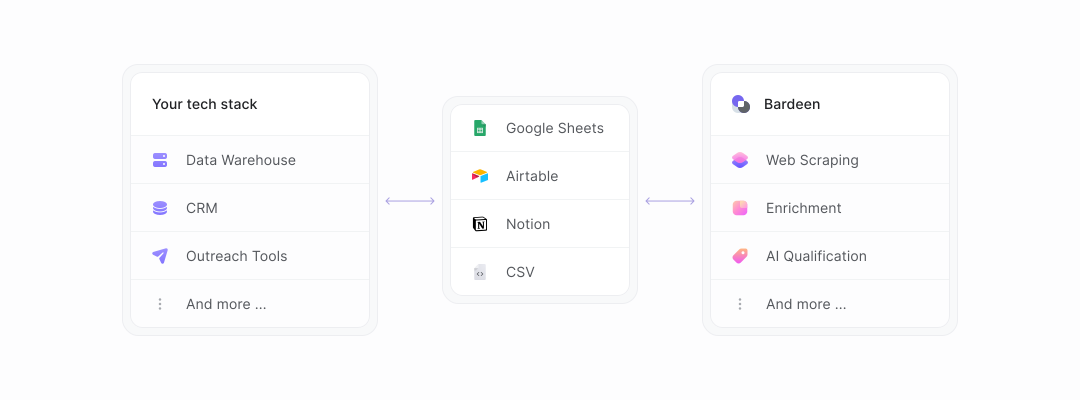
With our new Bardeen version, you can easily extract data from any website and discover new leads across the web. After extracting data from a website, use Bardeen’s powerful automation tools to validate and enrich your data, run additional scrapers on linked pages, or leverage AI to qualify leads and generate content automatically. Once your data is ready, you can easily export it to CSV, Google Sheets, Airtable, or Notion for further analysis and reporting.






SOC 2 Type II, GDPR and CASA Tier 2 and 3 certified — so you can automate with confidence at any scale.