
This workflow is designed to automatically update a Google Sheet whenever a new company is added to HubSpot. It streamlines the process of tracking new companies in your CRM system without manual data entry.
The automation is triggered by a webhook in HubSpot when a new company is created. It then captures the company's name, domain, and industry, appending this information as a new row in a designated Google Sheet. This is particularly useful for:
Note: This workflow can be modified to include additional company details or to integrate with other CRMs like Salesforce or Pipedrive.
Implementing this automation can significantly improve efficiency by ensuring that your Google Sheets are always up-to-date with the latest company information from HubSpot, without any manual work.
To get started, install the Bardeen app on your device by visiting Bardeen's download page.
After installation, proceed to the Magic Box within the app. Enter the prompt as follows:
Update Google Sheet, when HubSpot Company added
For the workflow to function, ensure you have the HubSpot and Google Sheets integrations set up within Bardeen.
With everything set up, you're ready to run the workflow. This workflow is designed to:
Managing and updating employee information in Google Sheets when a new company is added in HubSpot can be streamlined through automation. This process ensures that your Google Sheets are always up-to-date with the latest company details from HubSpot, enhancing productivity and eliminating manual data entry errors. Bardeen offers a workflow automation tool that can significantly simplify this task.
By automating the update process with Bardeen, you can ensure that your Google Sheets reflect real-time changes in HubSpot, making your data management process more efficient. Try Bardeen now to streamline your workflow.
The HubSpot App Marketplace provides a direct way to connect Google Sheets with your HubSpot account, enabling the transfer of data such as new company details into a Google Sheet. This connection can be established through workflow actions within HubSpot, such as "Create Google Sheet row" or "Update data in a Google Sheet." These actions allow for the automatic addition of new rows or updating of existing rows in your Google Sheet whenever a company is added in HubSpot.
To prepare your Google Sheets for integration, ensure that your spreadsheet is correctly formatted. The first row should contain headers that correspond to the HubSpot company properties you wish to track, such as company name, domain, and industry. It's important to label each column header clearly and ensure that there are no blank headers between columns. This setup facilitates the seamless transfer of data from HubSpot to Google Sheets.
While HubSpot's native functionality allows for manual data export, automating this process can save time and reduce the risk of data inconsistencies. Tools like Coupler.io and third-party integrations mentioned in the HubSpot Community can automate the export of companies and their details from HubSpot to Google Sheets. These solutions provide a more efficient way to manage data exports, especially for businesses that require frequent updates.
For scenarios where you need to export not just companies but also related contacts, HubSpot now allows for this capability directly within the platform. By creating a list of contacts with their associated company information and exporting this list, you can obtain a comprehensive dataset. This method, although initially designed for contacts, can be adapted through Excel functions or additional tools to include company details, offering a workaround for exporting companies and their associated contacts in one go.
Utilizing workflow automation tools like Bardeen can significantly enhance the efficiency of updating Google Sheets with HubSpot data. Automate your data management process today and focus on more strategic tasks. Download Bardeen and experience seamless integration.
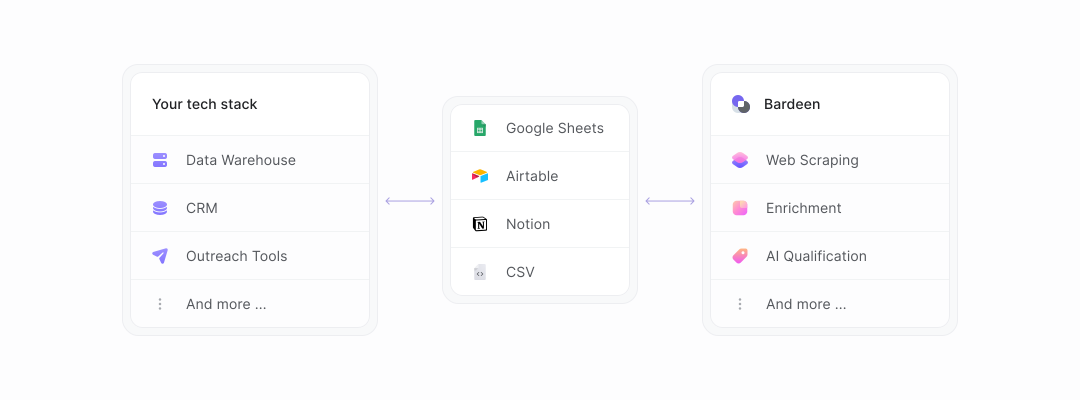
With our new Bardeen version, you can easily extract data from any website and discover new leads across the web. After extracting data from a website, use Bardeen’s powerful automation tools to validate and enrich your data, run additional scrapers on linked pages, or leverage AI to qualify leads and generate content automatically. Once your data is ready, you can easily export it to CSV, Google Sheets, Airtable, or Notion for further analysis and reporting.






SOC 2 Type II, GDPR and CASA Tier 2 and 3 certified — so you can automate with confidence at any scale.