
This workflow automates the process of searching for images on Google Images, scraping those images, and then saving the scraped image data into a specified Google Sheets document.
The process begins with a Google Image search based on a user-provided query. Next, a specialized scraper model is used to scrape images from the search results. Finally, the scraped image data is appended into the user's Google Sheets document. This workflow is perfect for:
Pro Tip: This workflow can be tailored to scrape specific types of images or images under certain licenses. Simply modify the search query accordingly.
Get started with this image collection workflow by installing Bardeen.
To start, ensure you have the Bardeen app installed on your device.
With the app installed, proceed to the Magic Box and enter the prompt:
Scrape Google Images then save into Google Sheets
Make certain to set up the necessary integrations for the workflow. This involves integrating with Google Sheets for data storage.
Finally, initiate the workflow. This workflow is designed to:
Scraping Google Images is a task that involves programmatically accessing Google's vast repository of images to extract relevant visual data. This can include image URLs, metadata, thumbnails, sizes and dimensions, source URLs, and image captions. Such data is invaluable for various applications, from research and presentations to machine learning projects. However, scraping images at a large scale can be challenging due to potential blocks and the need to respect copyright and usage rights.
Ready to automate your image collection process? Get started by installing Bardeen to streamline your workflow. Visit https://www.bardeen.ai/download.
One method to scrape Google Images involves using Python with specific libraries such as requests and pandas. The process typically includes setting up your environment, structuring your payload with the necessary parameters, making a POST request to a scraping API like Oxylabs’ Google Images Scraper API, and then extracting and saving the data. This method requires programming knowledge and access to a scraping API.
Once you have scraped your desired images, the next step is to add these images to Google Sheets. Google Sheets provides multiple ways to insert images, including directly into cells or over cells. For images directly in cells, you can use the IMAGE function for a dynamic approach or the Insert menu for a static method. The IMAGE function allows you to specify the image's fit within the cell, offering options like size to fit, stretch to fit, original size, or custom size. Alternatively, simply navigating to Insert > Image > Image in cell allows you to upload images from your device or select from Google Drive.
Automate the process of adding scraped images to Google Sheets with Bardeen. Simplify your tasks and save time. Start now by visiting https://www.bardeen.ai/download.
For a more automated and efficient workflow, especially when dealing with a large number of images, automating the process with Bardeen can save significant time and effort. Bardeen's automation capabilities allow you to seamlessly integrate the scraped image data into Google Sheets, making it an ideal solution for professionals looking to enhance productivity and streamline their image collection projects.
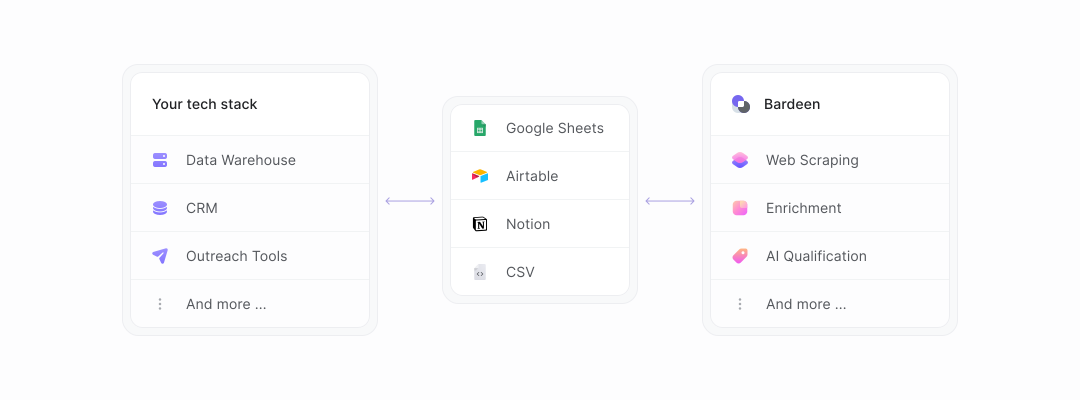
With our new Bardeen version, you can easily extract data from any website and discover new leads across the web. After extracting data from a website, use Bardeen’s powerful automation tools to validate and enrich your data, run additional scrapers on linked pages, or leverage AI to qualify leads and generate content automatically. Once your data is ready, you can easily export it to CSV, Google Sheets, Airtable, or Notion for further analysis and reporting.






SOC 2 Type II, GDPR and CASA Tier 2 and 3 certified — so you can automate with confidence at any scale.