

This automated workflow is designed to scrape listings information from Redfin and save it directly to a Google Sheet. It is an efficient way to gather real estate data for analysis, comparison, or tracking market trends.
The process begins by using a combined scraper model on the active tab, which is set to scrape listings information from Redfin. Following the successful data extraction, the information is then appended into a specified Google Sheet. This automation is particularly useful for:
Pro Tip: Bardeen's scraper model is highly customizable, allowing for specific data points to be targeted. Whether it's price, square footage, or location details, you can tailor the scraper to meet your needs.
Streamline your real estate data collection process by implementing this workflow. Get started with Bardeen today.
To get started, make sure to install the Bardeen app on your device.
After installation, go to the Magic Box and enter the following command:
scrape listings from redfin, save into google sheets
It's crucial to set up the integrations needed for the workflow. This includes the Scraper for extracting listings from Redfin and Google Sheets for the destination to store the scraped data.
Now, execute the workflow. This process involves:
Yes, scraping Redfin is possible and can be achieved through various methods, including using Python with specific libraries or employing web scraping services. Redfin, a leading real estate platform, offers a wealth of data on property listings, market trends, and other valuable information. This data can be invaluable for real estate analysts, investors, and policy makers to make informed decisions. However, it's crucial to scrape responsibly to avoid legal and ethical issues. This involves respecting the website's robots.txt file, not overloading their servers, and ensuring data privacy, especially concerning personal information.
Looking to streamline your real estate data collection? Automate the process with Bardeen and save listings directly to Google Sheets. Get started now.
There are a few approaches to scrape Redfin, each with its advantages. The manual method, or screen scraping, involves copying and pasting data directly from the website. While straightforward, it's time-consuming and not feasible for large datasets. On the other hand, automated scraping can be done using Python libraries such as Requests and BeautifulSoup for simpler tasks, or Scrapy for more complex scraping needs. These libraries allow for efficient data extraction but require some programming knowledge.
For those looking to scrape without getting into code, web scraping services like Geonode's Scraper API offer a solution. These services can handle dynamic content and are designed to avoid common scraping pitfalls such as getting banned. Another powerful tool is Selenium, a browser automation tool that's particularly useful for sites that load data dynamically with JavaScript.
Regardless of the method chosen, it's essential to process and store the scraped data effectively. This involves cleaning the data to ensure it's in the desired format and storing it in a database, CSV file, or another format for further analysis. Regular monitoring and updates to the scraping logic may be necessary to adapt to changes in the website's structure or content.
Automate your Redfin data scraping and directly save to Google Sheets with Bardeen. Simplify your data collection process. Try it now.
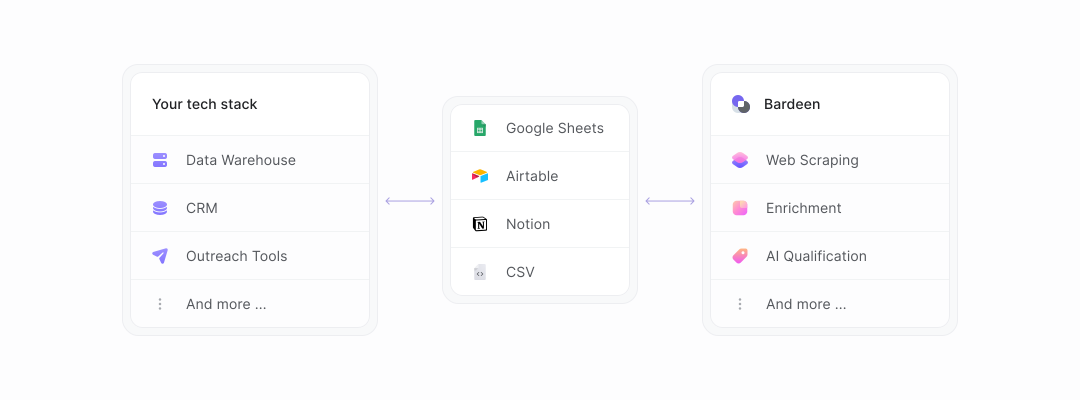
With our new Bardeen version, you can easily extract data from any website and discover new leads across the web. After extracting data from a website, use Bardeen’s powerful automation tools to validate and enrich your data, run additional scrapers on linked pages, or leverage AI to qualify leads and generate content automatically. Once your data is ready, you can easily export it to CSV, Google Sheets, Airtable, or Notion for further analysis and reporting.






SOC 2 Type II, GDPR and CASA Tier 2 and 3 certified — so you can automate with confidence at any scale.