

This automation scrapes job listings from Google Jobs and saves the data directly into a specified Google Sheet.
First, it uses a combined scraper model on the active tab where Google Jobs search results are displayed, extracting relevant job listing information. Following the successful scraping, the extracted data is appended into a pre-designated Google Sheet tab. This workflow is ideal for:
Note: While this workflow is set for Google Jobs and Google Sheets, Bardeen's modularity allows it to be adapted for use with other data sources and destinations such as Airtable, or CRM systems like Salesforce and HubSpot.
Enhance your job search or recruitment process efficiently with this powerful automation by installing Bardeen.
To start, ensure you install the Bardeen app on your device.
After installation, proceed to the Magic Box and enter the following:
scrape job listing from Google Jobs, save into google sheets
Make sure to set up the required integrations for the workflow. This involves integrating Google Sheets for saving the scraped job listings.
Lastly, execute the workflow. This workflow is structured to:
Finding the right job postings can be a daunting task, especially when you have to sift through multiple job boards and company websites. This is where scraping job postings from Google Jobs comes into play, offering a streamlined approach to gathering job listings efficiently. In this guide, we'll explore how to manually scrape job listings from Google Jobs and introduce you to job scraping tools that can automate the process.
Automate your job search or recruitment process by scraping job listings from Google Jobs directly into Google Sheets with Bardeen. Try it now!
For those who prefer a hands-on approach or need to scrape a small number of job listings, manual scraping from Google Jobs is a viable option. Here's how you can do it:
While manual scraping is straightforward, it can be time-consuming if you're looking to gather a large number of job listings.
For those who need to scrape job listings at scale, several job scraping tools can automate the process, saving you time and effort. These tools can extract job listings from Google Jobs and other sources, providing you with a comprehensive dataset of job postings. Some popular job scraping tools include:
Streamline your job scraping workflow by leveraging Bardeen's automation capabilities. Automate the extraction of job listings from Google Jobs and save them directly into Google Sheets. Get started with Bardeen today!
When choosing a job scraping tool, consider factors such as ease of use, customization options, scalability, and cost. Additionally, ensure that your scraping activities comply with the terms of service of the websites you're scraping from to avoid any legal issues.
In summary, scraping job postings from Google Jobs can significantly enhance your job search or recruitment efforts. Whether you prefer manual scraping for a small number of listings or automated tools for large-scale scraping, the right approach can provide you with valuable insights and opportunities in the job market.
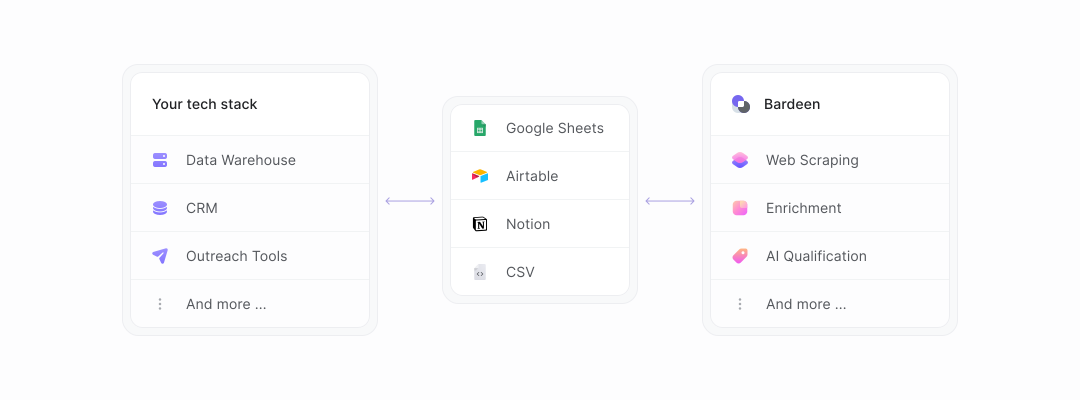
With our new Bardeen version, you can easily extract data from any website and discover new leads across the web. After extracting data from a website, use Bardeen’s powerful automation tools to validate and enrich your data, run additional scrapers on linked pages, or leverage AI to qualify leads and generate content automatically. Once your data is ready, you can easily export it to CSV, Google Sheets, Airtable, or Notion for further analysis and reporting.






SOC 2 Type II, GDPR and CASA Tier 2 and 3 certified — so you can automate with confidence at any scale.