
This workflow automates the process of copying chat conversations from HubSpot and moving them to Google Sheets. Utilizing a scraper model, it efficiently extracts chat data directly from the active HubSpot chat tab.
The steps involve scraping the chat data using the specified HubSpot Chat ID and then appending this data into a pre-selected Google Sheets tab. This automation is particularly useful for:
Note: This workflow can be customized to scrape different types of data from HubSpot or other platforms, and store it in various formats or locations like Airtable, or even a CRM.
Streamline your customer service and data analysis processes by utilizing this powerful automation. Try it now with Bardeen.
To start, ensure you have the Bardeen app installed on your device for automation.
With Bardeen installed, proceed to the Magic Box and enter the following command:
Copy HubSpot chat, Move to GoogleSheets
Before running the workflow, make sure to integrate your HubSpot and Google Sheets accounts with Bardeen. This ensures a smooth data transfer process.
Now, you're ready to execute the workflow. Here's what it does:
Managing customer interactions efficiently is crucial for businesses to provide exceptional service. Integrating HubSpot chat with Google Sheets can streamline the process of archiving and analyzing customer conversations. This integration allows for a seamless transition of chat data from HubSpot to Google Sheets, enabling businesses to keep a comprehensive record of customer interactions for further analysis and insights.
Automate the process of moving HubSpot chat data to Google Sheets with Bardeen to enhance your customer service and data analysis capabilities.
Before you begin, ensure that your Google Sheets is connected to your HubSpot account. This can be done through the HubSpot App Marketplace or within a workflow in HubSpot. Remember, by default, HubSpot sends internal property values to Google Sheets, including dates in unix timestamps. You might need to convert these timestamps in Google Sheets for better readability.
To start moving HubSpot chat data to Google Sheets, navigate to the 'Automations' > 'Workflows' section in your HubSpot account. Here, you can either edit an existing workflow or create a new one. When adding an action to your workflow, select either 'Create Google Sheet row' or 'Update data in a Google Sheet', depending on whether you want to add new data rows or update existing ones. Choose the spreadsheet and the specific sheet within it where you want to send the data. Then, map the HubSpot properties to the corresponding columns in your Google Sheet.
For updating existing rows in Google Sheets, set up unique identifiers like a contact's email address to match the data in Google Sheets with the data in HubSpot. This ensures that the correct row is updated with the new information from HubSpot. If there are multiple rows with matching values, only the first row containing the matching cell will be updated.
While setting up your spreadsheet, ensure the header row starts in the first column of the first row and each column header is labeled. This labeling is crucial for HubSpot to identify and send data correctly. Avoid manually adding data to the sheet that HubSpot is sending data to, as this can cause discrepancies. Instead, create a new sheet and reference existing data from the first sheet if manual additions are necessary.
Streamline your workflow and save time by automating the transfer of HubSpot chat data to Google Sheets with Bardeen. This not only enhances your data management practices but also provides valuable insights into customer interactions.
Remember, this integration can be customized further to fit your specific needs, whether it's archiving customer service interactions or analyzing chat data for insights. By automating this process, you can focus more on strategic tasks and less on manual data entry, thereby improving productivity and customer service.
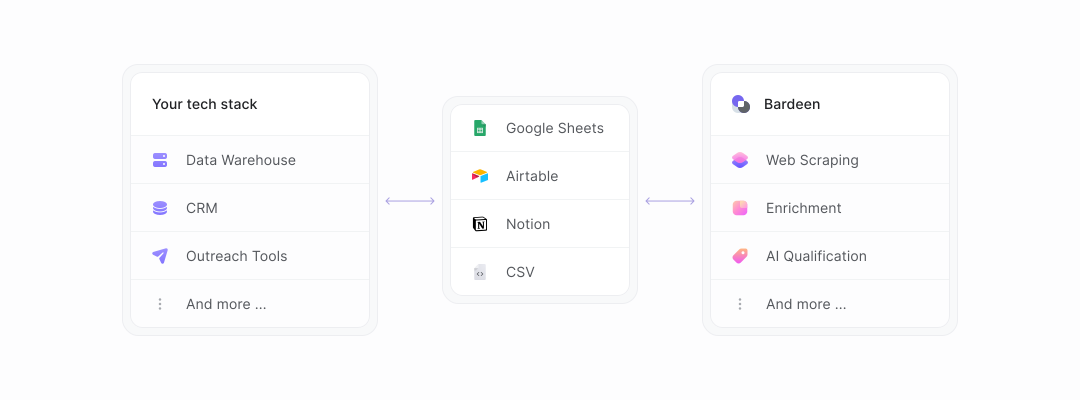
With our new Bardeen version, you can easily extract data from any website and discover new leads across the web. After extracting data from a website, use Bardeen’s powerful automation tools to validate and enrich your data, run additional scrapers on linked pages, or leverage AI to qualify leads and generate content automatically. Once your data is ready, you can easily export it to CSV, Google Sheets, Airtable, or Notion for further analysis and reporting.






SOC 2 Type II, GDPR and CASA Tier 2 and 3 certified — so you can automate with confidence at any scale.