
This workflow facilitates the scraping of Shopify store information and subsequently storing the data in a Google Sheet. It's particularly useful for e-commerce analysis, competitor research, and market trends observation.
The process begins by using a combined scraper model on the active Shopify store tab to scrape information such as product listings, prices, and reviews. Following the successful data extraction, the information is then appended to a specified Google Sheet. This enables seamless tracking and analysis of Shopify store data over time.
Note: While this workflow focuses on Shopify stores, it can be modified to scrape information from other types of e-commerce platforms by adjusting the scraper model accordingly. Additionally, data can be saved to other destinations like Notion, or Airtable.
Using this automation, users can efficiently gather and organize valuable e-commerce data without manual entry, thus saving time and enhancing productivity. Perfect for market analysis or competitor research projects.
First, ensure the Bardeen app is installed on your device.
Open the Magic Box in the Bardeen app and input the following prompt:
Scrape Shopify Stores then save into Google Sheets
Before proceeding, set up integrations with both the Scraper for scraping Shopify stores and Google Sheets for data storage.
To execute the workflow, simply run it. This process will:
Scraping Shopify stores involves collecting data from Shopify-powered websites. This data can include product listings, prices, reviews, and more. While this process can be manual, involving copying and pasting information into a spreadsheet, there are tools and methods that automate this task, significantly enhancing productivity and accuracy.
Automate your Shopify store scraping and save time. Try the workflow here.
Manual scraping can be done by visiting each Shopify store, navigating through the pages, and manually copying the information you need into a Google Sheet. This method is straightforward but time-consuming and prone to errors. For a more efficient approach, using a Shopify scraper tool can automate the process. These tools can export products and other store data into CSV files, which can then be easily imported into Google Sheets.
After scraping Shopify store data, the next step involves transferring this data into Google Sheets for analysis or record-keeping. This can be done manually by importing the CSV files generated by the scraper tool into Google Sheets. However, for a more streamlined process, automation tools can directly append the scraped data into a specified Google Sheet.
For those looking to specifically export Shopify orders to Google Sheets, there are apps available that can automate this process. These apps can automatically send new order data to your Google Sheets in an organized manner, making it easier to manage orders, track inventory, or analyze sales data.
Streamline your data management by automating the export of Shopify store data to Google Sheets. Get started here.
Whether you're scraping Shopify store data for competitor research, market analysis, or order management, automating the process can save valuable time and resources. By leveraging tools that scrape Shopify stores and export data directly to Google Sheets, businesses can efficiently gather and analyze e-commerce data, leading to more informed decision-making.
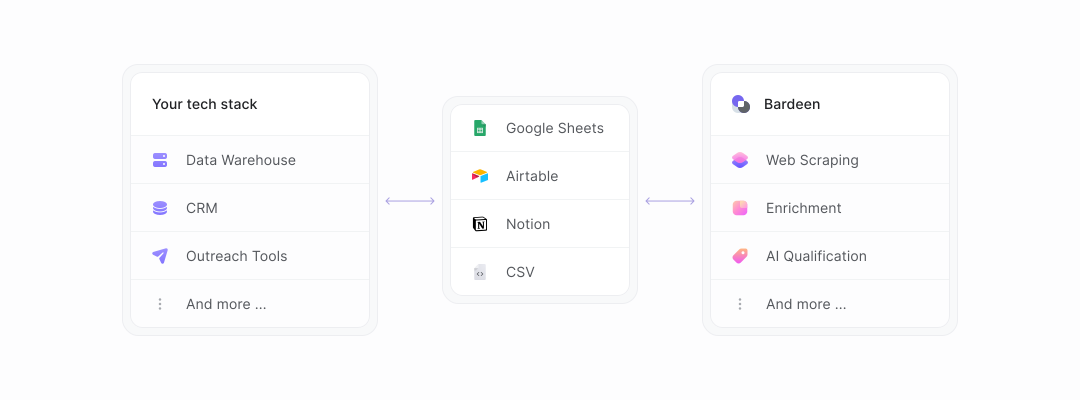
With our new Bardeen version, you can easily extract data from any website and discover new leads across the web. After extracting data from a website, use Bardeen’s powerful automation tools to validate and enrich your data, run additional scrapers on linked pages, or leverage AI to qualify leads and generate content automatically. Once your data is ready, you can easily export it to CSV, Google Sheets, Airtable, or Notion for further analysis and reporting.






SOC 2 Type II, GDPR and CASA Tier 2 and 3 certified — so you can automate with confidence at any scale.