
This workflow automatically creates a new HubSpot contact each time a new row is added to a specified Google Sheet. The process is seamless, requiring no manual data entry or duplication of efforts.
Upon the addition of a new row in Google Sheets, this workflow triggers and extracts the relevant details (First Name, Last Name, Email, Phone, Website, and Company) from the new row. It then creates a new contact in HubSpot using these details. This is ideal for:
Pro Tip: You can further customize this automation by adding additional fields based on your HubSpot contact structure, or modify the source Google Sheet as per your needs.
Utilize this workflow to streamline your CRM processes and ensure no lead is missed. Perfect for sales teams looking to automate their lead management system.
To begin, ensure the Bardeen app is installed on your device.
Open the Bardeen app and navigate to the Magic Box. Input the following prompt:
When new row in Google Sheets, create new contact in HubSpot
Connect your Google Sheets and HubSpot accounts to Bardeen to enable the workflow's integrations. This step is crucial for the automation to work seamlessly.
With the integrations set up, you can run the workflow. This workflow is designed to automatically:
Integrating Google Sheets with HubSpot is a game-changer for businesses looking to automate their workflow and enhance productivity. This integration allows for the automatic creation of new contacts in HubSpot whenever a new row is added to a specified Google Sheet. This process is ideal for businesses that collect leads or customer information through various online forms that are connected to Google Sheets. By automating the transfer of this data into HubSpot, businesses can ensure that no lead is missed and that their sales or customer service teams can follow up promptly.
Automate your workflow with Bardeen and ensure seamless synchronization between Google Sheets and HubSpot, saving you time and reducing manual data entry errors.
To set up this workflow, you'll first need to connect Google Sheets to your HubSpot account. This can be done through the HubSpot App Marketplace or directly within a workflow in your HubSpot account. Once connected, you can use the 'Create Google Sheet row' action or 'Update data in a Google Sheet' action to send data from HubSpot properties to your spreadsheet. However, for our specific workflow, we are focusing on the reverse - adding data to HubSpot from Google Sheets.
It's important to properly format your Google Sheet to ensure that HubSpot can identify and send data to it. The header row must start in the first column of the first row, and each column header should be labeled to match the HubSpot contact structure. This setup is crucial for the workflow to identify where to place data in HubSpot.
Once your Google Sheet is properly set up and connected to HubSpot, you can automate the creation of new contacts in HubSpot based on new rows added to your Google Sheet. This can be achieved by using workflow automation tools like Bardeen. These tools can monitor changes in your Google Sheet and trigger the creation of new contacts in HubSpot with the relevant details extracted from the new row.
Utilize Bardeen to automate the process of adding contacts to HubSpot from Google Sheets, ensuring your CRM is always up-to-date with the latest lead information.
This workflow is particularly useful for sales and marketing teams, as it allows them to quickly respond to new leads or inquiries without the need for manual data entry. By automating this process, businesses can improve their lead management system, enhance customer engagement, and ultimately drive more sales.
For businesses with specific needs, this workflow can be further customized. Additional fields can be added based on your HubSpot contact structure, or the source Google Sheet can be modified to include more detailed information. This flexibility allows businesses to tailor the automation to their unique processes and requirements.
By leveraging the power of workflow automation between Google Sheets and HubSpot, businesses can streamline their operations, reduce the risk of manual errors, and ensure that every lead is captured and nurtured effectively.
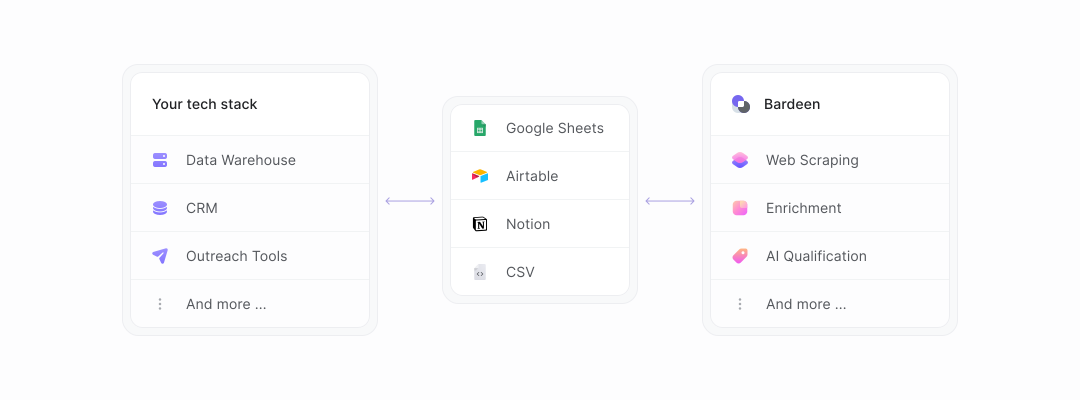
With our new Bardeen version, you can easily extract data from any website and discover new leads across the web. After extracting data from a website, use Bardeen’s powerful automation tools to validate and enrich your data, run additional scrapers on linked pages, or leverage AI to qualify leads and generate content automatically. Once your data is ready, you can easily export it to CSV, Google Sheets, Airtable, or Notion for further analysis and reporting.






SOC 2 Type II, GDPR and CASA Tier 2 and 3 certified — so you can automate with confidence at any scale.