

This automation extracts company data from an active Crunchbase page and saves it directly into HubSpot as a new company entry.
First, the automation uses a scraper model specifically designed for Crunchbase to extract key pieces of company information such as domain, description, headquarters location, founding year, industry, and size. Next, it creates a new company profile in HubSpot using this extracted data, filling in fields for company name, domain, and additional data like description, headquarters, founded year, industry, and size.
Pro Tip: This workflow can be customized to include more or specific fields based on your HubSpot configuration, ensuring that the data most relevant to your sales or marketing strategies is captured.
By automating the process of transferring valuable company data from Crunchbase to HubSpot, sales and marketing teams can save time and ensure their CRM is always populated with the latest information.
To start, ensure the Bardeen app is installed on your device.
Open the Magic Box within the Bardeen app and input the following prompt:
Save Crunchbase company data to HubSpot
For this workflow, the necessary integrations are Crunchbase for sourcing company data and HubSpot for the destination. Make sure both are integrated.
Proceed to run the workflow. This workflow operates by:
Integrating Crunchbase with HubSpot opens a plethora of opportunities for sales and marketing professionals. By leveraging the rich company data available on Crunchbase, teams can enhance their CRM with valuable insights, ensuring that they are always equipped with the latest information. This integration allows for the seamless transfer of company data from Crunchbase directly into HubSpot, streamlining the process of building and tracking your sales pipeline.
Automating the transfer of company data from Crunchbase to HubSpot can significantly save time and improve data accuracy in your CRM. To start automating this workflow, download Bardeen.
Connecting Crunchbase to HubSpot involves a few steps. Firstly, users must ensure that their HubSpot account is synced with Crunchbase. This can be done by navigating to the account settings in Crunchbase and selecting the HubSpot integration option. Once the connection is established, users can push new companies and contacts directly to HubSpot with a single click, either from within Crunchbase or using the Crunchbase Chrome extension. This integration not only helps in discovering new accounts but also in keeping track of potential opportunities by providing alerts on company activity and buy signals directly within HubSpot.
For those looking to import Crunchbase company data into HubSpot, the process is straightforward. HubSpot allows for the import of records and activities in bulk, supporting file formats such as .csv, .xlsx, or .xls. Before importing, it's crucial to set up your import files correctly, ensuring that each column header matches a property in HubSpot. This preparation helps in avoiding import errors and ensures that the data being added is accurate and actionable. HubSpot's import tool also offers the capability to auto-map your data to existing HubSpot properties and surface any errors before completing the import, making the process efficient and user-friendly.
For a hassle-free experience in saving Crunchbase company data to HubSpot, consider using Bardeen to automate your workflow. This not only saves time but also ensures that your CRM data is always up-to-date and accurate.
By integrating Crunchbase with HubSpot, teams can significantly enhance their sales and marketing efforts. This integration allows for the quick discovery of new prospects, streamlined data entry, and the ability to track opportunities and inform next steps right from within Crunchbase. Additionally, for Crunchbase Enterprise customers, there are added benefits such as automatically filtering out existing companies from searches and resurfacing old leads based on last activity date and account owner. These capabilities ensure that sales and marketing teams are always working with the most relevant and actionable data.
Ultimately, the Crunchbase HubSpot integration is a powerful tool for any sales or marketing professional looking to streamline their workflow and ensure their CRM is populated with the latest and most accurate company data available.
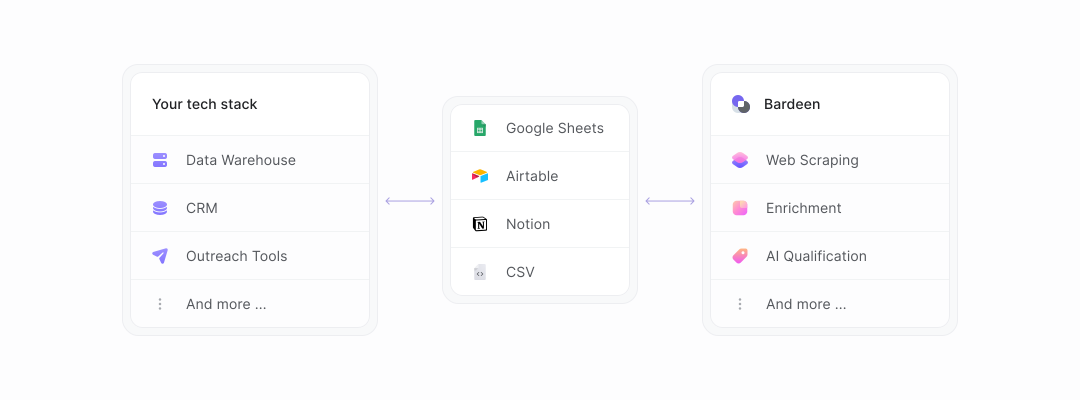
With our new Bardeen version, you can easily extract data from any website and discover new leads across the web. After extracting data from a website, use Bardeen’s powerful automation tools to validate and enrich your data, run additional scrapers on linked pages, or leverage AI to qualify leads and generate content automatically. Once your data is ready, you can easily export it to CSV, Google Sheets, Airtable, or Notion for further analysis and reporting.






SOC 2 Type II, GDPR and CASA Tier 2 and 3 certified — so you can automate with confidence at any scale.